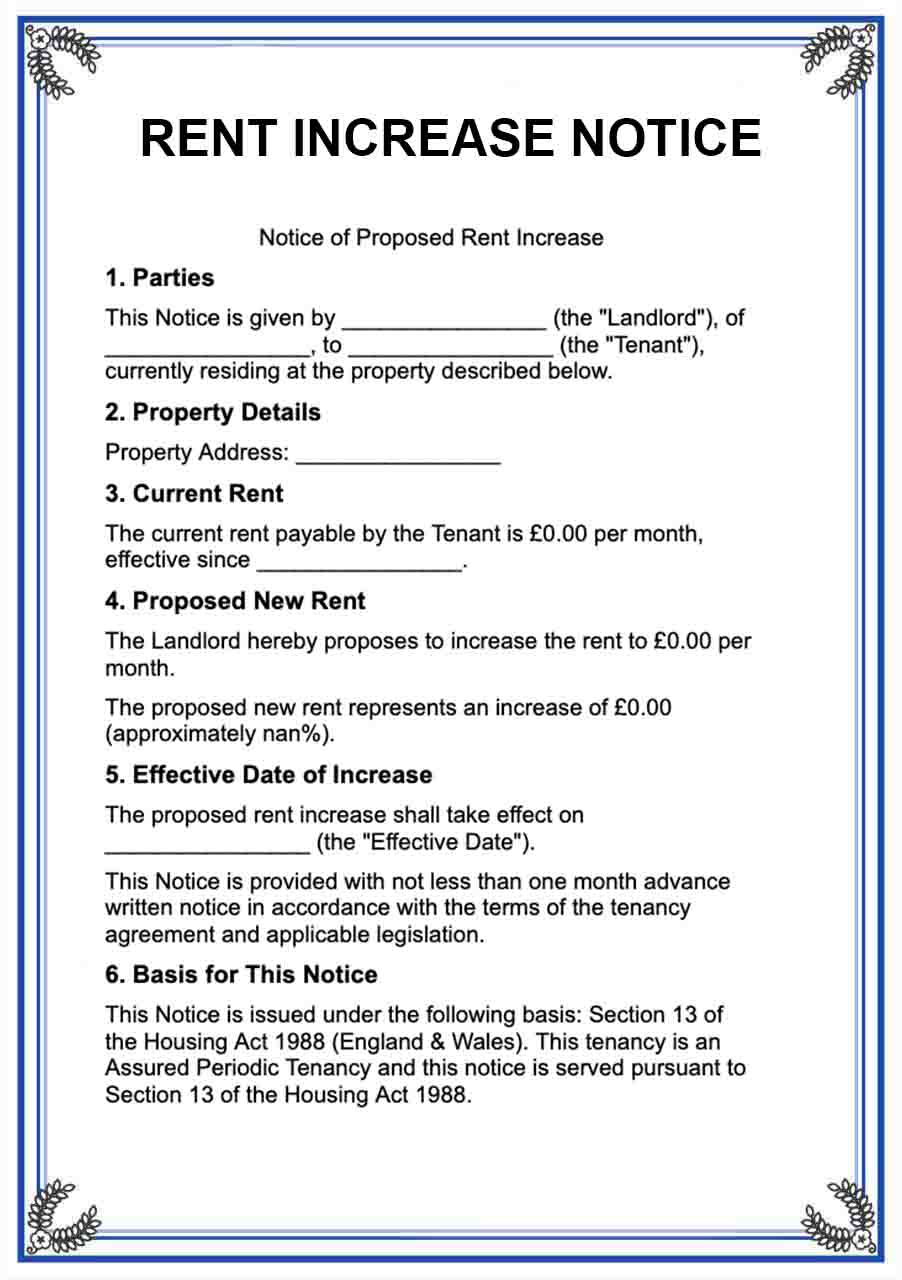
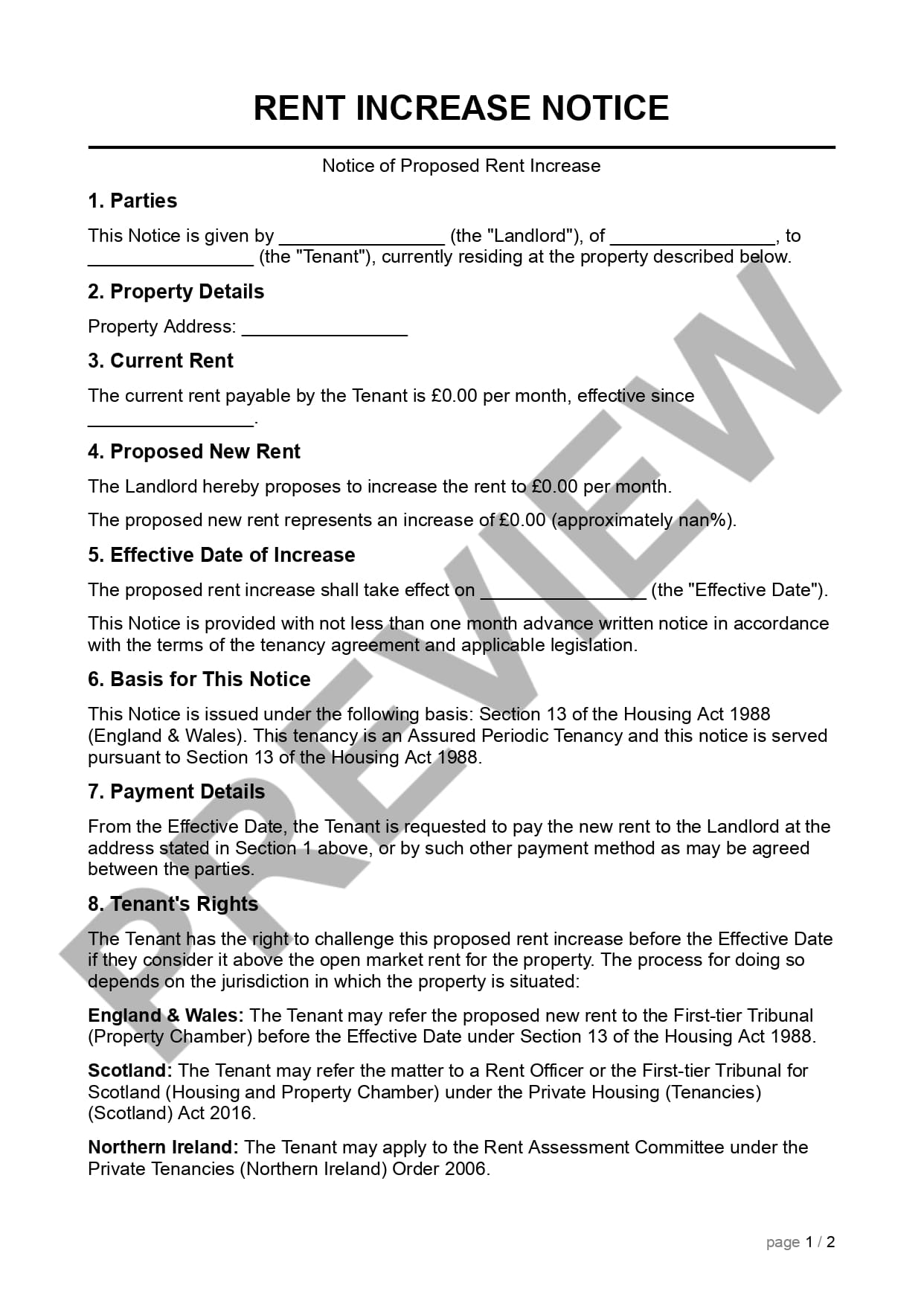
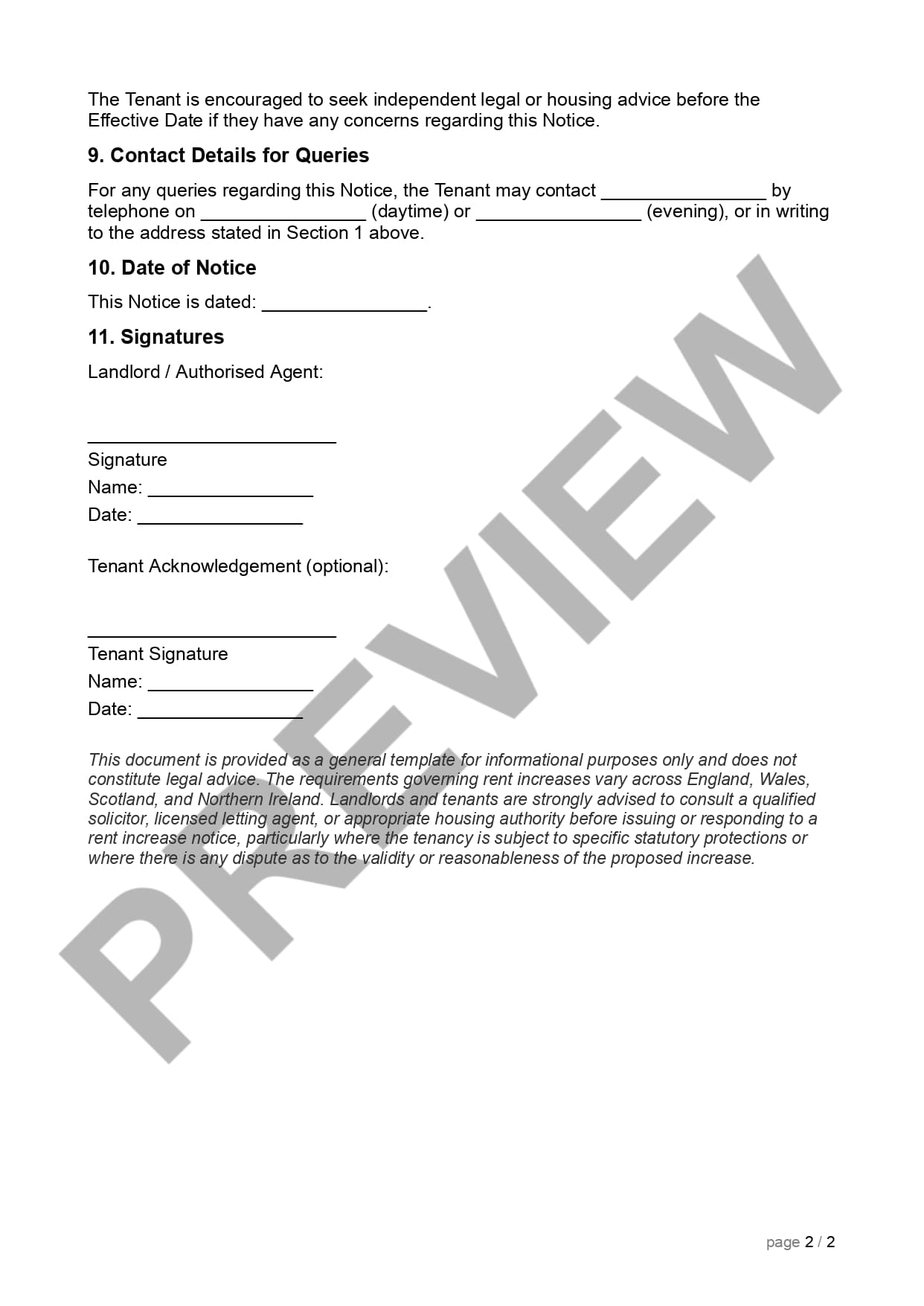
Rent Increase Notice Template UK
A Rent Increase Notice is a formal written notice given by a landlord to their tenant to inform them of an upcoming increase in rent. It sets out the new rent amount, the effective date of the increase, and is required to comply with UK tenancy law. Select the property type to get started.
Last Update 17 March 2026
What is a Rent Increase Notice?
A Rent Increase Notice (also known as a Section 13 Notice for assured periodic tenancies) is a formal written document used by landlords to notify their tenants of an increase in rent. The notice must be served in accordance with the Housing Act 1988 and must give the tenant sufficient time to consider or challenge the proposed increase before it takes effect.
When do I need a Rent Increase Notice?
Assured periodic tenancies: Landlords with assured periodic tenancies must serve a formal Section 13 Notice to lawfully increase rent. Without the notice, any rent increase may not be enforceable.
Fixed-term tenancies ending: When a fixed-term tenancy ends and rolls into a periodic tenancy, a rent increase notice is the proper way to set a new rent level.
Annual rent reviews: Many landlords carry out annual rent reviews to keep rents in line with the market. A formal notice ensures this is done lawfully and with the required notice period.
Avoiding disputes: Serving a proper written notice protects landlords from disputes about whether a rent increase was agreed and when it took effect.
Frequently Asked Questions
For assured periodic tenancies in England, a landlord must give at least one month's notice for monthly tenancies and at least six months' notice for yearly tenancies. The Renters (Reform) Act changes are ongoing — always check the latest requirements for your jurisdiction before serving a notice.
Yes. For assured periodic tenancies, a tenant can refer the proposed rent increase to the First-tier Tribunal (Property Chamber) before the effective date of the increase. The tribunal will assess whether the proposed rent is in line with market rates. If the tenant does not challenge the increase, it takes effect on the date stated in the notice.
A Section 13 Notice is the statutory form used by landlords to propose a rent increase for assured periodic tenancies under the Housing Act 1988. It must set out the current rent, the proposed new rent, and the date from which the increase will apply. Using the correct form is essential — an incorrect notice may be invalid and unenforceable.
For assured periodic tenancies, a landlord can only serve one rent increase notice in any 52-week period. This means rent can only be increased once per year through this mechanism. If the tenancy agreement contains a rent review clause, that clause may also govern when and how often rent can be increased.
Scotland and Wales have their own rules for rent increases. Scotland uses a different tenancy framework under the Private Housing (Tenancies) (Scotland) Act 2016, and Wales introduced the Renting Homes (Wales) Act 2016. The rules on notice periods, challenge rights, and rent caps differ significantly. This generator is primarily designed for England — always check the rules for your specific jurisdiction.