Independent Contractor Agreement Template UK
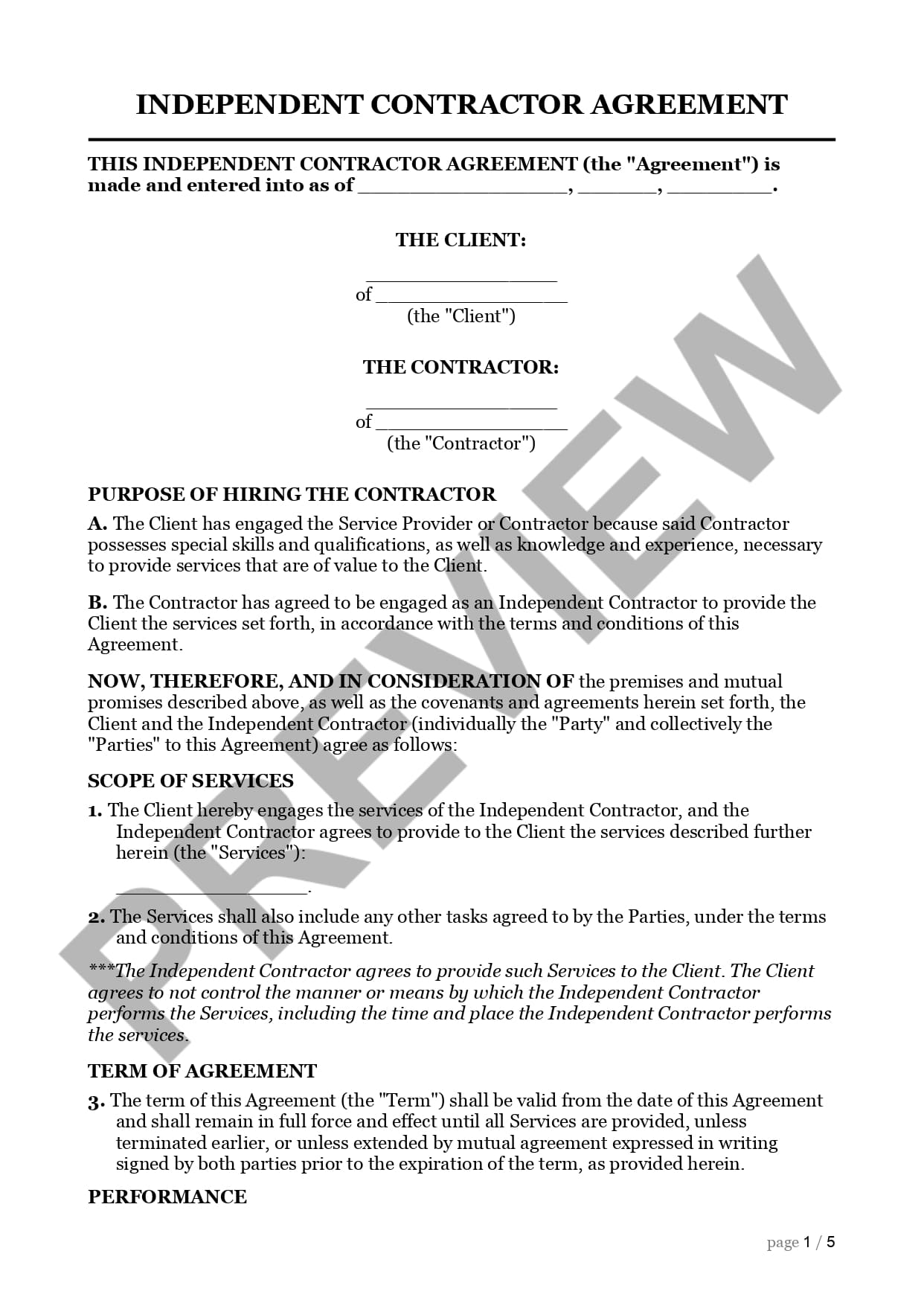
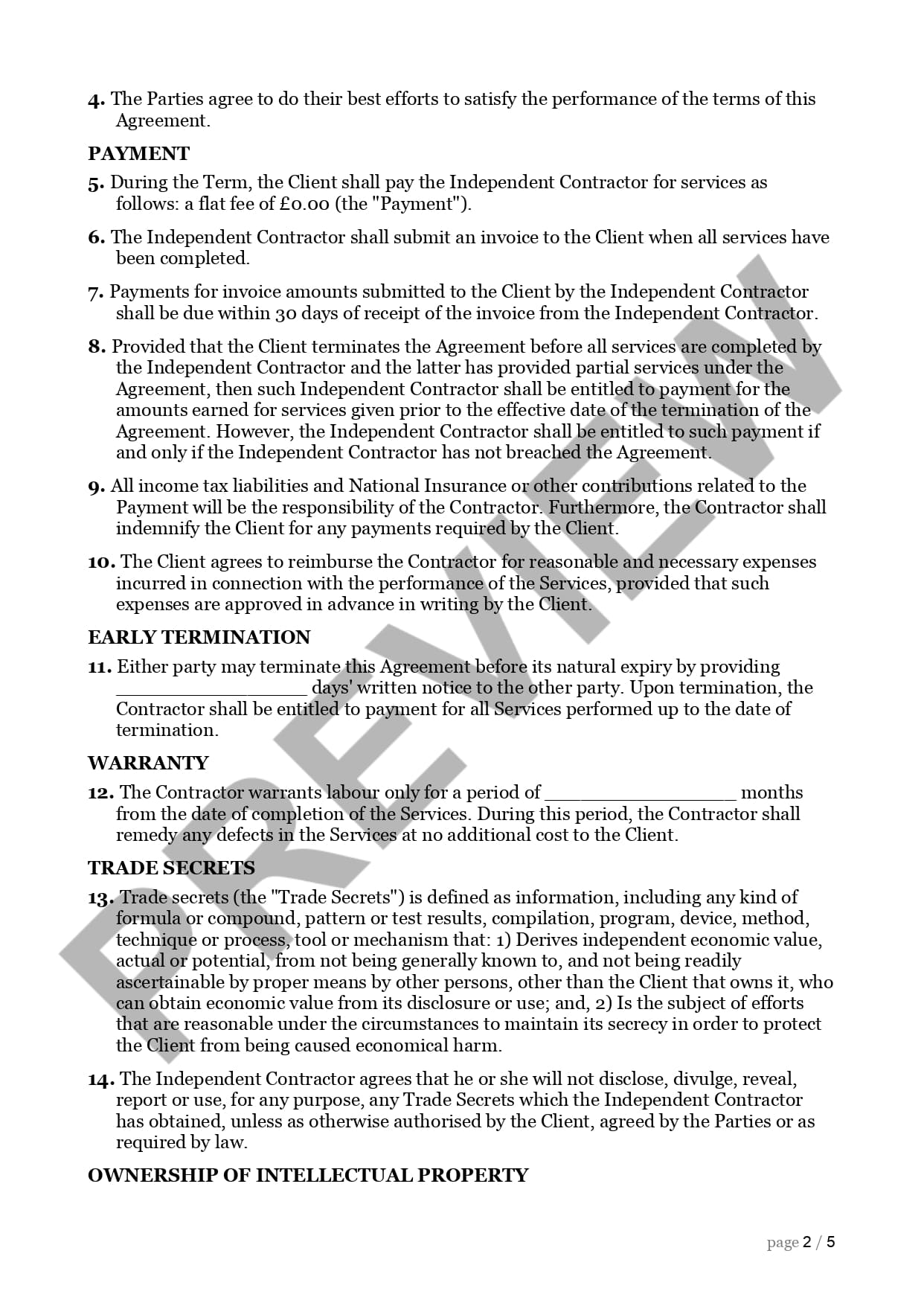
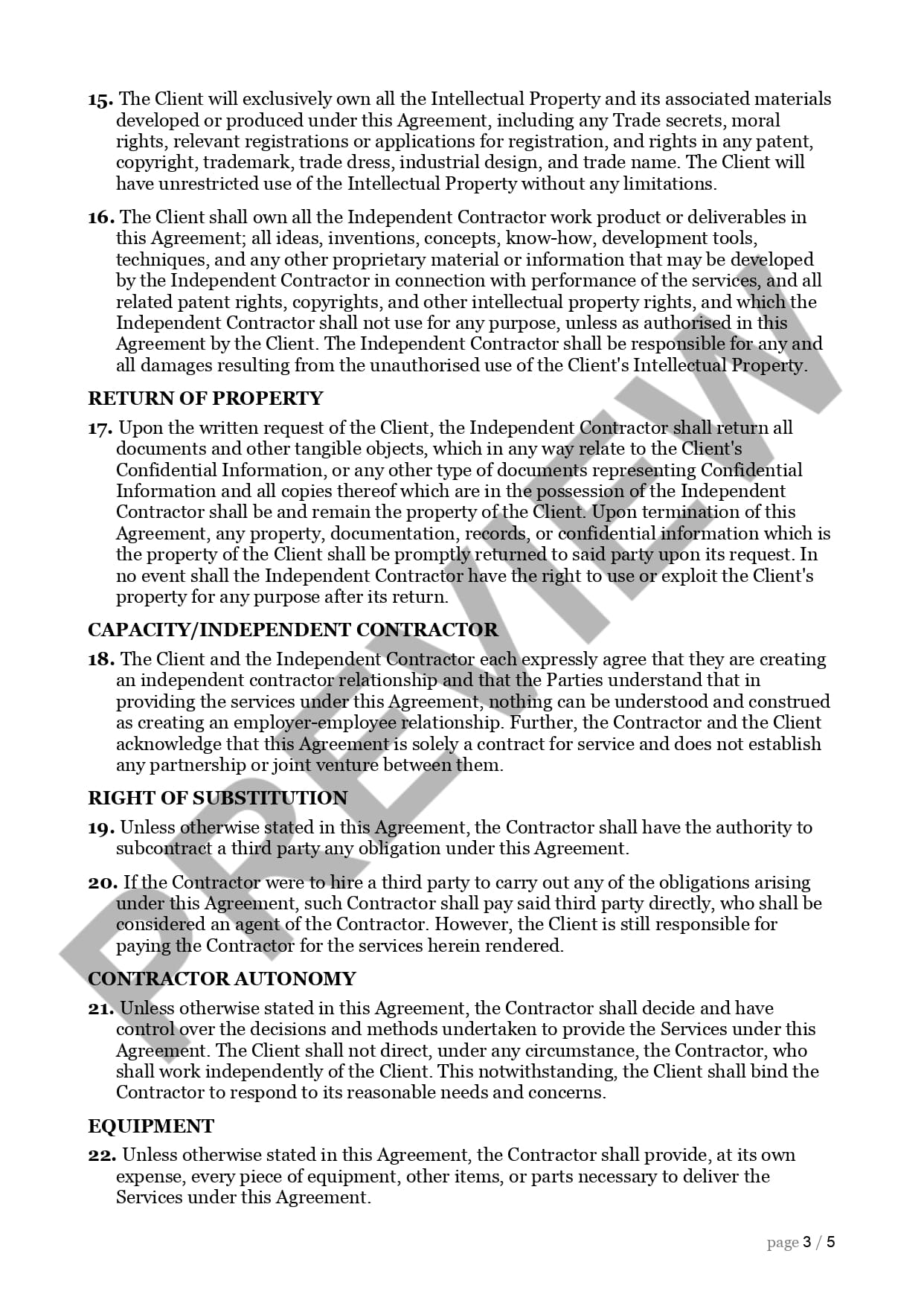
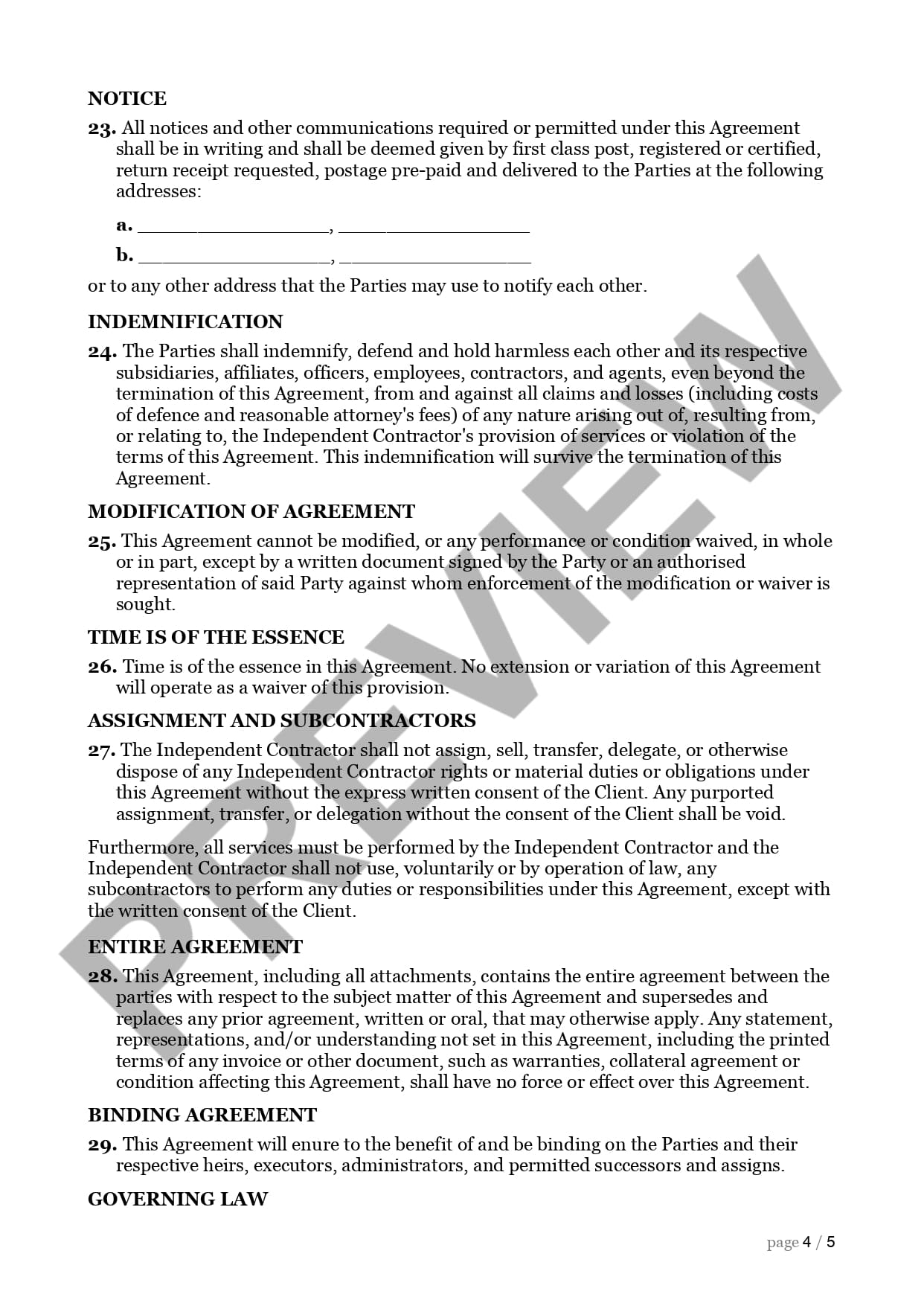
An Independent Contractor Agreement is a legally binding contract between a client and a self-employed contractor. It sets out the terms and conditions of the engagement, including scope of work, payment terms, duration, and the rights and obligations of both parties. Select the type of service being contracted to get started.
What type of service is being contracted?
Last Update 17 March 2026
What is an Independent Contractor Agreement?
An Independent Contractor Agreement (also known as a freelancer or service agreement) is a legally binding contract between a client and a self-employed contractor. It sets out the terms on which the contractor will provide services, including the scope of work, payment terms, duration, and each party's responsibilities. Unlike an employment contract, an independent contractor agreement confirms that the contractor is not an employee and is responsible for their own tax and National Insurance contributions.
When do I need an Independent Contractor Agreement?
Hiring a freelancer: Any time you engage a self-employed person or business to carry out work, an independent contractor agreement protects both parties by clearly setting out the terms of the arrangement.
Clarifying employment status: An independent contractor agreement helps to establish that the worker is not an employee, which has important implications for tax, National Insurance, and employment rights.
Protecting intellectual property: If the contractor will create original work — such as software, designs, or written content — the agreement should specify who owns the intellectual property created during the engagement.
Setting payment terms: A written agreement prevents disputes about fees, invoicing timelines, and late payment charges by clearly recording what was agreed between the parties.
Frequently Asked Questions
An employee works under a contract of employment and is entitled to employment rights such as minimum wage, holiday pay, sick pay, and protection from unfair dismissal. An independent contractor is self-employed and provides services under a contract for services. A contractor is generally not entitled to employment rights and is responsible for paying their own tax and National Insurance through Self Assessment.
Any business or individual who engages a freelancer, consultant, or self-employed contractor to carry out work should use an independent contractor agreement. This includes sole traders, limited companies, partnerships, and individuals hiring tradespeople or creative professionals. The agreement protects both the client and the contractor by clearly setting out the terms of the engagement.
IR35 (off-payroll working rules) is HMRC legislation designed to ensure that contractors who work in a similar way to employees pay broadly the same tax as employees. If HMRC considers that a contractor's working arrangements are indistinguishable from employment, the contractor (or the client, for medium and large businesses) may be required to pay income tax and National Insurance as if they were an employee. The wording and terms of your contractor agreement can affect IR35 status, so you may wish to seek professional advice.
Under UK law, intellectual property created by an independent contractor generally belongs to the contractor, not the client — unlike work created by an employee during employment, which typically belongs to the employer. If you want the client to own the intellectual property created under the agreement, this must be expressly agreed in the contract. A well-drafted independent contractor agreement will include a clear IP assignment clause.
Yes. Either party can terminate an independent contractor agreement early if the contract includes an early termination clause specifying the required notice period. Without such a clause, terminating the agreement early could result in a claim for breach of contract. A reasonable notice period of 14 to 30 days is common for most contractor arrangements, though longer periods may be appropriate for complex or long-term projects.