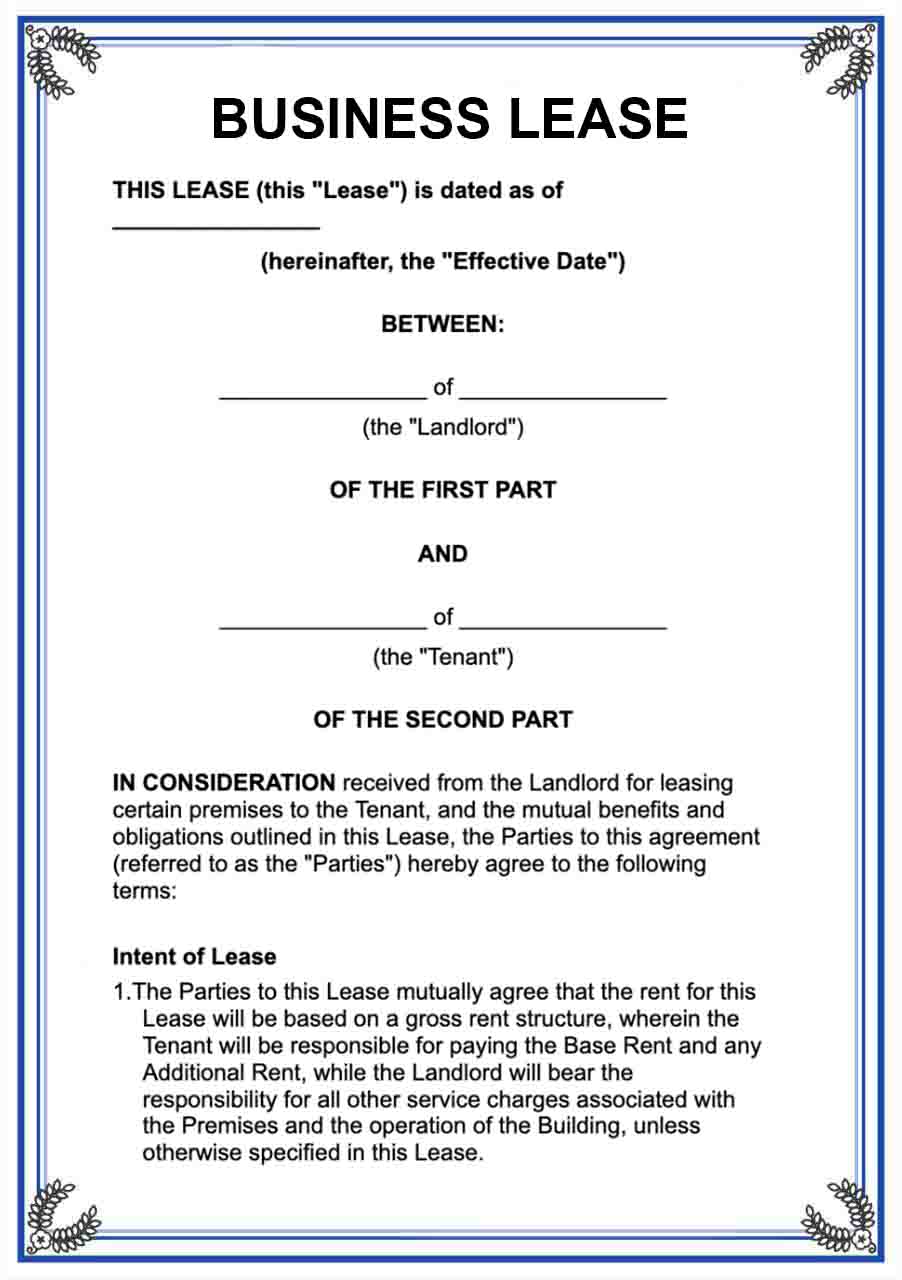
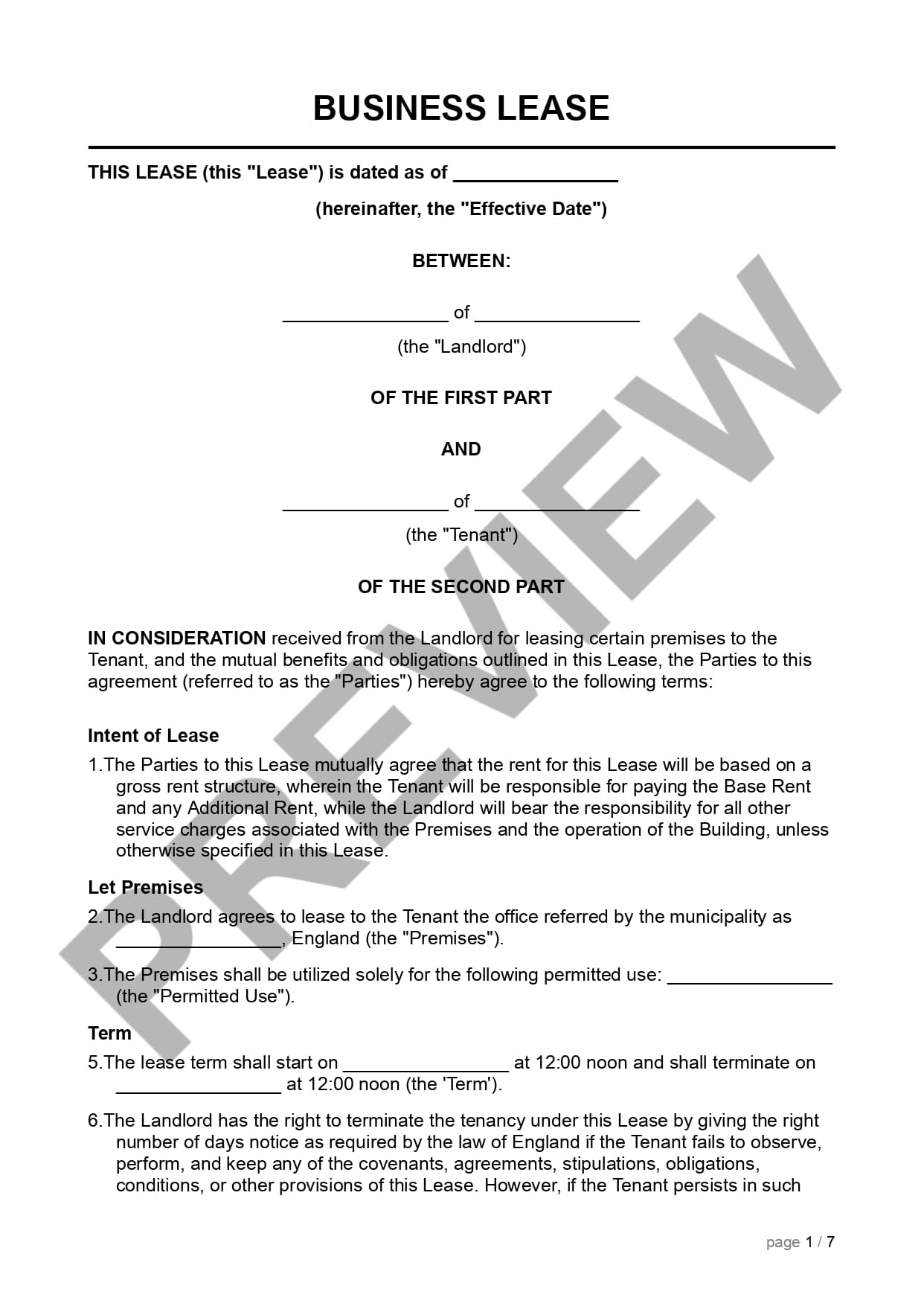
Commercial Lease Agreement Template UK
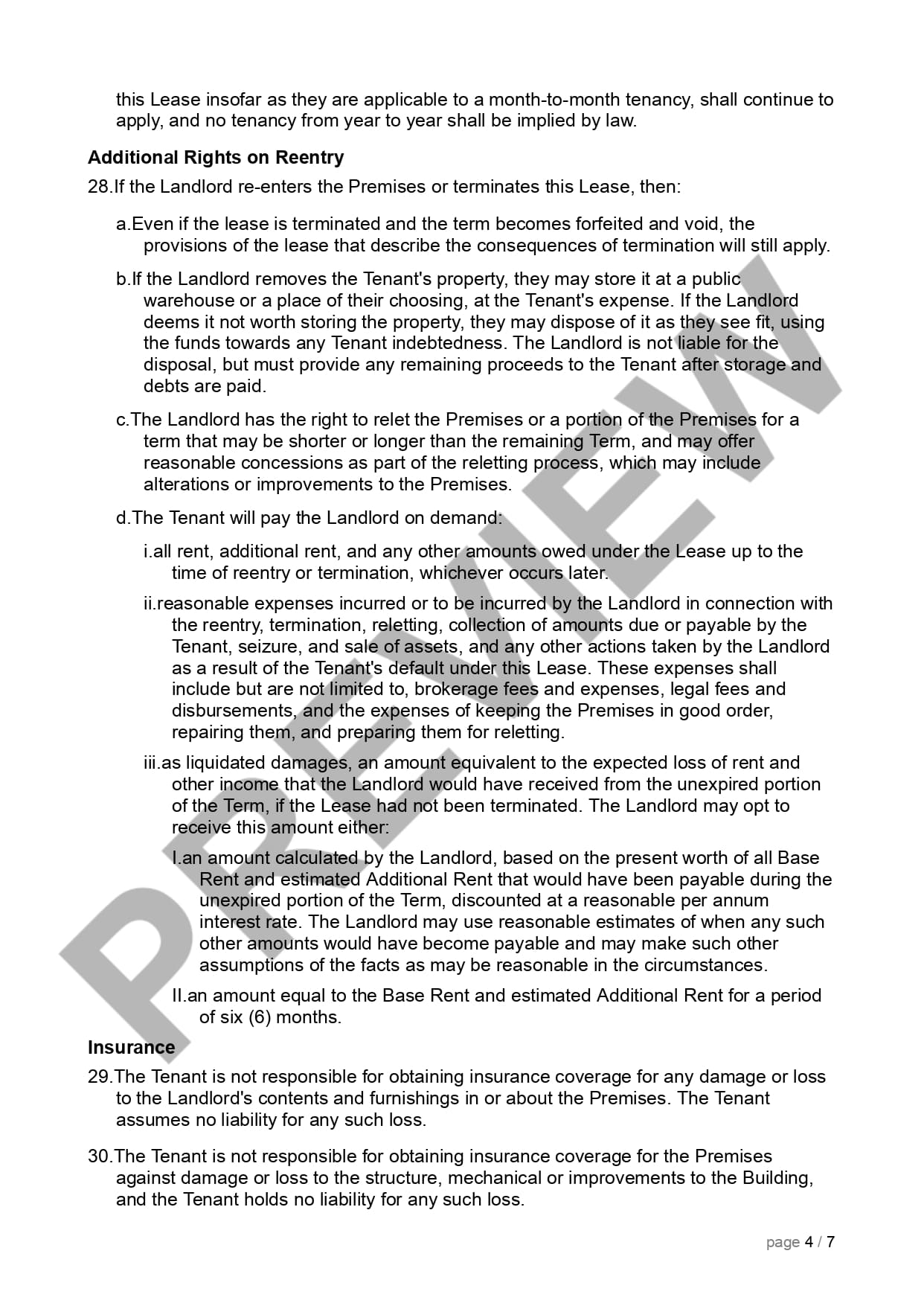
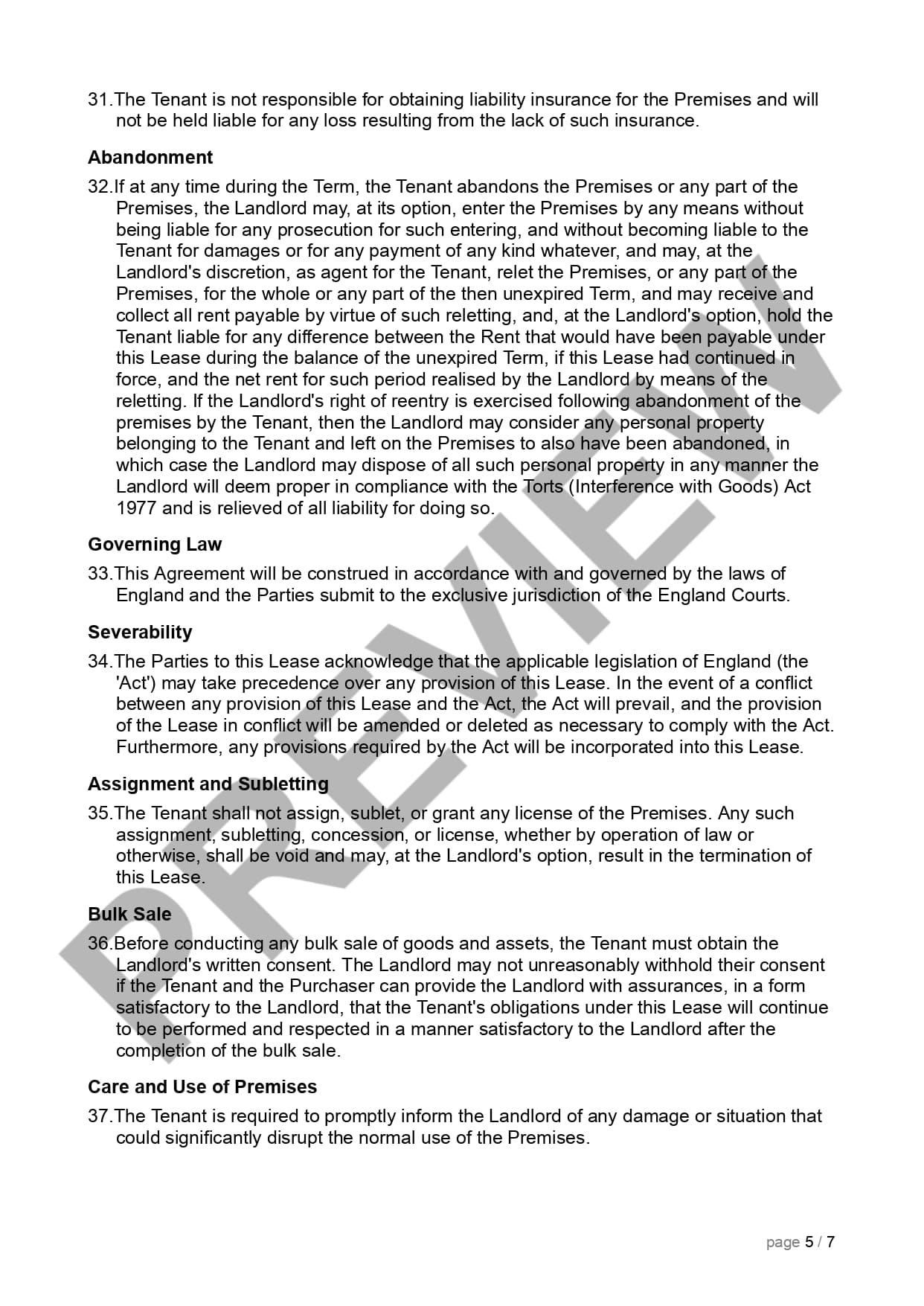
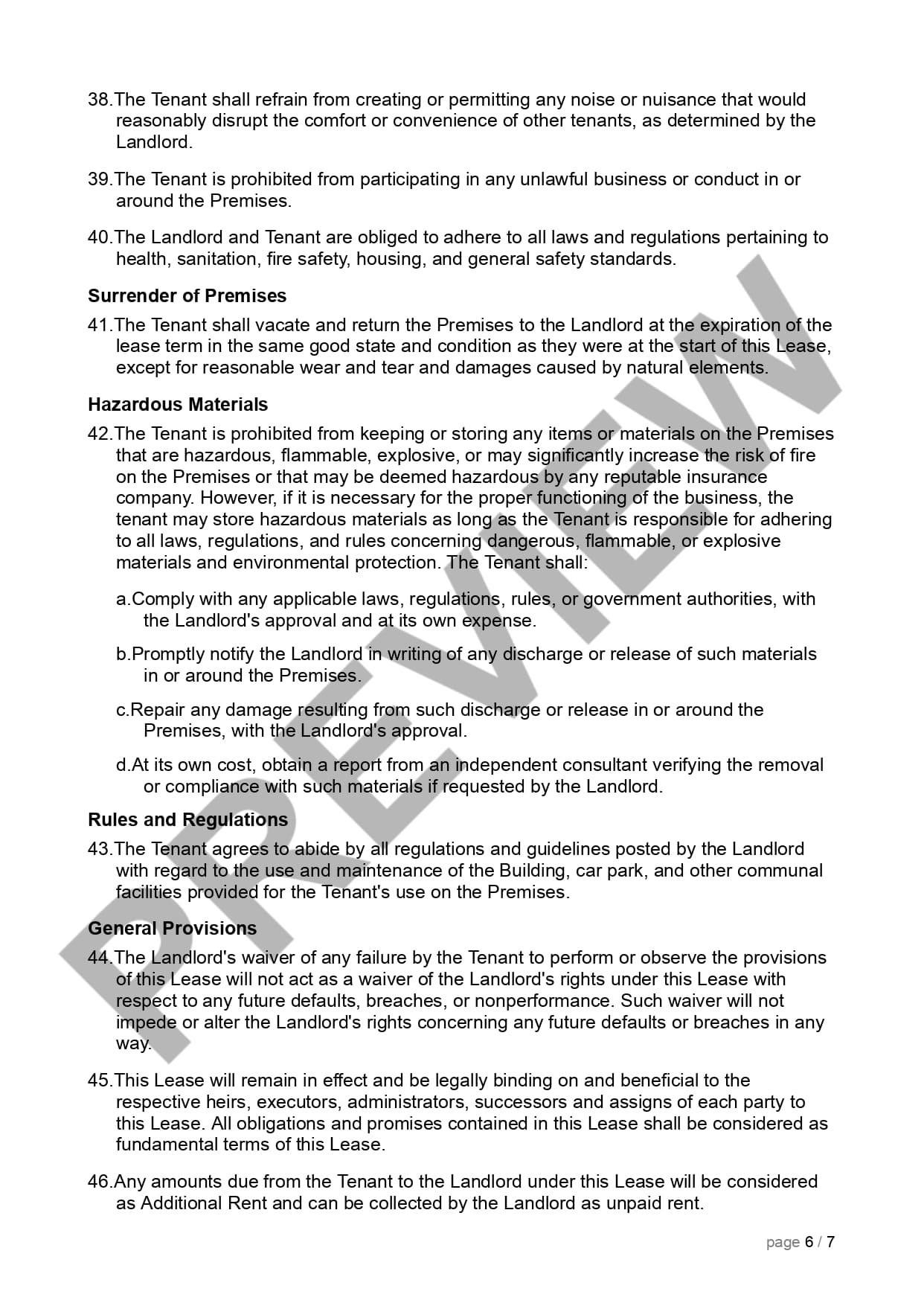
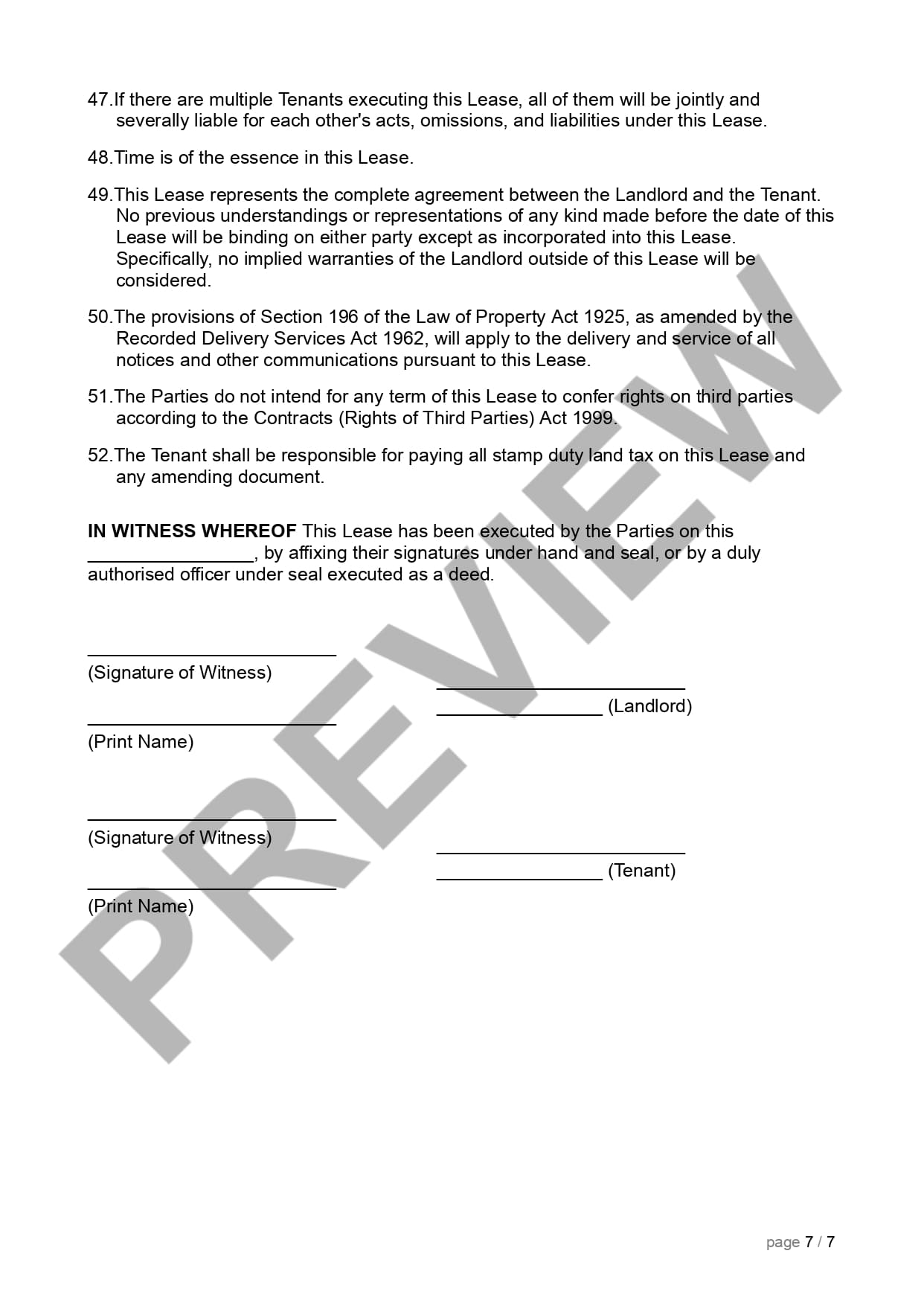
A Commercial Lease Agreement is a legally binding contract between a landlord and a business tenant. It sets out the terms and conditions of the letting, including rent, lease duration, permitted use, and the rights and obligations of both parties. Select the type of property being leased to get started.
What kind of commercial property is being leased?
Last Update 17 March 2026
What is a Commercial Lease Agreement?
A Commercial Lease Agreement (also known as a business lease or commercial tenancy agreement) is a legally binding contract between a landlord and a business tenant granting the tenant the right to use and occupy a commercial property in exchange for rent. Unlike residential tenancies, commercial leases are largely governed by the principle of freedom of contract, meaning the parties are free to agree on most of the terms. However, certain statutory protections — particularly those under the Landlord and Tenant Act 1954 — may apply and should be carefully considered when drafting any commercial lease in England and Wales.
Why do I need a Commercial Lease Agreement?
Legal certainty: A written lease sets out the agreed terms clearly, reducing the risk of disputes between landlord and tenant over rent, maintenance responsibilities, permitted use, and other key matters.
Protection for both parties: A well-drafted lease protects the landlord's investment and the tenant's right to quiet enjoyment of the premises. Without a written agreement, both parties are exposed to significant legal and financial risk.
Rent and payment terms: The lease records the agreed rent, payment frequency, and any rent review provisions, giving both parties certainty about their financial obligations throughout the tenancy.
Landlord and Tenant Act 1954: Commercial tenants in England and Wales may have statutory rights to renew their lease at the end of the term under the 1954 Act. A lease can include a contracting-out agreement to exclude this right if both parties agree, but this must be done correctly to be valid.
Frequently Asked Questions
Under a gross lease, the tenant pays a fixed rent and the landlord covers most or all additional costs such as insurance, maintenance, and service charges. Under a net lease, the tenant pays a base rent plus some or all additional costs. An FRI (Full Repairing and Insuring) lease places full responsibility for repairs, maintenance, and insurance on the tenant, meaning the landlord receives a completely clear rent with no deductions. FRI leases are very common in longer commercial lettings in England and Wales.
Under the Landlord and Tenant Act 1954, business tenants in England and Wales generally have a statutory right to renew their lease when it expires. "Contracting out" means both parties agree to exclude this right before the lease is granted. To validly contract out, the landlord must serve a formal warning notice on the tenant and the tenant must make a statutory declaration (or simple declaration) confirming they understand they are giving up the right to renew. This process must be completed before the lease is entered into.
A break clause is a provision in a fixed-term lease that allows one or both parties to bring the lease to an end before the contractual expiry date, provided the required notice is given. Break clauses can be exercisable by the landlord, the tenant, or both. They must be exercised strictly in accordance with the lease terms — failure to give correct notice or comply with any conditions attached to the break right can render it invalid.
In England and Wales, a commercial lease for a term of more than seven years must be registered at HM Land Registry. Leases of seven years or less do not need to be registered but may still take effect as overriding interests. If a lease that requires registration is not registered, the legal estate will not pass and the lease will only take effect in equity. It is strongly recommended to seek legal advice if your lease is for seven years or more.
Assignment involves the tenant transferring their entire interest in the lease to a new tenant (the assignee), who steps into the original tenant's shoes. Subletting involves the tenant granting a new, shorter lease to a subtenant while remaining bound by the terms of the original lease. Most commercial leases require the landlord's consent for both assignment and subletting, and such consent must not be unreasonably withheld unless the lease expressly permits the landlord to do so.