Employment Contract Template UK
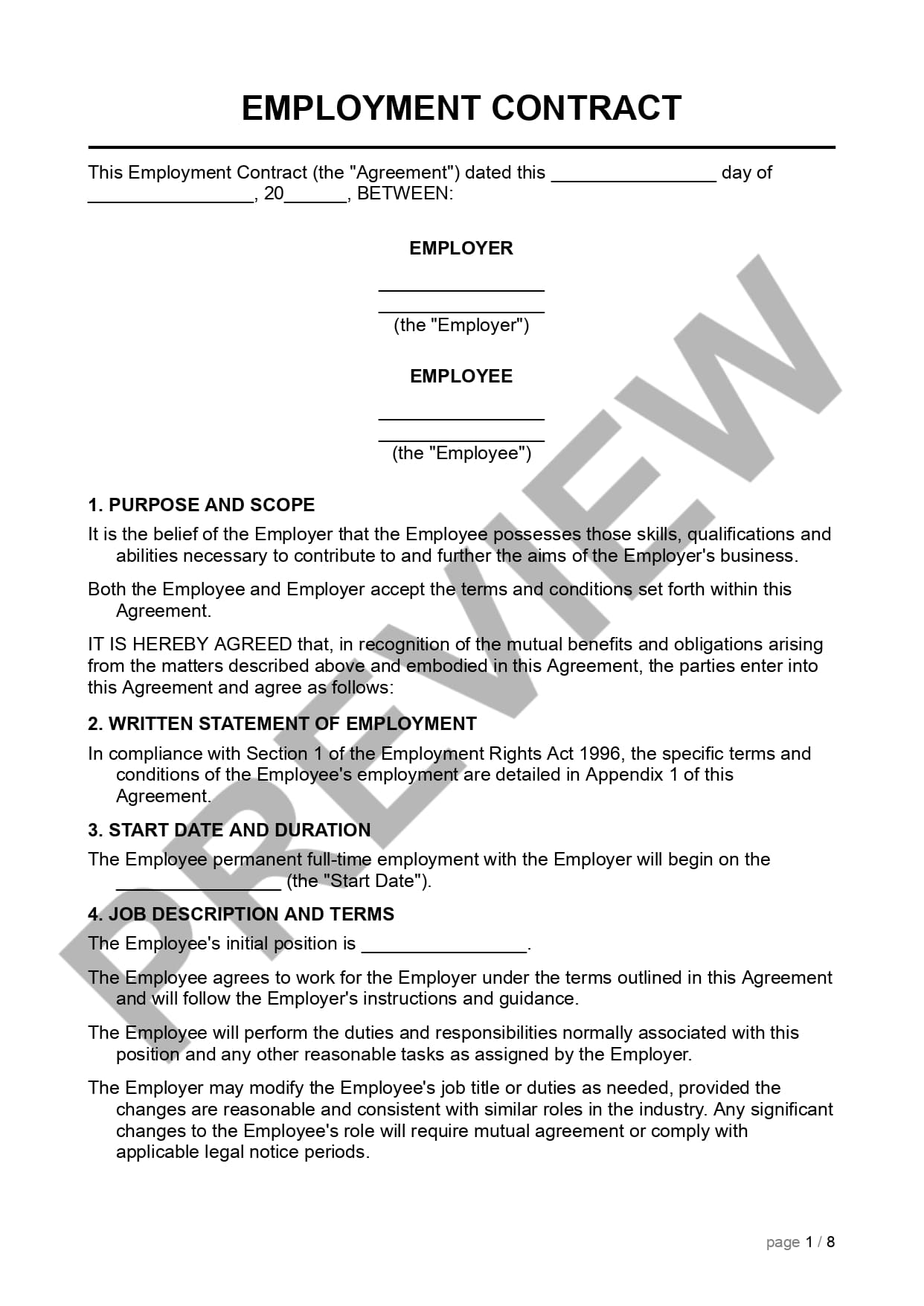
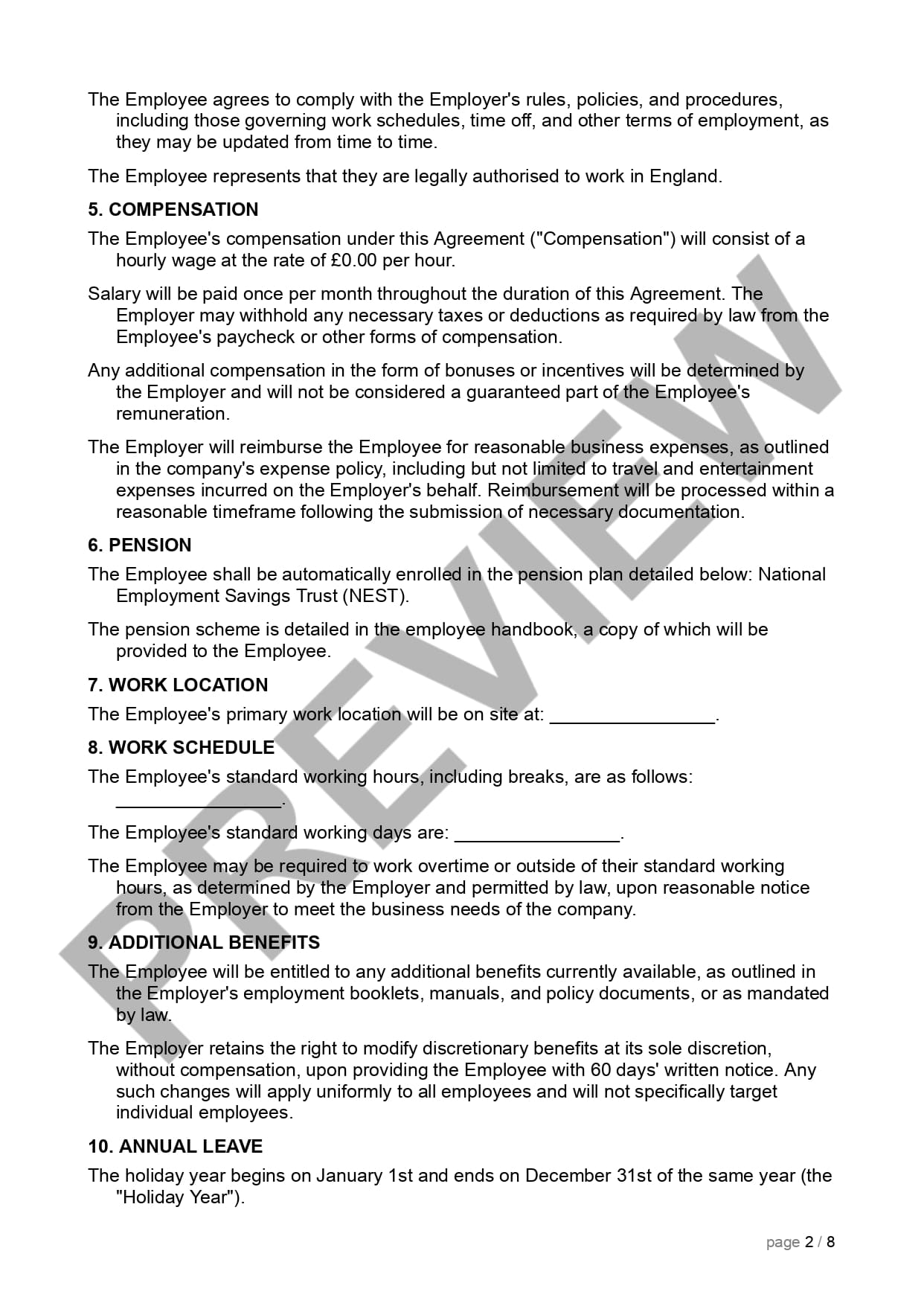
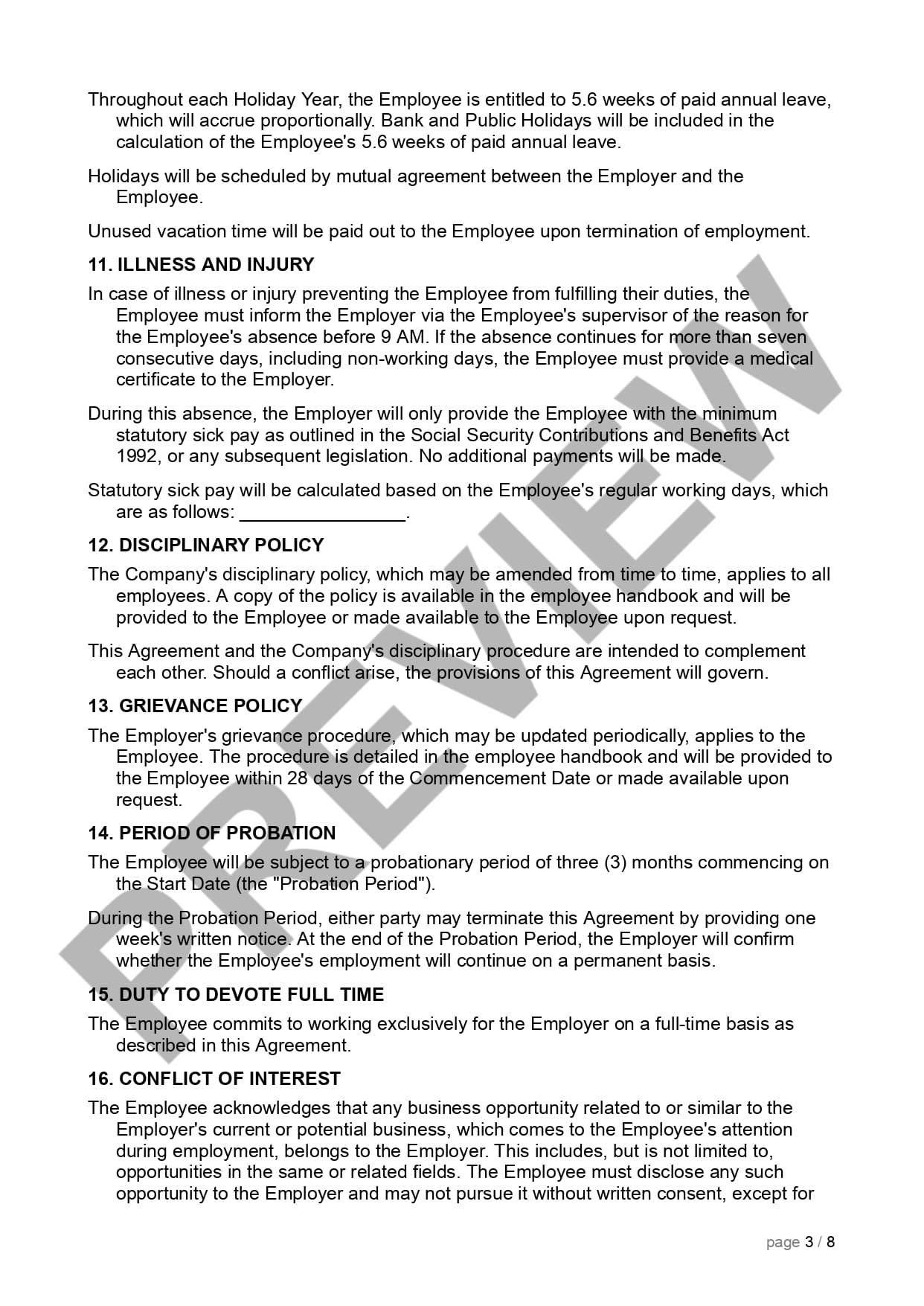
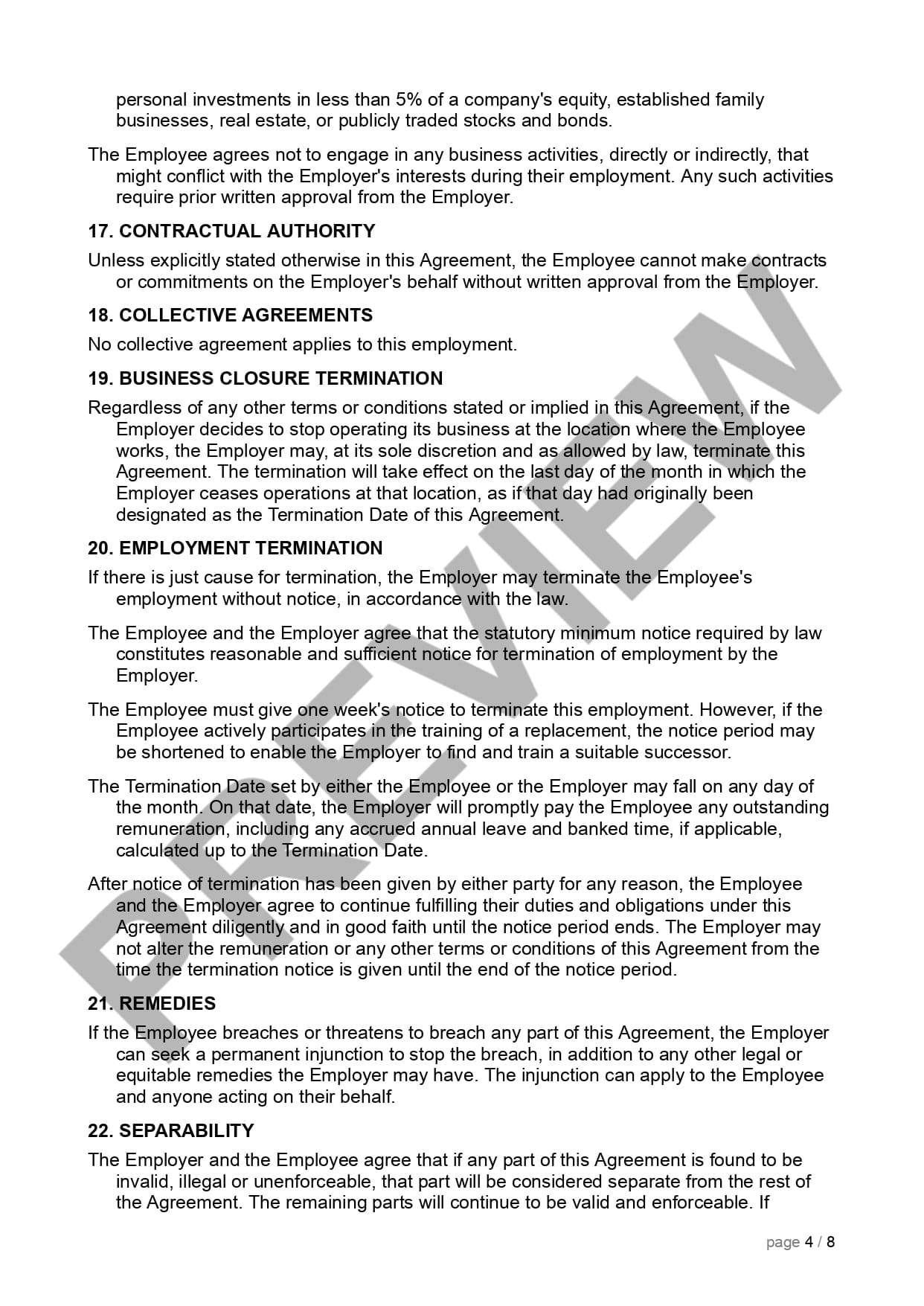
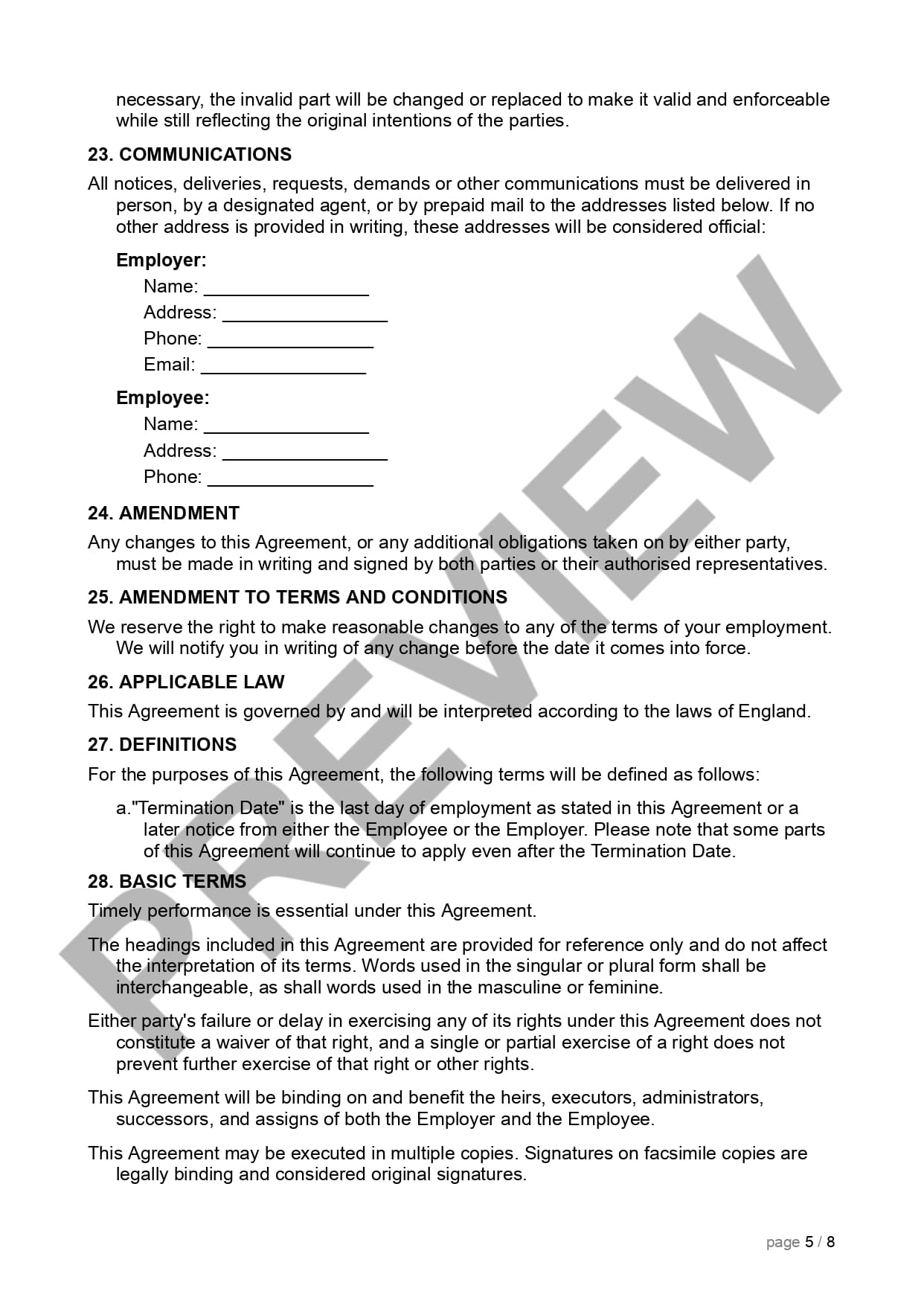
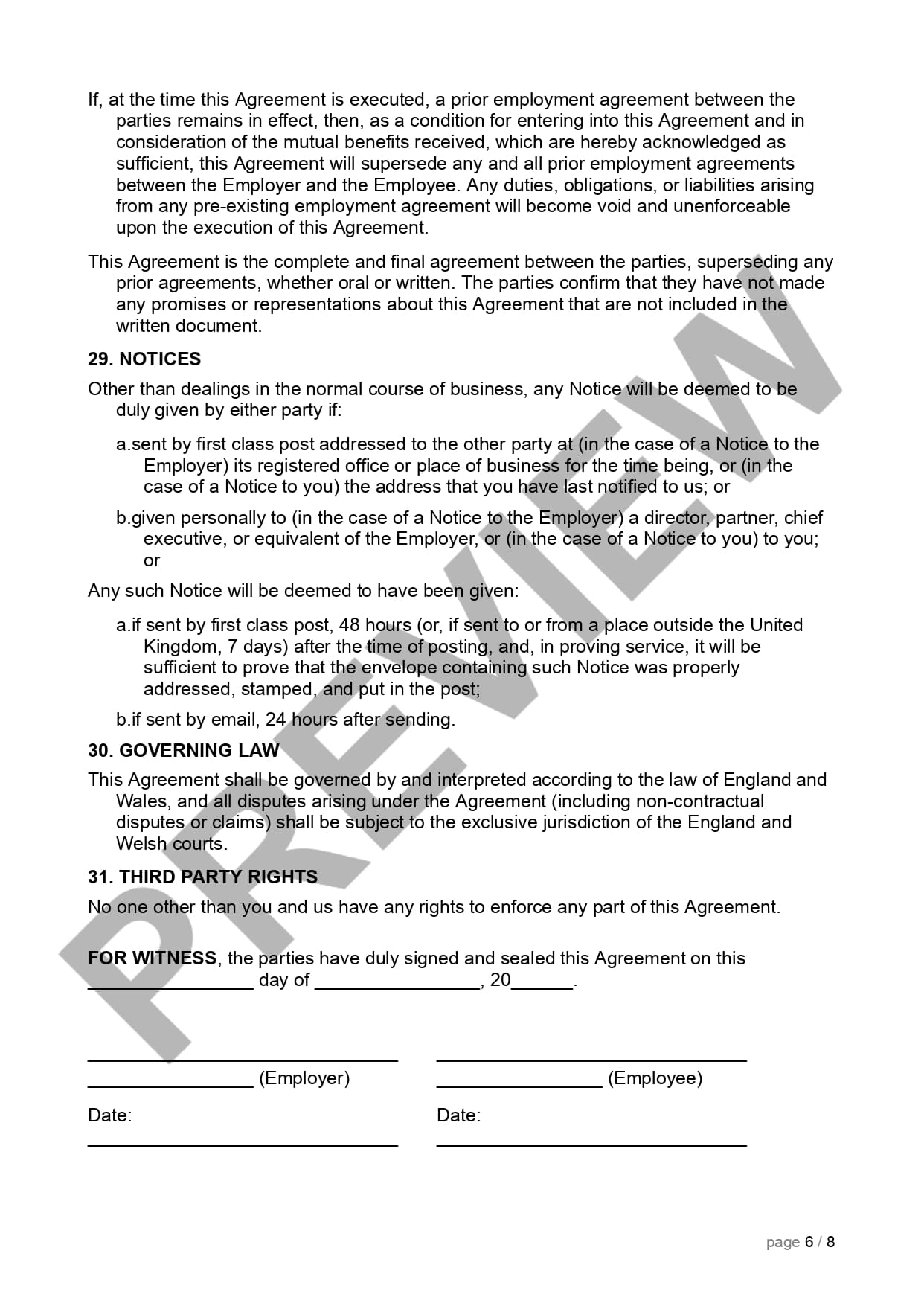
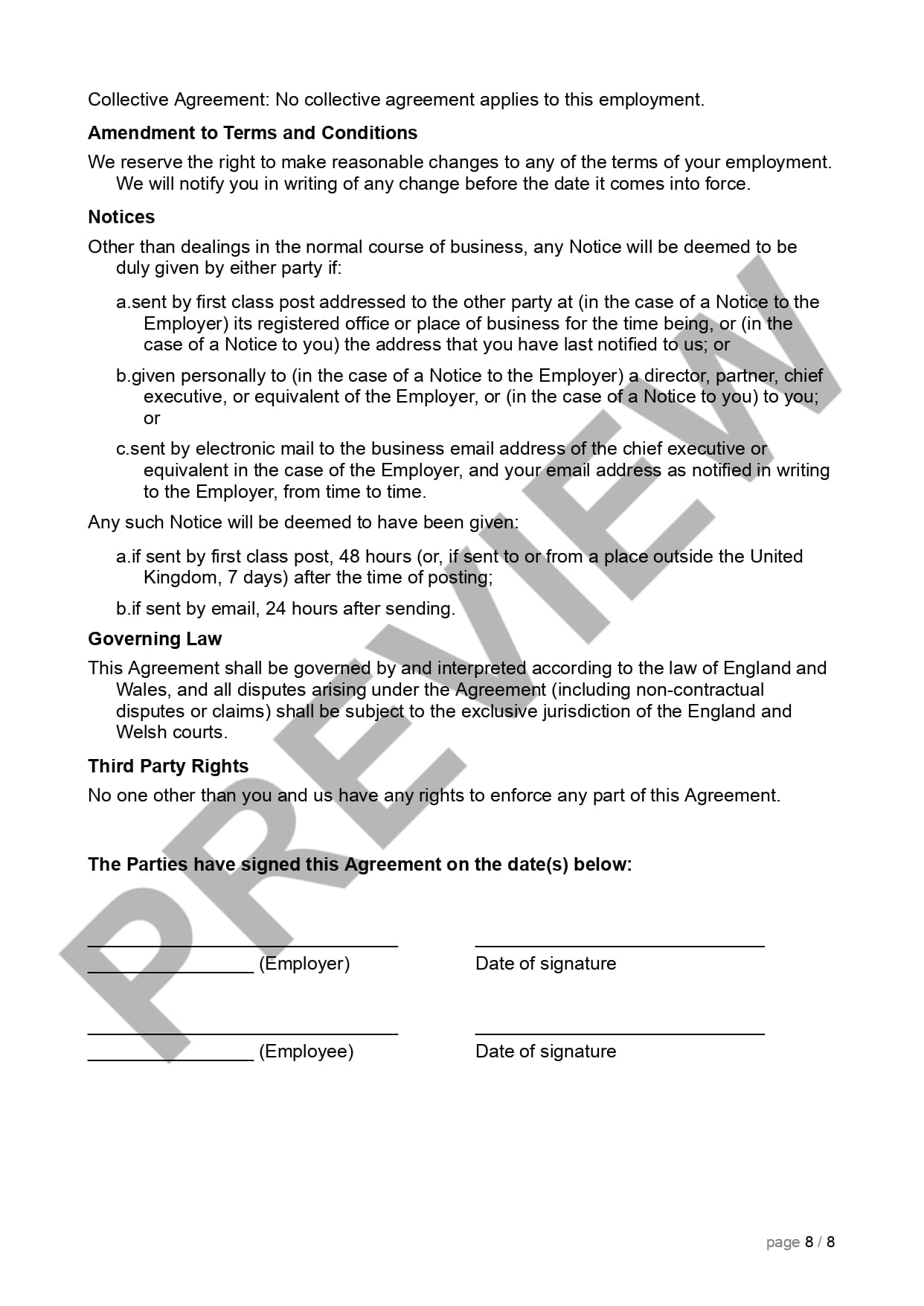
An Employment Contract is a legally binding agreement between an employer and an employee. It sets out the terms and conditions of employment, including job duties, working hours, pay, holiday entitlement, and termination procedures. Select the type of schedule to get started.
Last Update 17 March 2026
What is an Employment Contract?
An Employment Contract (also known as a contract of employment) is a legally binding agreement between an employer and an employee that sets out the terms and conditions of the employment relationship. In the UK, employers are required by law to provide employees with a written statement of employment particulars on or before their first day of work. A well-drafted employment contract protects both the employer and the employee by clearly setting out each party's rights and obligations.
Why do I need an Employment Contract?
Legal requirement: Under the Employment Rights Act 1996, employers must provide employees with a written statement of employment particulars. Failure to do so can result in an employment tribunal claim.
Clarity and certainty: A written contract prevents disputes by clearly setting out agreed terms — such as salary, working hours, holiday entitlement, and notice periods — so both parties understand their obligations from the outset.
Protecting business interests: A contract can include confidentiality clauses, non-solicitation clauses, and non-compete restrictions to protect the employer's trade secrets, client relationships, and competitive position.
Managing performance and conduct: Incorporating disciplinary and grievance procedures into the contract (or referencing them in a staff handbook) ensures employees know what standards are expected and how concerns will be handled.
Frequently Asked Questions
Yes. Under the Employment Rights Act 1996 (as amended by the Employment Act 2002 and the Good Work Plan reforms), employers must give all employees and workers a written statement of employment particulars on or before the first day of employment. While a contract of employment can be formed verbally, providing a written contract protects both parties and satisfies the statutory requirement.
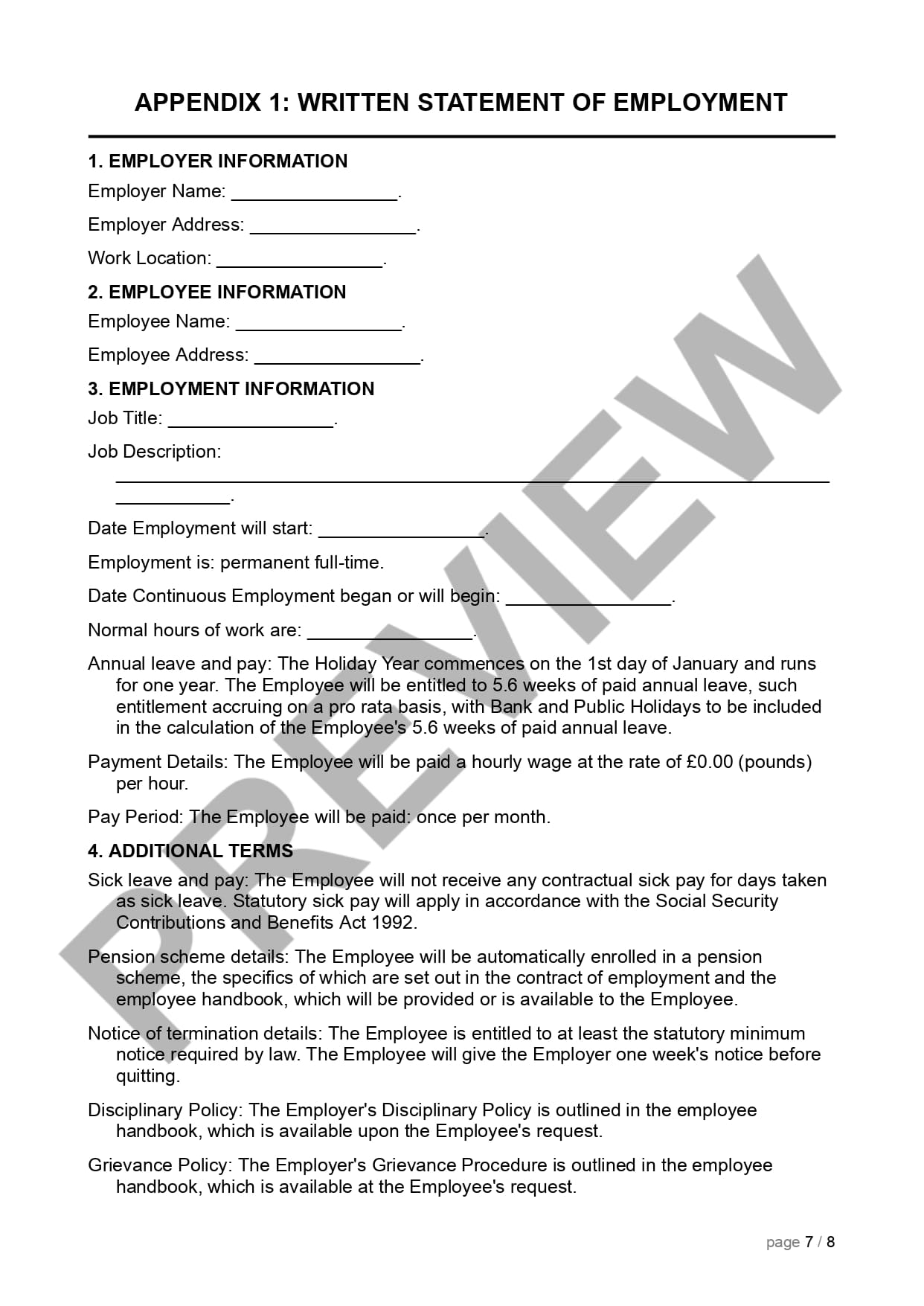
The statutory written statement must include: the employer's and employee's names, the start date, pay and pay frequency, working hours, holiday entitlement, job title and description, place of work, notice periods, and information about sick pay, pensions, and disciplinary and grievance procedures. Some of this information can be provided by reference to a separate document such as a staff handbook.
An employer cannot unilaterally change the terms of an employment contract without the employee's consent. Any changes must be agreed between both parties and properly documented. If an employer imposes a change without agreement, the employee may have grounds for a claim of breach of contract or constructive dismissal. Proper consultation and written confirmation of any agreed changes is essential.
A probationary period is an initial period of employment during which the employer assesses the employee's suitability for the role. During probation, reduced notice periods often apply. If performance is unsatisfactory, the employer can terminate the employment more easily during probation, provided they follow a fair process. Probationary periods typically last between one and six months.
Restrictive covenants — such as confidentiality clauses, non-solicitation clauses, and non-compete clauses — are enforceable in England and Wales provided they are reasonable in scope and duration and go no further than necessary to protect a legitimate business interest. Courts will not enforce restrictions that are overly wide. Each clause should be carefully drafted to reflect the specific circumstances of the employment.