Lodger Agreement Template UK
Create a rent-a-room contract, known as a Lodger Agreement, to formalise your living arrangement with another party. Set the terms, such as rent, house rules, and more with our template. Select the property type to get started.
Last Updated February 2026
What is a Lodger Agreement?
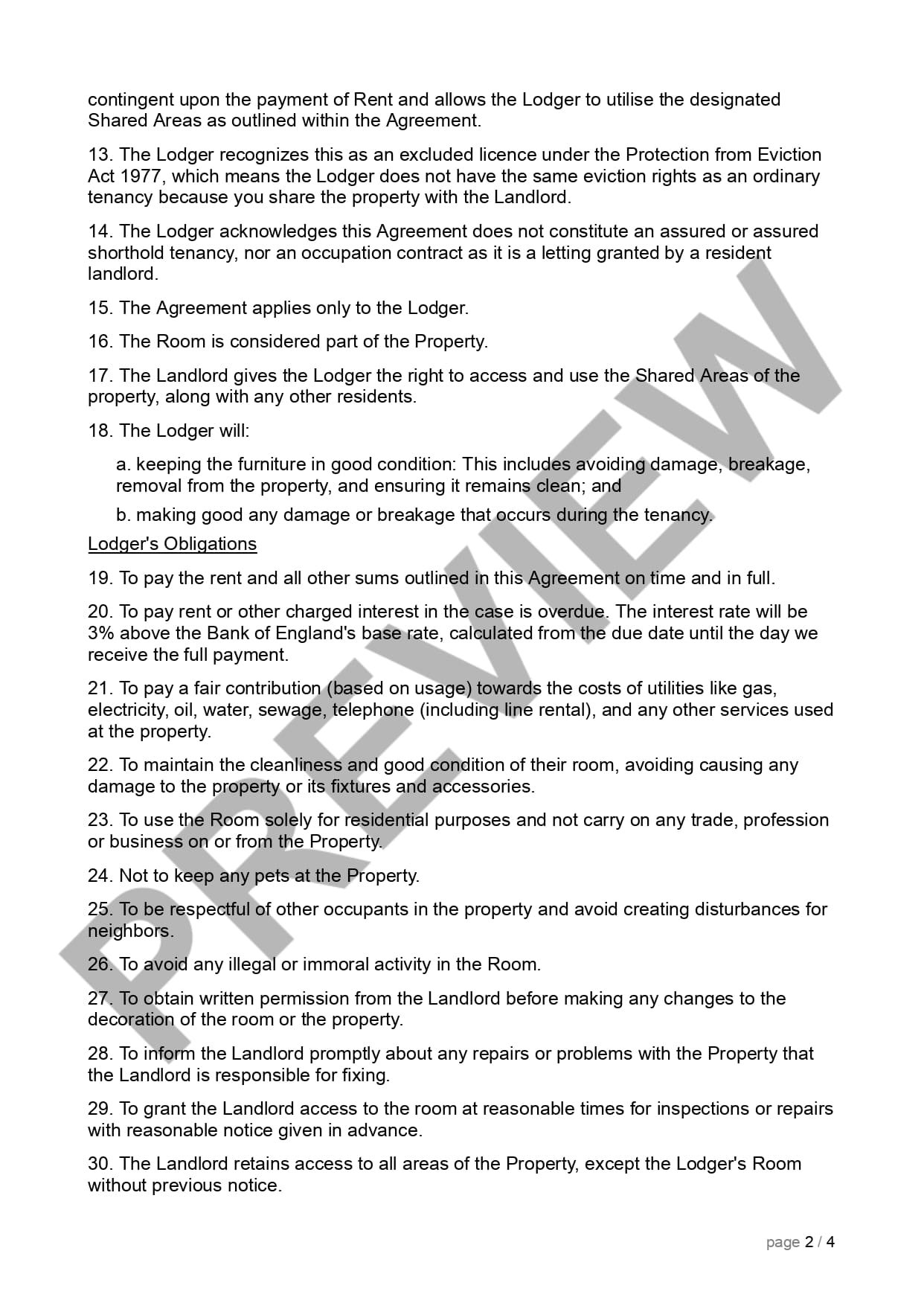
A Lodger Agreement (also known as a rent-a-room contract) is a legal document that sets out the terms of a living arrangement between a homeowner (the landlord) and a lodger. Unlike a standard tenancy agreement, a lodger lives in the same property as the landlord and shares common areas such as the kitchen and bathroom. The agreement covers rent, duration, shared areas, house rules, and services provided.
When do I need a Lodger Agreement?
Taking in a lodger: Any homeowner who rents out a room in their own home to a lodger should have a written lodger agreement in place before the lodger moves in.
Formalising an informal arrangement: If you currently have a lodger with no written agreement, putting one in place protects both parties and clarifies expectations.
Rent a Room Scheme: If you are using the government's Rent a Room Scheme to earn up to £7,500 per year tax-free, a lodger agreement helps demonstrate the nature of the arrangement.
Shared services: Where the landlord provides meals, cleaning, or other services, the agreement sets out exactly what is included in the rent.
Frequently Asked Questions
A tenant rents a self-contained property and has exclusive occupation of it. A lodger rents a room in a property where the landlord also lives and does not have exclusive possession. Lodgers have fewer legal protections than tenants — for example, a landlord can ask a lodger to leave with reasonable notice without going through the full eviction process required for tenants.
There is no statutory minimum notice period for lodgers in the UK if there is no written agreement. However, it is best practice to include a reasonable notice period in the lodger agreement — typically 28 days. If the lodger has an excluded tenancy or licence, the landlord can regain possession more easily than with an assured shorthold tenancy.
Unlike a tenant's deposit, a lodger's deposit does not legally need to be protected in a government-approved scheme. However, it is good practice to keep the deposit separate and return it promptly at the end of the arrangement if there is no damage or outstanding rent. The amount is agreed between the landlord and lodger.
The UK government's Rent a Room Scheme allows homeowners to earn up to £7,500 per year tax-free from letting furnished rooms in their home. The scheme applies automatically if you rent out a furnished room in your home and your income from lodgers does not exceed the threshold. You can opt out of the scheme if your expenses exceed your income.
Yes, you can have more than one lodger as long as you live in the property yourself. However, if you have multiple lodgers and you are not living in the property, different rules may apply and the arrangement may be classified as an HMO (House in Multiple Occupation), which is subject to licensing requirements. Always check your local council's requirements.