Last Will and Testament Template UK
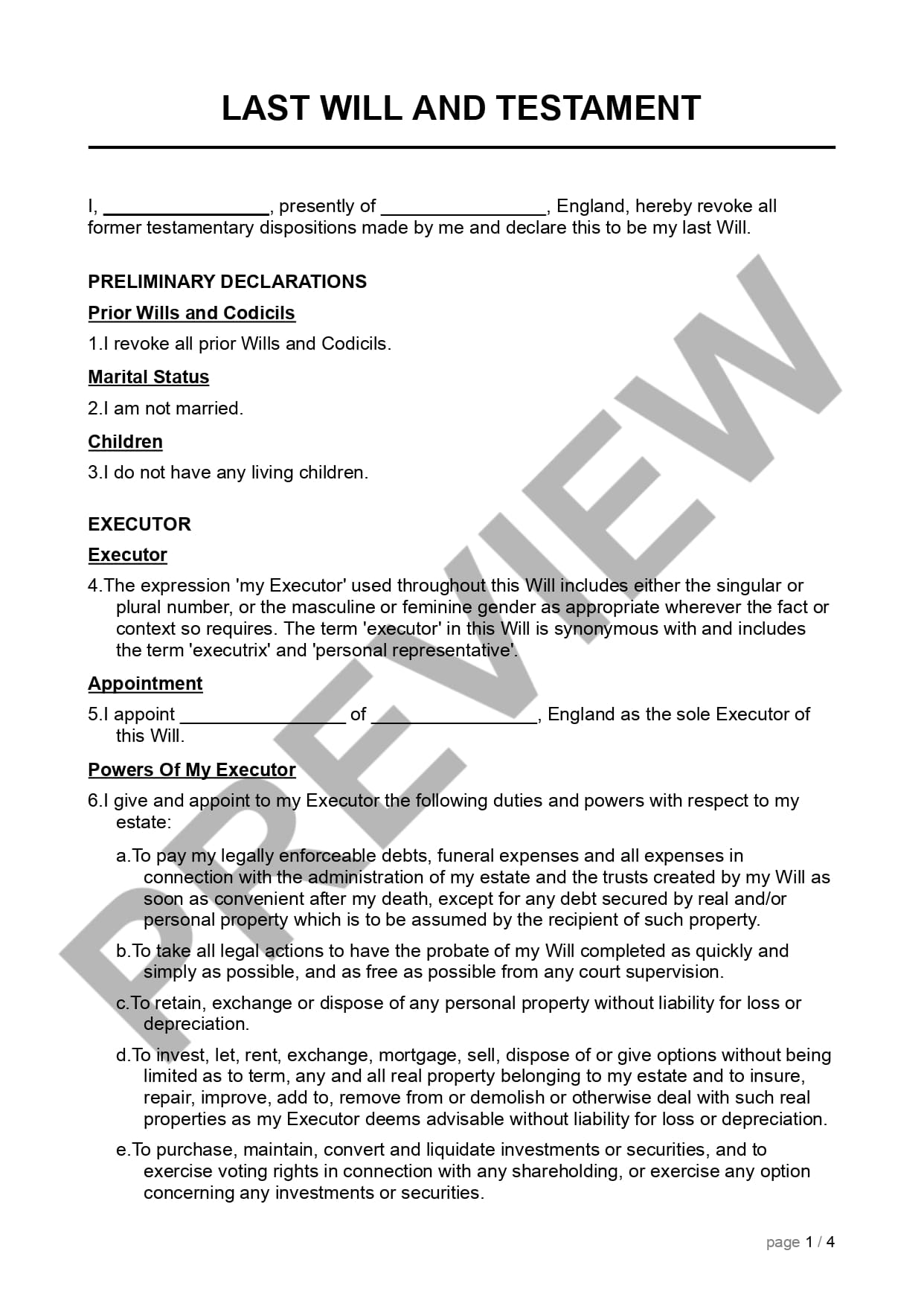
A Last Will and Testament is a legal document that sets out your wishes regarding the distribution of your estate and the care of any dependants after your death. It names your executor, beneficiaries, and any specific gifts you wish to leave. Select your marital status to get started.
What is your marital status?
The term "Single" encompasses never married, divorced, and widowed.
Last Update 17 March 2026
What is a Last Will and Testament?
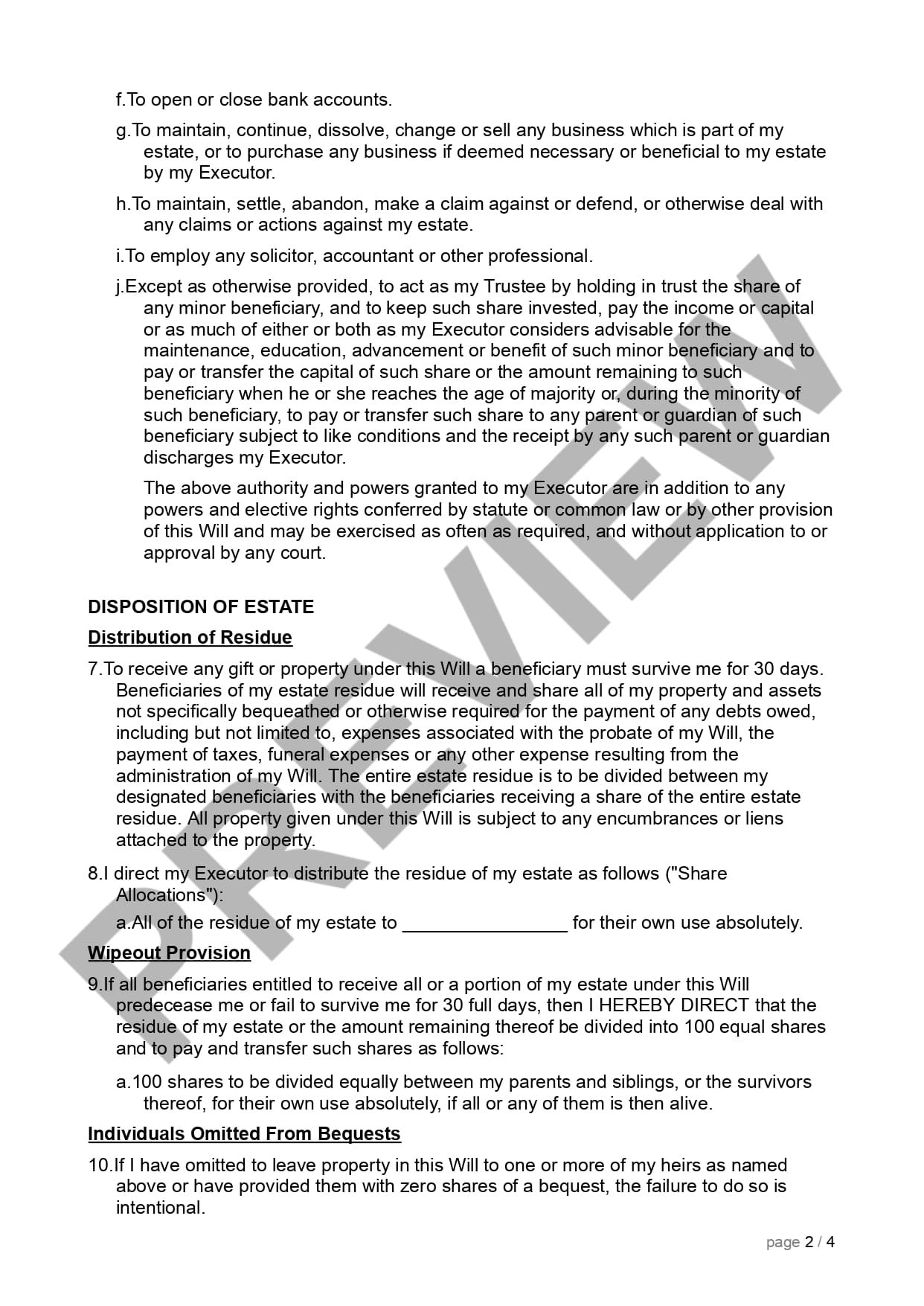
A Last Will and Testament (commonly known simply as a Will) is a legal document in which a person sets out their wishes for the distribution of their estate and the care of their dependants after their death. It names the executor who will administer the estate, the beneficiaries who will receive gifts or assets, and any specific instructions the testator wishes to leave. A valid Will must be signed and witnessed in accordance with the Wills Act 1837.
Why should I make a Will?
Control over your estate: Without a Will, the intestacy rules determine who inherits your estate. A Will ensures your assets go to the people you choose, rather than being distributed according to a fixed legal formula.
Protecting your family: A Will allows you to appoint guardians for minor children, make provision for dependants, and ensure your loved ones are cared for in the way you intend.
Naming an executor: Your executor is the person responsible for carrying out the instructions in your Will. Without a Will, the court appoints an administrator, who may not be the person you would have chosen.
Reducing disputes: A clear, well-drafted Will reduces the risk of disputes between family members and makes the probate process quicker and less stressful for those left behind.
Frequently Asked Questions
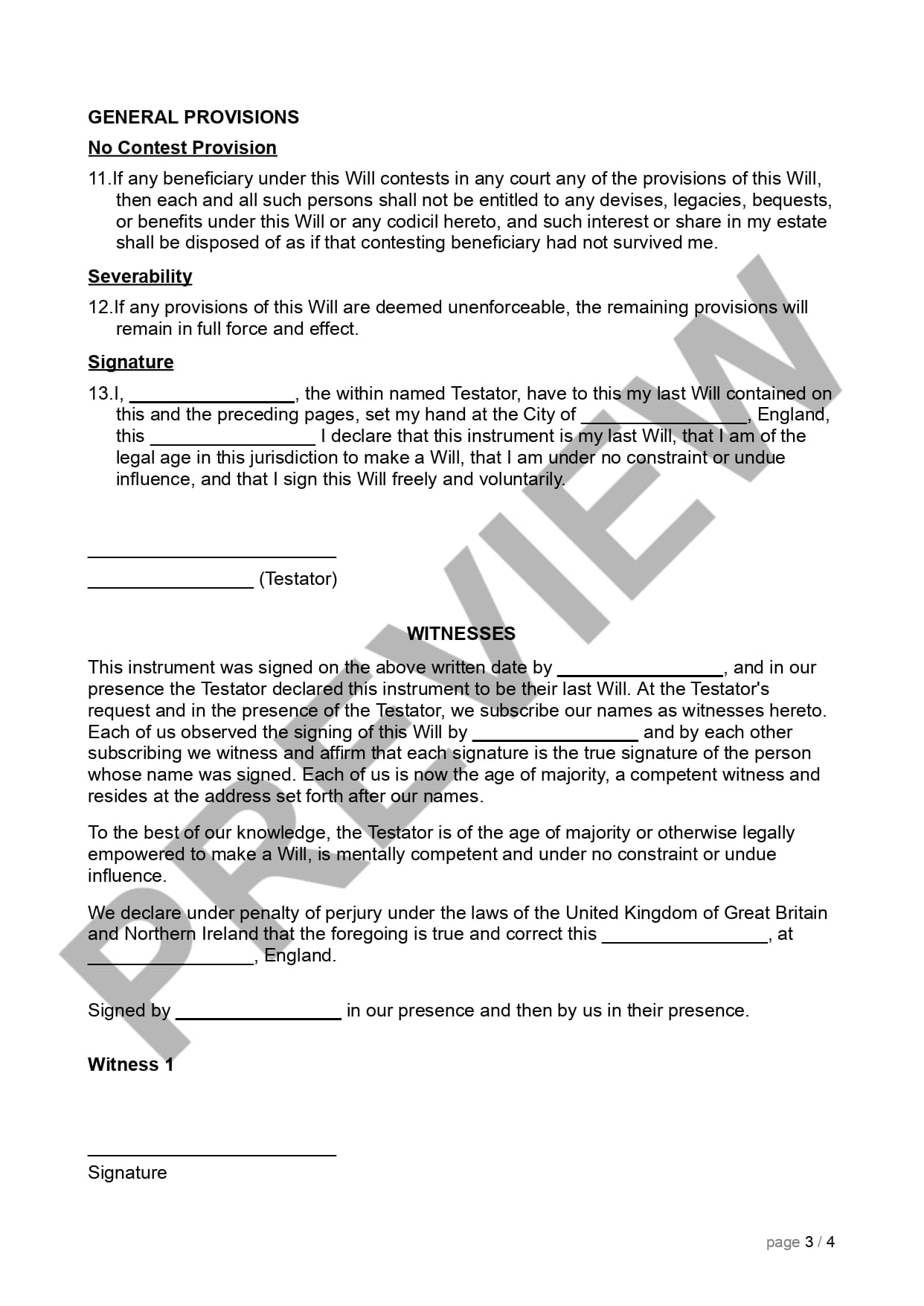
To be valid in England and Wales, a Will must be in writing, signed by the testator (or by someone else in their presence and at their direction), and witnessed by two independent witnesses who are both present at the same time and who each sign the Will in the testator's presence. Witnesses and their spouses should not be beneficiaries under the Will.
If you die without a valid Will (known as dying intestate), your estate is distributed according to the intestacy rules set out in the Administration of Estates Act 1925. These rules follow a strict order of priority and may not reflect your wishes. For example, an unmarried partner has no automatic right to inherit under the intestacy rules, regardless of how long you have been together.
Yes. In England and Wales, marriage automatically revokes any existing Will. This means that if you made a Will before getting married and then marry, your Will is no longer valid. You must make a new Will after marriage to ensure your wishes are carried out. The same applies to forming a civil partnership.
An executor can be any adult of sound mind. Common choices include a spouse, close family member, or a trusted friend. An executor can also be a beneficiary under the Will. It is advisable to name at least two executors in case one is unable or unwilling to act. You can also appoint a professional executor such as a solicitor.
Yes. You can change your Will at any time while you have the mental capacity to do so. Minor changes can be made by adding a codicil — a separate document that amends the Will — which must be signed and witnessed in the same way as the original Will. For significant changes, it is usually better to make an entirely new Will and revoke the old one.