
A UK tenancy agreement template is the starting point for any residential let; it sets out terms and conditions between a landlord and tenant in one clear document. In 2026, getting this document right matters more than ever because the rules have fundamentally changed.
This guide covers the shift to assured periodic tenancies under the Renters’ Rights Act 2025 (in force from 1 May 2026), what that means for your agreement, and how landlords and tenants across England can stay compliant.
Table of Contents
- What is a UK Tenancy Agreement Template?
- Assured Periodic Tenancy Agreement: The New Default in England
- What Happened to Assured Shorthold Tenancy Agreements and Fixed Terms
- How the Documentify UK Tenancy Agreement Template Works
- Step‑by‑Step: Creating Your Assured Periodic Tenancy Agreement Template
- Using the Template for Existing Tenancies and Converting ASTs
- Landlord’s Obligations and Tenant Rights Under the New Law
- Special Cases: Lodger Agreements, HMOs, and Lodging in Your Own Home
- Rent, Deposits, and Rent Increases in Assured Periodic Tenancies
- Pets, Adaptations, and Other Modern Clauses
- Example Table: Main Parts of a UK Assured Periodic Tenancy Agreement
- Common Mistakes When Drafting a UK Tenancy Agreement Template
- Summary: Choosing and Using a UK Tenancy Agreement Template in 2026
- Key Takeaways
- FAQ
- Is the Documentify UK tenancy agreement template genuinely free?
- Can I still use my old assured shorthold tenancy agreement after 1 May 2026?
- Do I need a tenancy agreement template if I already have an existing tenancy?
- When should I use a lodger agreement instead of an assured periodic tenancy agreement?
- Does the template cover legal obligations like repairs, safety checks, and written information?
What is a UK Tenancy Agreement Template?

A tenancy agreement is a legally binding contract between a landlord and tenant. It sets out who pays what, who handles repairs, how rent can change, and what happens when either party wants to end the arrangement. A written tenancy agreement helps prevent misunderstandings between landlords and tenants by putting everything on paper.
A tenancy agreement template is simply a pre-drafted version of that contract. It contains placeholder fields – property address, tenant details, rent payable, deposit amount, tenancy start date, and special clauses for things like pets or smoking – which you fill in to create a bespoke document.
Think of it as a sample tenancy agreement that you customise rather than draft it from scratch.
This guide focuses on residential tenancy agreements, not a commercial lease or commercial property letting. UK tenancy law varies across regions such as England, Wales, Scotland, and Northern Ireland. Under UK law, tenancies can be fixed-term or periodic by default, but since 1 May 2026 the landscape in England has changed dramatically.
The Welsh Renting Homes Act 2016 replaced traditional tenancy agreements with occupation contracts, and Scotland uses private residential tenancy structures of its own.
Even though the law recognises a verbal agreement, a written agreement is strongly recommended. It serves as vital evidence if a dispute reaches a tribunal or court. The tenancy agreement template covered in this hub is designed around the post-2026 assured periodic tenancy model in England, with notes for devolved nations where relevant.
Assured Periodic Tenancy Agreement: The New Default in England
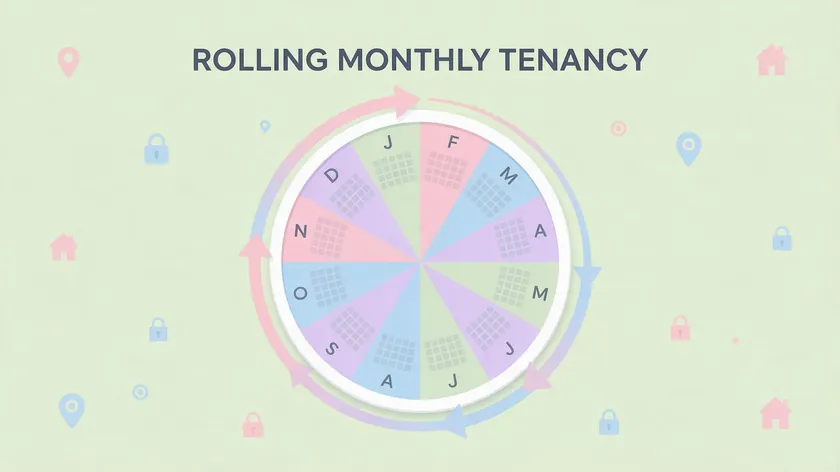
The assured periodic tenancy is now the standard private rental contract in England. From 1 May 2026, all new tenancies in the private rented sector must be periodic, with no exceptions for new lets.
An assured periodic tenancy agreement has no fixed end date. It rolls from period to period (usually monthly), continuing automatically until either the landlord properly ends it or the tenant wishes to leave. Periodic tenancies automatically renew until terminated by either party, which means the tenancy starts and simply keeps going.
Fixed-term tenancies, by contrast, end on a specific date, but there are no longer any fixed terms for new private lets in England.
The Renters’ Rights Act 2025 abolished fixed-term tenancies in England on 1 May 2026. The Act makes the assured periodic tenancy the most common type in England post-2026, replacing the old assured shorthold tenancy model entirely. All new tenancies are now periodic from 1 May 2026.
Your tenancy agreement form should reflect several core features of the new model:
- A rolling term with no fixed end date
- Tenants can end a tenancy with two months’ written notice
- Landlords must use updated Section 8 grounds under the Housing Act 1988 to recover possession – Section 21 no-fault evictions are gone
- Rent can only be increased once every 12 months with two months’ notice via the Section 13 process
The template language should explicitly title the contract an “Assured Periodic Tenancy Agreement” and cross-reference the Housing Act 1988 as amended by the Renters’ Rights Act 2025. For a template-focused breakdown of every clause a compliant document needs, see our assured periodic tenancy agreement template guide.

What Happened to Assured Shorthold Tenancy Agreements and Fixed Terms
From 1 May 2026, new assured shorthold tenancy agreements and fixed-term tenancies are banned in the English private rented sector. Existing ASTs signed before this date automatically convert into assured periodic tenancies. For a full explanation, see our complete guide: Assured Shorthold Tenancy (AST): Complete UK Guide
How the Documentify UK Tenancy Agreement Template Works

Documentify is an online document generator that lets you build a bespoke UK tenancy agreement, along with other contracts, through a step-by-step questionnaire. The creation process is entirely free: you answer questions, and the tool assembles your agreement template in real time. No card details are needed to fill it out.
To download the finished document as a Word or PDF file, you will need to start a paid plan. Documentify offers a trial that auto-renews unless you cancel, so you only pay when you are ready to export and print the final version.
Here are the key customisation options the questionnaire covers:
| Customisation Option | What You Can Set |
|---|---|
| Rent amount and rental period | Monthly or weekly rent, and how often it’s paid |
| Deposit amount and scheme | Deposit value (within legal caps) and which protection scheme it’s held in |
| Council tax and utilities | Who is responsible for council tax, water, gas, and electricity? |
| Pets | Whether pets are allowed and any related conditions |
| Smoking | Smoking/vaping rules for the property |
| HMO clauses | Shared-house rules for House in Multiple Occupation lets |
| Guarantors | Whether a guarantor is required and their details |
| Break/notice options | Notice periods and how either party can end the tenancy, compliant with APT law |
The resulting template is intended for general use, not one-to-one legal advice. If you have a complex case – such as unusual existing tenancies, mixed-use residential property, or high-value lets – you may still need to consult a solicitor.
Step‑by‑Step: Creating Your Assured Periodic Tenancy Agreement Template

This section walks you through the process of going from a blank tenancy agreement form to a completed document using an online template generator. Clear utility responsibilities should be defined in the agreement, and the steps below ensure nothing important gets missed.
Alongside the agreement itself, landlords should also prepare a property inventory before the tenant moves in.
A comprehensive tenancy agreement must clearly identify the parties and detail the property. Essential information includes names and contact details of both parties. Here is the typical workflow:
- Gather parties’ full names and contact details. Include the landlord’s address and every tenant’s name. Tenancy agreements must include tenant names and signatures.
- Confirm whether it’s a whole-property let or room in a shared house. This determines whether HMO-specific clauses are needed.
- Enter property address and postcode. The property address must specify the exact location being rented – flat number, building name, street, town, and postcode.
- Choose rent amount, rental period (monthly/weekly), and payment day. The rent payable and frequency drive the periodic tenancy’s legal period.
- Set deposit amount (within legal caps) and deposit protection scheme. Deposit details must specify the amount and the Tenancy Deposit Scheme protecting it.
- Add start date and initial rent due date. The tenancy start date must be included in the agreement so that notice periods and rent increase timelines can be calculated.
- Select clauses on pets, smoking, furnishings, permitted occupiers, and subletting. These reflect tenant obligations and house rules.
- Choose if a guarantor is required and add their details. This is common when a tenant has limited credit history.
- Review statutory information wording required by the Renters’ Rights Act 2025. Tenants must be provided written key-term information before the tenancy is agreed. Landlords must provide specific documentation at the beginning of a tenancy.
- Preview the completed template before paying to download. You can read and edit everything online before deciding to export.
Using the Template for Existing Tenancies and Converting ASTs
If you have existing tenancies signed before 1 May 2026, you do not necessarily need a brand-new contract. Most existing ASTs automatically became assured periodic tenancies on that date, without requiring a fresh agreement – unless a possession claim was already ongoing.
However, some landlords choose to “refresh” the paperwork. The template can be adapted when a landlord decides to update names, rent, or clauses while keeping continuity of occupation clear. Be careful not to frame the updated document as a new tenancy, which could trigger fresh deposit protection deadlines unnecessarily.
There is a strict legal obligation to give tenants the government’s Renters’ Rights Act Information Sheet by 31 May 2026 for applicable existing tenancies. If no written agreement existed, landlords must also provide a written statement of key terms. Landlords face penalties up to £7,000 for non-compliance with these information-giving duties.
Common pitfalls when switching paperwork include accidentally creating a new deposit obligation that must be re-protected, inserting non-compliant fixed-term language or a break clause tied to a fixed end date, and failing to remove obsolete Section 21 references.
Always check that the refreshed document reflects the current periodic tenancy rather than an old shorthold tenancy model.
Landlord’s Obligations and Tenant Rights Under the New Law

Every compliant agreement template must reflect the legal obligations that apply to both parties. For a deeper breakdown of what landlords specifically owe tenants, see our landlord tenancy agreement guide. The responsibilities of the landlord and tenant regarding repairs should be outlined clearly, along with safety duties, information requirements, and anti-discrimination rules.
Landlord’s Obligations
A landlord agrees to meet several core duties that any tenancy agreement should spell out. These include keeping the structure and installations (heating, plumbing, electrical wiring) in repair, ensuring a gas-safe registered engineer carries out annual gas safety checks, maintaining valid electrical safety certificates, and providing an Energy Performance Certificate where required.
Deposits must be capped at five weeks’ rent and protected in a government-approved tenancy deposit scheme within 30 days of receipt. Landlords must also provide required written information and leaflets by set dates, including the Renters’ Rights Act Information Sheet.
Tenants must receive a written statement of terms before the tenancy starts. Before signing, many landlords also carry out a tenancy reference check to confirm affordability and rental history. Landlords carrying out routine visits during the tenancy should also follow a structured landlord inspection checklist to stay compliant with access rules.
Tenant Rights and Protections
The template should reference key tenant rights: the right to quiet enjoyment of the rental property, protection from illegal eviction, the right to reasonable notice and proper process before the landlord can recover possession, and the right to request repairs and adaptations – including at the tenant’s request for disability-related changes.
A legally binding tenancy agreement can include terms for ending the tenancy, but those terms must comply with statutory minimums. Any such notice requiring a shorter notice period than the law allows is unenforceable.
End of Section 21 and the Move to Section 8
Section 21 no-fault evictions were abolished on 1 May 2026 for all private assured tenancies. If your agreement still contains wording like “the landlord reserves the right to serve a Section 21 notice”, that language is obsolete and unenforceable. Remove it.
Landlords must now rely on updated Section 8 grounds – using legal grounds such as serious rent arrears (unpaid rent), antisocial behaviour, or the landlord’s intention to sell or move back in.
Proper months’ written notice must be given, and possession can only be granted by a court. Where both parties agree to end the tenancy early instead, see our guide on surrender of tenancy.
Anti-Discrimination Duties
Under the Renters’ Rights Act 2025, discriminatory tenancy terms are void. The template should never include “No DSS”, “No benefits”, or “No children” clauses. Private landlords who include such consent requirements risk enforcement action and fines under relevant laws.
Special Cases: Lodger Agreements, HMOs, and Lodging in Your Own Home
Not every living arrangement is an assured periodic tenancy. Sometimes a lodger agreement or a licence is the correct document. The same applies to short lets under six months — see our short term tenancy agreement guide for that scenario. Agricultural lettings follow a separate regime entirely — see our farm business tenancy guide if the letting involves farmland.
Lodger Agreements
If you live in the property as your main home and rent out a room to someone who shares your kitchen or bathroom, they are usually a lodger. A lodger agreement typically creates a licence, not a tenancy, so the occupier has less security of tenure, eviction rules are simpler, and the landlord does not need a court order to end the arrangement. Do not label this as an assured periodic tenancy agreement.
HMOs and Room Lets in Shared Houses
Room-by-room lets in shared houses – where a tenant has exclusive possession of their bedroom but shares communal areas – are still tenancies and usually periodic tenancy agreements. These need additional clauses covering common areas, utilities split, and house rules and may require HMO-specific licences depending on the local authority.
Documentify’s tenancy agreement template can be adapted for room lets with HMO clauses. See our room tenancy agreement guide for room-specific clauses. For genuine lodger situations, a separate lodger agreement template is the better choice.
Rent, Deposits, and Rent Increases in Assured Periodic Tenancies
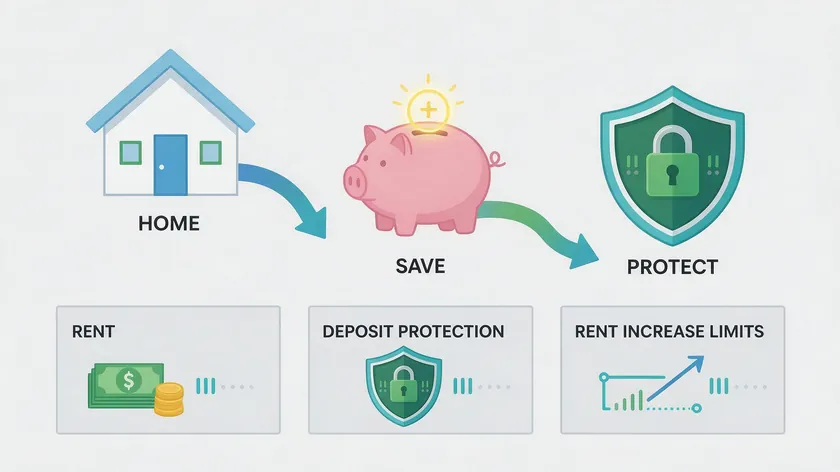
This section covers the financial terms your rental agreement must address under post-2026 rules.
Rent Terms and Payment Rules
The agreement must state the rent amount, frequency (usually monthly), payment method, due date, and consequences if a tenant fails to pay rent on time, such as reasonable interest after 14 days. Under the new rules, landlords cannot demand rent before the agreement is signed.
For monthly tenancies, a landlord can ask for up to one month’s rent in advance; for weekly tenancies, up to 28 days.
Any tenant fees charged outside of permitted payments under the Tenant Fees Act are banned. Reasonable costs incurred by the landlord for specific services (like replacement keys) can be passed on only if the agreement allows it and the amount reflects reasonable costs.
Deposit Limits and Protection
The deposit is capped at five weeks’ rent for tenancies where the annual rent is under £50,000, or six weeks where the annual rent is £50,000 or more. The deposit must be protected in a government-approved scheme within 30 days. Your template should name the specific scheme and confirm the protection timeline.
How to Increase Rent Under Section 13
Rent can only be increased once every 12 months with two months’ notice. The landlord must use the prescribed Section 13 form (Form 4A) and give at least two months’ written notice before the increase takes effect. No rent increase is permitted during the first 12 months of the tenancy.
If the tenant disagrees, they can challenge the proposed rent at the First-tier Tribunal on the basis that it exceeds open market rent. For the full timeline and forms, see our guide on how much notice for a rent increase in England.
New Rules on Rent in Advance and Bidding Wars
Rent bidding – where prospective tenants compete by offering above the advertised rent – is banned under the Renters’ Rights Act 2025. Your template and any marketing materials should avoid language that encourages or permits bidding wars. Any clause asking for rent in advance beyond one month (for monthly tenancies) or 28 days (for weekly tenancies) is void.
Pets, Adaptations, and Other Modern Clauses

Modern tenancy agreement templates need to deal with lifestyle issues that older documents often ignored or banned outright.
Pet Requests and Landlord Response Times
Under the new rules, a tenant has the contractual right to make pet requests. The landlord agrees to respond within 28 days, and any refusal must be reasonable – for example, where a freeholder’s lease genuinely prohibits animals. If the landlord decides not to respond within that window, consent is deemed granted.
Reasonable Adaptations for Tenants
Tenants can request certain property adaptations, especially disability-related changes. The agreement should not unfairly restrict reasonable modifications where legislation requires consideration. A blanket “no alterations” clause may conflict with statutory rights.
Smoking, Decorations, and Other Lifestyle Clauses
Include clear rules on smoking or vaping inside the property, satellite dishes, internal decorations, and use of portable heaters or candles. These clauses must not conflict with statutory fire safety or repair duties. Keep the language proportionate – ban what genuinely poses a risk, but avoid overreach.
Pet Fees and the Tenant Fees Act
Any pet-related charges must comply with Tenant Fees Act rules. You cannot charge a disguised pet “deposit” beyond the lawful five-week cap. If a landlord wants to cover pet-related risk, options include a modest rent increase or requiring the tenant to hold pet insurance – provided the wording stays within what the law permits.
Example Table: Main Parts of a UK Assured Periodic Tenancy Agreement
The table below summarises the typical sections you will find in a well-structured assured periodic tenancy agreement. It is a quick reference, not full legal text.
| Section | What It Covers |
|---|---|
| Parties and Definitions | Names of landlord, tenant(s), and guarantor(s); key defined terms |
| The Property | Address, description, shared areas, parking, storage |
| Term of the Tenancy | Start date, statement that it is an assured periodic tenancy with no fixed term |
| Rent and Rent Reviews | Amount, due date, payment method, increase process |
| Deposit | Amount, protection scheme, circumstances for deductions |
| Use of the Property | Residential use only, no business use except light home-working |
| Repairs and Maintenance | Division of responsibilities and reporting process |
| Landlord’s Obligations | Legal safety duties and compliance with the landlord’s obligations |
| Tenant’s Obligations | Everyday care, nuisance, subletting, keys |
| Pets and Smoking | Rules and request processes |
| Ending the Tenancy | Tenant notice, landlord possession grounds, how to surrender |
| Signatures | Execution blocks for all parties sign |
Common Mistakes When Drafting a UK Tenancy Agreement Template
Avoiding typical drafting errors saves time, money, and stress later. Here are the most common problems:
- Using outdated AST templates that still refer to Section 21 or include a fixed term. Any clause setting a fixed end date is legally ineffective for new English leases. Landlords face fines up to £7,000 for fixed-term lettings post-2026.
- Omitting mandatory written information required under the Renters’ Rights Act 2025 – such as how rent can increase, the landlord’s address, and confirmation of the tenancy type.
- Failing to identify all adult occupiers as tenants. If someone lives in the property full-time, they should usually be named. Missing this can cause problems if the named tenant leaves.
- Ignoring HMO or local licensing requirements. A tenancy in a shared house may need an HMO licence, and the agreement should reference this.
- Adding unfair or unenforceable clauses – for example, blanket professional cleaning charges, clauses that try to contract out of statutory repair duties, or discriminatory restrictions.
Always check the template date and legal basis before using it for a new tenancy. Look for wording like “updated for 2026 law” to confirm it reflects current rules. Keep a standardised, up-to-date template and avoid editing clauses ad hoc without understanding the legal consequences.
Summary: Choosing and Using a UK Tenancy Agreement Template in 2026
In England, the default is now an assured periodic tenancy with no more fixed terms. Every tenancy agreement template you use must reflect that reality – rolling terms, two months’ notice for tenants, Section 8 possession grounds for landlords, and compliant rent increase clauses.
A good agreement template protects both landlord and tenant. It clearly sets rent, rights, and responsibilities and mirrors current law, including the Renters’ Rights Act 2025. Use Documentify’s free online questionnaire to build a tailored agreement template, and remember that downloading the finished PDF or Word document requires a paid plan.
Review the agreement carefully, keep copies for all parties, and seek specific legal advice for unusual or high-value situations.
Key Takeaways
- From 1 May 2026 in England, there are no more fixed-term new private lets; they are assured periodic tenancies by default.
- The Documentify UK tenancy agreement template is structured as an assured periodic tenancy agreement and reflects the Renters’ Rights Act 2025, including the end of Section 21.
- Landlords with existing tenancies must provide the government’s Information Sheet by 31 May 2026 or face penalties up to £7,000.
- This guide covers existing tenancies, landlord’s obligations, lodger agreements, and how to stay compliant under the new rules.
Ready to create yours? Start creating your tenancy agreement for free with Documentify UK’s guided questionnaire – no card required. You’ll only need a plan when you’re ready to download the finished PDF or Word document.
FAQ
Is the Documentify UK tenancy agreement template genuinely free?
Creating and filling in the tenancy agreement via the online questionnaire is completely free. You do not need to enter any card details to answer the questions and build your document.
Downloading, exporting, or printing the final tenancy agreement as a PDF or Word file requires a paid plan. Documentify offers a trial that auto-renews unless you cancel before the trial period ends. You can read and edit everything you have created online before deciding whether to pay.
Pricing and renewal terms are displayed transparently at the checkout stage, so there are no surprises.
Can I still use my old assured shorthold tenancy agreement after 1 May 2026?
You should not issue a new assured shorthold tenancy agreement for an English private let starting on or after 1 May 2026. The law now requires assured periodic tenancies, and landlords face fines up to £7,000 for attempting to grant fixed-term tenancies after that date.
Existing ASTs signed before 1 May 2026 generally continue as contracts but convert into assured periodic tenancies by operation of law. The label on the old document may say “assured shorthold tenancy”, but the legal reality is now a periodic tenancy.
Landlords should review any old AST templates before reusing them and remove all fixed-term language and Section 21 references. Using an updated assured periodic tenancy agreement template is the safer approach.
Do I need a tenancy agreement template if I already have an existing tenancy?
You do not have to replace a written tenancy agreement that started before 1 May 2026 simply because the law changed, provided you meet the new information-giving duties. Some landlords choose to issue an updated periodic tenancy agreement to tidy up clauses and reflect current law – especially when changing rent or swapping tenants.
Landlords of existing tenancies must still give the Renters’ Rights Act Information Sheet by 31 May 2026 or a written statement of terms where required. When in doubt about changing an existing tenancy, get specific legal advice rather than relying solely on a generic template.
When should I use a lodger agreement instead of an assured periodic tenancy agreement?
If you live in the property as your main home and rent out a room to someone who shares facilities with you, they are usually a lodger, not a tenant. In that situation, you should use a lodger agreement (a licence) rather than an assured periodic tenancy agreement.
Security of tenure and eviction rules are quite different for lodgers. A full assured periodic tenancy agreement is appropriate when the occupier has exclusive possession and the landlord does not live in the property. Be honest about living arrangements when using any online agreement template so that you are guided to the correct document type.
Does the template cover legal obligations like repairs, safety checks, and written information?
A modern UK tenancy agreement template should include clauses reflecting core landlord’s obligations: keeping the structure and installations in repair, carrying out gas and electrical safety checks via a Gas Safe registered engineer, and allowing quiet enjoyment for tenants.
The template must be read together with statutory duties – some obligations apply automatically by law even if they are not written out in full in the contract.
From 1 May 2026, landlords in England must provide specified written information about the tenancy and the Renters’ Rights Act 2025. The template helps cover these requirements. Landlords should also keep copies of safety certificates, deposit protection paperwork, and any information sheets alongside the signed tenancy agreement for easy reference.

