
A will trust is a legal arrangement written into your will that only comes into existence after your death. It instructs your chosen executor to hold assets – usually money – for your children until they reach an age you pick, such as 18, 21 or 25.
This guide explains in plain English how a simple children’s will trust works, who is involved and how to include one in your own will.
Table of Contents
- What Is a Will Trust in Simple Terms?
- How a Simple Children’s Will Trust Works Step by Step
- Why Parents Use a Will Trust Instead of an Outright Gift
- The People Involved: Testator, Executor and Beneficiaries
- What Can Go Into a Simple Will Trust for Children?
- Legal Requirements for a Will Trust in England and Wales
- Other Types of Will Trusts: A Quick Overview
- How to Put a Simple Will Trust for Children Into Your Own Will
- Key Takeaways
- Frequently Asked Questions About Will Trusts for Children
- What are the benefits of a will trust?
- What are the disadvantages of a will trust?
- Who owns the property in a will trust?
- Does a will trust avoid inheritance tax?
- Can I choose different ages for different children?
- What happens if I have another child after making my will?
- Can trustees be paid for looking after the trust?
- Can I change or cancel the will trust later?
What Is a Will Trust in Simple Terms?

A will trust is a legal trust you write into your will so that, when you die, your executor holds and manages specific assets for your beneficiaries instead of handing everything over immediately. It is one of the most practical tools in trust law for families with young children.
A will trust works through three simple mechanics. Together they explain why it is such a common choice for parents who want to protect their children’s inheritance:
- The trust is created by clauses in your will – no separate document is needed.
- It has no effect while you are alive. A will trust does not exist or hold assets until your death.
- It only comes into existence on your death, once your executors begin estate administration.
Here is a common example: if you die in 2030 leaving £50,000, your will can direct that this sum goes into a trust until your youngest child turns 21. Until then, the executor manages the money and can use it for the children’s needs.
This guide focuses on the simple children’s will trust. Other types, such as a life interest trust or a discretionary trust, are summarised briefly later in this guide, and they normally require a solicitor to draft.
With the definition covered, the sections below walk through how a children’s will trust works in practice, who is involved, and how to set one up.
How a Simple Children’s Will Trust Works Step by Step
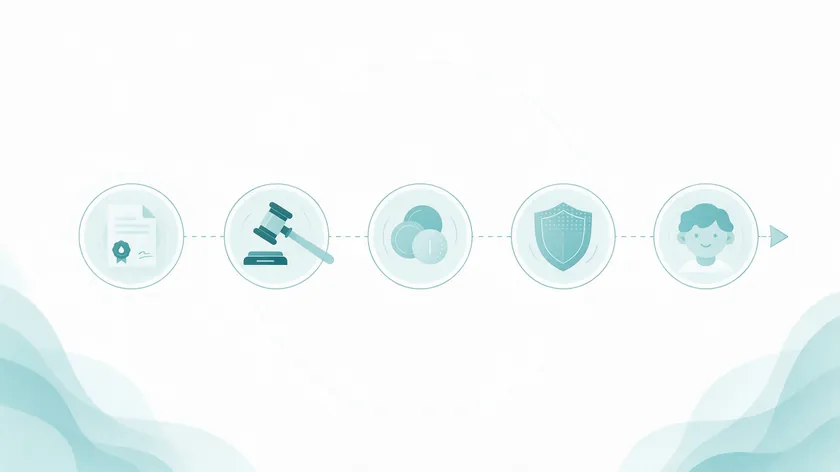
This section explains what happens in practice after death for a standard children’s will trust in England and Wales.
After Your Death
Your death is registered, your will is located and your executors begin work. Where the estate is large enough to require it, they apply for a Grant of Probate so they can deal with banks, insurers and other institutions.
The trust created in your will comes into effect upon your death.
Paying Debts and Funding the Trust
Before any asset passes into the trust, your executors must settle debts, funeral costs and inheritance tax from the estate. Only after these obligations are met do the relevant assets directed “to be held on trust for my children” pass into the trust.
The residuary estate – everything left after debts and specific gifts – is often what funds the trust.
How the Executor Holds the Money in Trust

Once the trust is funded, the executor holds and looks after the trust property for the children until the age chosen in the will. Trustees manage the assets for the benefit of beneficiaries, and they must manage the trust according to its terms.
During this period they may use trust funds for the children’s maintenance – school fees, rent, university costs – if the will allows it. Trustees may also need to register the trust with HMRC once it becomes liable for tax, as explained in the government guidance on trustees’ tax responsibilities.
When the Trust Ends
When the chosen age is reached (for example 18, 21 or 25), whatever is left is paid out to the child outright. With more than one child, each child’s share can be paid as they individually reach that age, or all at once when the youngest does, depending on how the will is worded.
In short, the sequence runs: death → probate → debts paid → trust funded → executor manages assets → child reaches the right age → money paid out.
Why Parents Use a Will Trust Instead of an Outright Gift

Leaving money as an outright gift to a minor does not work well in practice. A child under 18 cannot manage a large sum themselves, so an adult has to hold the money for them anyway.
A will trust formalises that arrangement and gives you more control over timing and protection.
| Question | Outright gift to a child | Will trust |
|---|---|---|
| Who controls the money while the child is a minor? | An adult under default legal rules, with limited flexibility | Your chosen executor, following your will |
| When does the child get the money? | At 18 by default | At the age you choose (18–35) |
| What if the child is 18 and financially inexperienced? | They receive the full sum immediately | Executor continues to hold until the chosen age |
| Who can use the money for the child’s needs? | Limited statutory powers | Executor, guided by the will and any letter of wishes |
Consider a scenario: two parents in 2026 leave their estate to be shared equally between their three children, held in trust until each child reaches 25. This means the executor invests and manages the funds, using income generated for the children’s benefit where needed, until each one is old enough.
A simple will trust can also help with practical risks. Holding the money until a chosen age gives young adults time to gain financial experience, and it can reduce the chance that a lump sum is lost to poor decisions or a relationship breakdown.
For most young families with a family home, some savings and minor children, a simple children’s will trust is often enough to plan ahead without needing complex estate planning structures.
Couples often make one will each with matching wording, known as mirror wills, so that both wills set up the same trust for the children.
The People Involved: Testator, Executor and Beneficiaries

Key parties involved in a will trust include the testator (the person making the will), the executor and trustees, and the beneficiaries. Here is what each role means.
The Testator
The testator is the person making the will and deciding that the trust should exist after their death. They choose who receives what, at what age, and who manages the trust in between. The testator’s wishes have lasting powers over how the estate is handled after they are gone.
The Executor and Trustees
In a simple children’s will trust, the same trusted adults usually act as executors and as trustees. In Documentify’s generator you name an executor (and optionally an alternate executor), and your executor holds the inheritance in trust until the age you choose.
You can name more than one person, as our guide to joint executors of a will explains.
Trustees must be at least 18 years old to administer a will trust, and they have a fiduciary duty – a legal obligation – to manage trust assets in the best interests of the children. They must follow the will, keep records and invest prudently.
Choose organised, trustworthy family members or friends likely to be available for several years, because a children’s trust can run until the last child turns 25 or older.
The Beneficiaries
Beneficiaries are individuals or organisations who will benefit from the trust’s income or capital. In a children’s will trust, they are typically the named beneficiaries – your children or step-children. Our guide to the beneficiary of a will covers their rights and the problems that can arise.
Note that step-children do not inherit automatically under the intestacy rules and must be explicitly included in the will if you want them to benefit.
Clearly identifying each beneficiary in the will is essential. Chosen beneficiaries should be described precisely so there is no doubt about who benefits.
What Can Go Into a Simple Will Trust for Children?

Parents typically place the following assets into a children’s will trust, depending on what the estate contains when the testator dies:
- Cash held in bank accounts
- Life insurance pay-outs paid to the estate
- Investments such as shares or unit trusts
- Proceeds from the sale of the family home, if the will directs it
You decide in the will what share of your estate goes into the trust. For instance, you might write “my entire residuary estate to my executors on trust for my children until age 21.” The executor then holds legal title to those assets until the property passes to each child at the specified age.
Pensions and some life insurance policies have their own rules and are usually paid outside the will through separate nomination forms, so check these separately.
Legal Requirements for a Will Trust in England and Wales

For a will trust to work, several legal requirements must be met. Scotland and Northern Ireland have their own rules, so this guide focuses on England and Wales.
- The will itself must be valid: made by someone over 18 with mental capacity, signed and witnessed by two independent adults. The Wills Act 1837 sets out these rules – see our last will and testament guide for a detailed walkthrough.
- The will must make three things clear: that you intend to create a trust, which assets fund it, and who the beneficiaries are. Lawyers call these the three certainties.
- Trustees may have HMRC reporting duties, including income tax on trust income, and these obligations can change over time.
This article is general information and not legal advice. Anyone with a high-value estate, assets abroad or a complex family situation should take professional advice and speak to a solicitor.
Other Types of Will Trusts: A Quick Overview

The simple children’s will trust is only one of several kinds of will trust. The types below are summarised briefly so you can recognise them. Documentify’s generator is designed for simple wills, so these arrangements are outside what this guide covers, and they normally need a solicitor to draft.
Bare Trust
In a bare trust, the beneficiary can take both the income and the capital once they reach 18 in England and Wales (16 in Scotland). It is the simplest form of trust, because the trustees hold the assets only until the beneficiary is old enough to claim them.
Life Interest Trust
A life interest trust gives one person, the life tenant, the income from the assets or the use of a property for life. The assets then pass to someone else.
For example, a surviving spouse may live in the family home for the rest of their life, with the home passing to the children afterwards.
Wills that do this are often called property trust wills. A life interest trust can also help preserve assets for children from a previous relationship.
Discretionary Trust
In a discretionary trust, the trustees decide how the income and sometimes the capital is used, who receives it and when. The potential beneficiaries are usually named in the will, and a letter of wishes often guides the trustees. These trusts are often used to provide for future needs.
Bereaved Minor’s Trust
A bereaved minor’s trust is for a child under 18 who has lost a parent. The child becomes fully entitled to the capital by 18, and special inheritance tax rules apply.
This differs from the simple children’s trust in this guide, where you choose the age at which your children inherit.
Vulnerable Beneficiary Trust
A vulnerable beneficiary trust manages assets for a disabled person, for someone who cannot manage their own affairs because of a mental health condition, or for a child under 18 whose parent has died. It can receive special tax treatment and has eligibility rules, so it needs specialist advice.
If any of these arrangements sounds relevant to your family, take professional advice before writing it into a will. The simple children’s will trust described in this guide is a much more limited arrangement.
How to Put a Simple Will Trust for Children Into Your Own Will

For simple, common situations, establishing a will trust involves drafting specific instructions in a will. Here is what you need to decide:
- Who your executor will be, and optionally an alternate executor
- Who your children are, and whether any are minors or dependents
- Whether minors should wait for their inheritance – choose one age for all of them, from 18 up to 35 (options include 18, 19, 20, 21, 22, 23, 24, 25, 30 or 35)
Documentify’s Last Will and Testament generator guides you through these choices step by step. The executor holds the inheritance in trust until the chosen age.
You can also include a letter of wishes alongside your simple will to guide the executor on how to use income or capital during the trust – for example, for school trips, driving lessons or university fees.
This gives your executor context without creating a binding legal trust document on top of the will.
Once the will is produced, print it, sign it with two witnesses present, store it safely and tell the executors where it is kept. For a straightforward children’s trust the process is manageable, but choosing the right executor matters.
Key Takeaways
A will trust is a trust written into your will that only starts after death, usually to hold children’s inheritance until a chosen age. It is a practical way of ensuring the right people manage money for the right beneficiaries at the right time.
- Legal control sits with the executor and trustees while the benefit belongs to the children.
- The trust only takes effect on death – it has no legal existence while you are alive.
- The most common use is parents leaving an inheritance to minor children until they are old enough to manage it.
- In Documentify’s generator, the executor holds the inheritance in trust until the age you choose, from 18 up to 35.
- Other types of will trust exist, such as life interest and discretionary trusts, but they normally need a solicitor.
Once you understand the basics, you can include a simple children’s will trust in your own will with our online Last Will and Testament generator.
Frequently Asked Questions About Will Trusts for Children
These FAQs cover practical questions not fully answered in the main article.
What are the benefits of a will trust?
A will trust gives you control over when and how your children receive their inheritance. You can delay payment to an age you choose rather than 18, and trusted adults manage the money in the meantime.
It also sits inside the same will, so there is no separate document to keep up to date.
A will trust can also reduce the risk that a young adult receives a large sum before they are ready to manage it.
What are the disadvantages of a will trust?
A will trust adds a layer of administration after death. The executor or trustees must manage and record the trust until it ends, and it may need to be registered with HMRC.
Children cannot normally reach the money before the chosen age unless the will allows it, and professional trustees charge ongoing fees.
Which? also warns that the tax advantages of trusts are often overstated, so a trust should not be set up only to reduce tax.
Who owns the property in a will trust?
Legal ownership sits with the executor and trustees, who hold the assets for the beneficiaries. The children have the right to benefit from the trust, for example by receiving the money at the chosen age, but they do not control the assets while the trust runs.
When the trust ends, the remaining assets pass to the beneficiaries outright.
Does a will trust avoid inheritance tax?
No, not by itself. A basic children’s will trust is about control and protection, not tax planning, and assets in a will trust generally still count as part of your estate for inheritance tax. Anyone wanting specific tax planning advice should speak to a solicitor or tax adviser.
Can I choose different ages for different children?
The law allows you to set different ages or conditions for different children – for instance, one child receiving at 21 and another at 25. However, most parents use one age for all children for fairness and simplicity.
Documentify’s generator uses one age for all minor beneficiaries (from 18 to 35). Anyone wanting child-by-child conditions should speak to a solicitor.
What happens if I have another child after making my will?
Many wills define beneficiaries as “my children who survive me”, which automatically includes children born after the will is signed. Older wills that list children by name may not cover a later child.
Review and update your will whenever a child is born or adopted to make sure all children benefit as intended.
Can trustees be paid for looking after the trust?
Lay trustees – family members or friends – are normally not paid unless the will specifically allows it, but they can usually reclaim proper expenses incurred while managing trust assets. Professional trustees, such as solicitors or accountants, charge fees agreed when they are appointed.
The Trustee Act 1925 sets out baseline powers for trustees, including powers of maintenance and advancement under sections 31 and 32.
Can I change or cancel the will trust later?
While you are alive and have mental capacity, you can make a new will or a codicil to change or remove the trust provisions. The latest valid will applies on death.
After death, family members or trustees cannot simply alter the trust to suit new preferences, so it is important to review your will regularly – particularly after a major life event, a new partner joining the family, or any shift in your circumstances.

