
When a person dies, the executor named in their will takes on the responsibility of administering someone’s estate.
A common question from both executors and family members is whether an executor can change a will after death. A related question is can an executor be a beneficiary, which we cover separately.
The short answer is no – an executor cannot unilaterally change the terms of a will after death. Their role is to carry out the deceased’s wishes, not rewrite them.
That said, there are separate legal routes that can alter how an inheritance is distributed. A deed of variation lets beneficiaries – not the executor acting alone – redirect their entitlements, usually within a two-year time limit for inheritance tax and capital gains tax purposes.
Limited executor decisions are also allowed, such as timing of asset sales or other practical administration, but changing who gets what normally needs beneficiary consent or a court order.
With mirror wills, the survivor stays free to rewrite their own will, but nobody can alter the first partner’s will.
These rules apply across the UK – England, Wales, Scotland and Northern Ireland – though the specific statutes differ by nation. This article explains exactly what an executor can and cannot decide, how deeds of variation and court rectification work, and what happens if an executor oversteps.
Table of Contents
- Can an executor change a will at all?
- What is an executor’s role – and what can an executor decide?
- What an executor can and cannot change in practice
- Deed of variation – how beneficiaries can redirect an inheritance
- Rectifying a will – when the court can correct mistakes
- Executor discretion vs beneficiary consent – comparison table
- Inheritance tax, deeds of variation and the 2-year time limit
- What if the executor ignores the will or acts outside their authority?
- Changing the executor vs. changing the will
- How to minimise the need for changes after death
- Key Takeaways
- FAQ
- Can an executor change a will if all beneficiaries agree?
- Can a sole beneficiary tell the executor to change the will?
- Can an executor delay distribution to try to reduce inheritance tax?
- What happens if beneficiaries disagree about signing a deed of variation?
- Can an executor refuse to carry out a deed of variation?
Can an executor change a will at all?
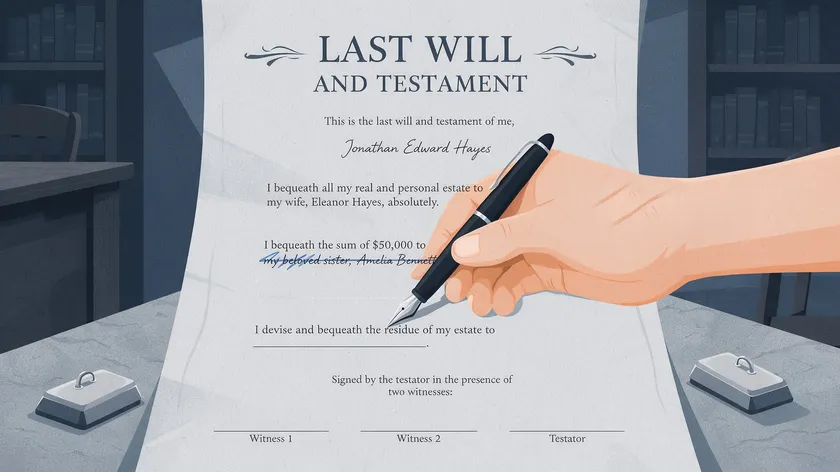
No. Once the testator has died, the will is a fixed legal document. An executor administers it; they do not have the power to legislate new terms, appoint new beneficiaries, or alter the shares written in the original will.
Executors must follow the will’s terms as written. For the full list of what an executor is allowed to do, see what power does an executor of a will have.
The important distinction is between “changing the will” – which is impossible after death – and “changing what happens with the inheritance” through separate legal processes.
A deed of variation or a court rectification order can alter outcomes, but neither is an executor acting alone to rewrite the will.
For example, imagine a deceased parent leaves 50% of their estate to each of two children. If the executor named in the will decides – without consent or a court order – to reduce one child’s share to favour themselves, that is not legally allowed.
An executor cannot change a will without beneficiary agreement and cannot remove a beneficiary from a will. The sections below explain the lawful routes that do exist.
What is an executor’s role – and what can an executor decide?
An executor is the person appointed in a valid will to manage someone’s estate after their death. An executor’s primary legal duty is to administer the estate according to the will.
This means collecting assets, paying debts and taxes, keeping proper accounts, and ultimately distributing everything to the people entitled under the will – or under intestacy rules if no valid will exists.
Core duties of an executor
Executor duties include gathering assets, paying debts, and distributing remaining assets. In practice, the core responsibilities are:
- Applying to the probate registry for a grant of probate
- Locating, securing and valuing all estate assets
- Paying debts, funeral expenses and ongoing liabilities
- Calculating and paying inheritance tax, income tax and any capital gains tax due
- Managing estate property – insuring, maintaining, selling where needed
- Keeping accurate accounts and distributing to beneficiaries
Even where the executor is also the sole beneficiary, they must still act in the estate’s best interests. Fiduciary duty requires executors to act in the best interests of the estate and beneficiaries – not their own personal interests.
What “executor discretion” means
Executor discretion covers the practical judgement calls involved in administration: when to sell a property, which investments to encash first, which solicitor or estate agent to appoint, and how to sequence debt payments.
These decisions are part of running the estate and do not alter who inherits or what share they receive.
An executor may also have express powers granted by the will, such as a power to postpone sales or appropriate specific assets. But even broad discretionary powers do not allow an executor to decide who gets what – that is fixed by the will.
What an executor can and cannot change in practice
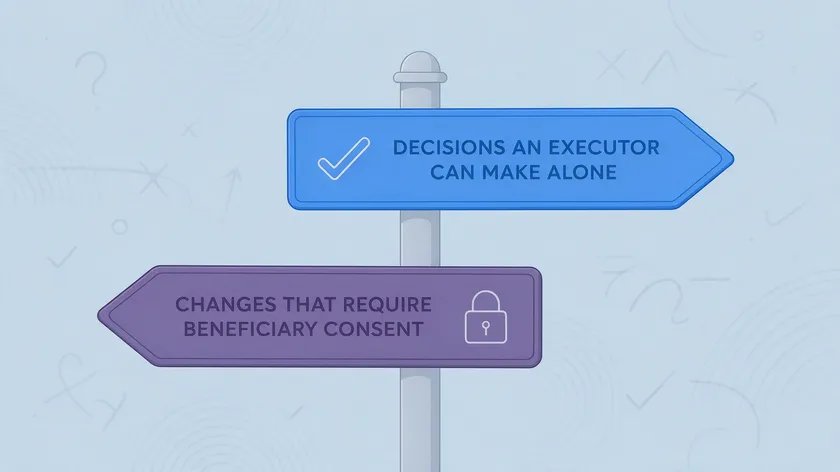
Understanding the line between legitimate executor discretion and unlawful interference is critical. Here is how the two categories break down.
What an executor can decide alone
- Timing of selling estate property and choosing the best market circumstances
- Which investments to liquidate first
- Selecting estate agents, solicitors or valuers
- Practical steps to resolve disputes between beneficiaries (e.g. mediation)
- Scheduling payments once debts and taxes have been assessed
None of these choices affect who ultimately inherits or how much they receive – they simply keep the estate moving towards distribution. Anything beyond this practical level of discretion requires either beneficiary consent or a court order, as the next section sets out.
What an executor cannot lawfully change
Executors cannot unilaterally change beneficiaries or the distribution shares without proper consent. Specifically, an executor cannot:
- Add, remove or substitute beneficiaries
- Alter the fixed shares or legacy amounts written in the will
- Redirect a sole beneficiary’s entire entitlement
- Change trust terms or conditions set out in the will
Some grey areas arise – vague gifts, unclear property descriptions, ambiguous wording. These are about interpreting the will, not changing it, and may require you to seek legal advice.
If the will’s terms are ambiguous or defective, a court can interpret or modify it through a formal process covered below.
Deed of variation – how beneficiaries can redirect an inheritance
A deed of variation is a legal document that allows beneficiaries to change inheritance distribution after someone’s death. Crucially, a deed of variation cannot change the original will’s terms – instead, the beneficiaries involved redirect their own entitlements.
The executor does not drive this process, though executor agreement is necessary if the variation affects the estate directly.
Who can enter into a deed of variation
Only the affected beneficiaries whose share would be reduced or redirected need to sign. A deed of variation requires agreement from all affected beneficiaries – if even one refuses, the variation cannot proceed for their share.
Where a minor or incapacitated person is among the affected beneficiaries, court approval is usually needed before they can be bound.
The 2-year time limit and common uses
The deed must be completed within two years of death to qualify for favourable tax treatment. HMRC will treat the varied distribution as if it had always been in the will, which can provide significant tax benefits for inheritance tax and capital gains tax purposes.
Common examples include:
- A beneficiary passing part of their inheritance to their own children or grandchildren
- Siblings equalising shares where the will created an imbalance
- Redirecting assets to a spouse or civil partner, or to charity, to reduce the inheritance tax bill
In every case, it is the beneficiaries who choose to vary their own entitlement – the executor simply administers the outcome.
Rectifying a will – when the court can correct mistakes
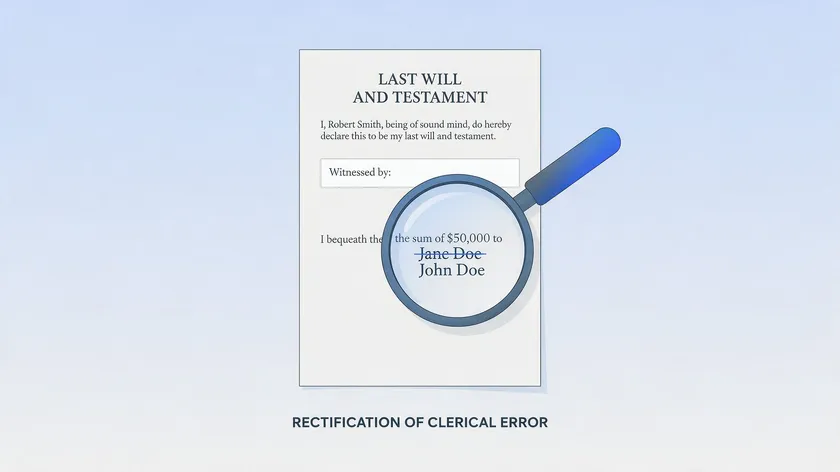
Rectification is different from variation. It fixes clerical errors or drafting mistakes so the will reflects what the testator actually intended – it does not allow anyone to rewrite an unfair will.
In England and Wales, section 20 of the Administration of Justice Act 1982 gives courts the power to rectify wills where a clerical error or misunderstanding of the testator’s instructions caused the will to fail. Scotland has its own route under the Succession (Scotland) Act 2016, and Northern Ireland follows similar court processes.
When rectification might be available
Rectification might apply where names are typed incorrectly, assets are mis-described, or a clause was omitted by the will-writer by mistake.
For example, if a testator told their solicitor to leave money to “my sister Mary” but the written will named “sister Jane,” a court could correct the error on application.
An executor cannot simply “correct” these errors themselves. They must apply to court or support a beneficiary taking the lead on a rectification claim.
Time limits for rectification claims
In England and Wales, the time limit is six months from the date the grant of probate is issued, though the court has discretion to extend in exceptional circumstances.
In Scotland, the limit runs from death or confirmation. Missing the deadline usually means the claim cannot proceed.
Executor discretion vs beneficiary consent – comparison table
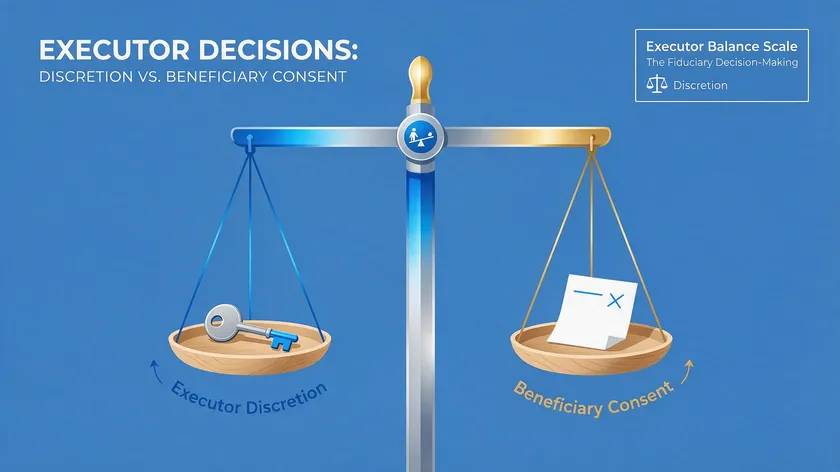
The table below summarises the dividing line. An executor cannot change a will, but lawful post-death changes do exist through separate legal processes.
| What an Executor Can Decide Alone | What Requires a Deed of Variation or Court Order |
|---|---|
| Timing of property sale and choice of estate agents | Changing who inherits under the will |
| Which investments to encash first | Altering fixed legacy amounts or percentage shares |
| Appointing solicitors, valuers, accountants | Redirecting a sole beneficiary’s entitlement |
| Paying debts, taxes and funeral expenses in proper order | Changing trust terms or conditions in the will |
| Practical steps to resolve disputes (e.g. mediation) | Correcting a genuine drafting error (court rectification) |
| Filing IHT returns and paying inheritance tax due | Changing the inheritance tax outcome via variation (needs all affected beneficiaries to agree and sign) |
Inheritance tax, deeds of variation and the 2-year time limit
Inheritance tax in the UK is charged at 40% on the value of the deceased’s estate above the nil-rate band. Executors are responsible for calculating and paying this tax from the estate.
How HMRC treats a deed of variation
A properly drafted deed of variation completed within two years of death is treated by HMRC as if the will had always contained the new provisions. This means the varied distribution is backdated for both inheritance tax and capital gains tax.
If the variation results in more inheritance tax being due, the deed must be sent to HMRC within six months of its execution. Where the variation does not affect the tax liability, no notification is typically needed.
It can help reduce inheritance tax liabilities – one of the most common reasons beneficiaries use this route.
Typical IHT-motivated variations
Common tax-driven variations include redirecting assets to a spouse or civil partner (who benefit from the spouse exemption), passing a larger share directly to charity, or skipping a generation so that money goes straight to children or grandchildren.
The executor’s role here is to cooperate with the beneficiaries involved and ensure tax forms are accurate. An executor cannot impose tax-driven changes without beneficiary consent.
What if the executor ignores the will or acts outside their authority?
Beneficiaries trust executors to follow the will faithfully. Problems arise when an executor oversteps their authority, fails to act, or tries to decide who gets what outside the law.
What counts as a breach of duty?
A breach of fiduciary duty can take many forms: an executor changing distributions to favour themselves, deliberately delaying without good reason, failing to keep proper accounts, or mismanaging assets.
Alterations cannot be used to defraud creditors or bypass lawful claims against an estate – and any attempt to do so is actionable.
Remedies available to beneficiaries
Beneficiaries can request full estate accounts and formal information. If the executor will not comply, beneficiaries can apply to court to compel disclosure, seek to remove or replace the executor, or claim compensation for losses. Executors are liable for financial losses to beneficiaries caused by their breach.
Courts have the power to remove executors even without proof of misconduct – in Fernandez v Fernandez [2025] EWHC 2373 (Ch), the High Court removed an executor simply because hostility between the parties had made the estate’s administration unworkable.
Where disputes escalate, seek legal advice early. Mediation can help resolve disputes between beneficiaries and executors before legal action becomes necessary, saving both money and family relationships.
Changing the executor vs. changing the will
Removing or replacing an executor is a completely separate issue from changing the will’s content. You generally cannot change the named executor after someone’s death just by agreement – instead, an executor may renounce the role, step aside voluntarily, or be removed by the court in serious cases.
A deed of variation cannot be used to change the executor or their role. It only affects how inheritances are redirected among beneficiaries. Even if the person acting as executor changes, the underlying will and its gifts stay the same unless varied by beneficiaries or rectified by the court.
If you need to know whether one executor can act without another, that topic is covered in a separate joint executors guide.
How to minimise the need for changes after death
The best way to avoid post-death variations and disputes is to keep your will up to date and clearly written during your lifetime. Practical steps include:
- Review your will every three to five years
- Update after major life events – marriage, divorce, birth of children, property purchases
- Choose executors you trust to follow your instructions
- Discuss your wishes with your intended executor and main beneficiaries so there are fewer surprises
A clearly written will reduces the need for rectification applications and makes it easier for your executor to resolve disputes. Using a structured will-writing service aimed at UK law can help ensure the will is legally valid across all UK nations.
Key Takeaways
- An executor cannot change who inherits – they must administer the estate according to the will
- Beneficiaries can redirect their entitlements using a deed of variation, but all affected beneficiaries must agree and the deed must be completed within two years of death
- Court rectification is only available for genuine clerical errors or drafting mistakes, not for rewriting an unfair will
- Executors who overstep risk personal liability, removal by the court, and legal action from beneficiaries
- Open communication between executors and beneficiaries is the best way to avoid costly disputes
Writing a clear, legally valid will is the single most effective way to prevent problems after death. Rather than paying solicitor fees of £150–£500 or more, you can use Documentify’s guided last-will-and-testament generator with a 7-day trial to create a properly structured will at a fraction of the cost.
FAQ
Can an executor change a will if all beneficiaries agree?
Even with unanimous agreement from all beneficiaries, the will itself is never rewritten. Instead, the beneficiaries execute a deed of variation to redirect their inheritances.
The executor typically cooperates with this process, but the power to vary belongs to the beneficiaries – not the executor acting alone.
Can a sole beneficiary tell the executor to change the will?
A sole beneficiary cannot change the will’s wording. However, as the only person entitled to inherit, they can effectively redirect part or all of the estate – for example, to their own children or to charity – by signing a deed of variation.
The executor must still administer the estate lawfully regardless of what the sole beneficiary requests.
Can an executor delay distribution to try to reduce inheritance tax?
Executors can decide timing within reason, but they must meet HMRC deadlines and act in the beneficiaries’ best interests.
Delaying purely to exert pressure or to favour some beneficiaries over other beneficiaries would be a breach of fiduciary duty and could expose the executor to a legal action by those affected.
What happens if beneficiaries disagree about signing a deed of variation?
A deed of variation requires all affected beneficiaries to consent. If one person refuses, that particular change is blocked, and the will or intestacy rules stand as originally written.
The only alternatives would be a successful court challenge or, in cases of genuine error, a rectification claim – neither of which is guaranteed.
Can an executor refuse to carry out a deed of variation?
If a deed of variation is validly executed by the beneficiaries and complies with tax rules, the executor normally must administer the estate in line with it.
Refusing without good reason could expose them to a court challenge. Where circumstances are genuinely unclear, the executor should seek legal advice before acting.

