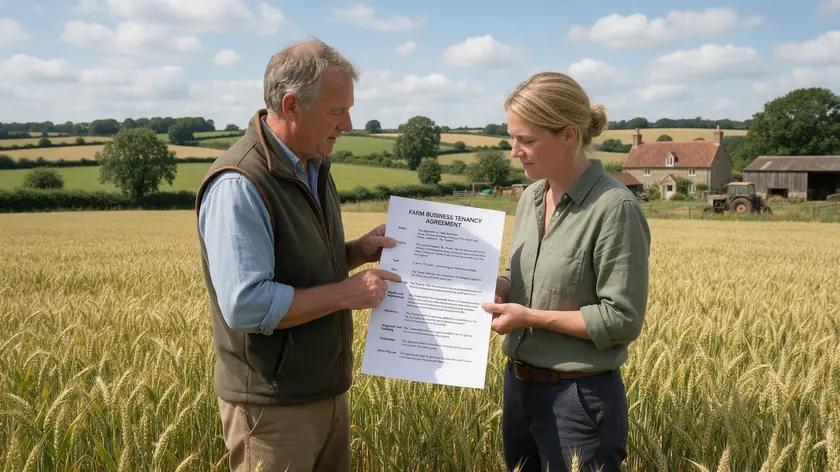
A farm business tenancy (FBT) is the standard legal framework for letting agricultural land and buildings in England and Wales under the Agricultural Tenancies Act 1995. This guide is written for landlords letting farmland and tenants running an agricultural business on it.
Below, we cover qualifying conditions, notice and termination rules, rent reviews, improvements and compensation, and how an FBT differs from older 1986 Act agricultural tenancies.
Table of Contents
- What is a Farm Business Tenancy (FBT)?
- Qualifying Conditions: When Does a Tenancy Become an FBT?
- Agricultural Use, Farm Business and Diversification
- Term, Notice to Quit and Ending a Farm Business Tenancy
- Rent Levels and Rent Reviews in Farm Business Tenancies
- Tenant’s Improvements, “Tenant Right” and Compensation
- Disputes, Arbitration and Practical Drafting of an FBT Agreement
- Relationship with 1986 Act Agricultural Tenancies and Succession
- Key Takeaways
- FAQ
- Does a short grazing arrangement always create a farm business tenancy?
- Can a farm business tenancy include a farmhouse for the tenant to live in?
- What happens if we forget to serve a rent review notice on the agreed review date?
- Can a tenant under an FBT assign or sublet the holding to someone else?
- How do environmental schemes and natural capital projects affect a farm business tenancy?
What is a Farm Business Tenancy (FBT)?
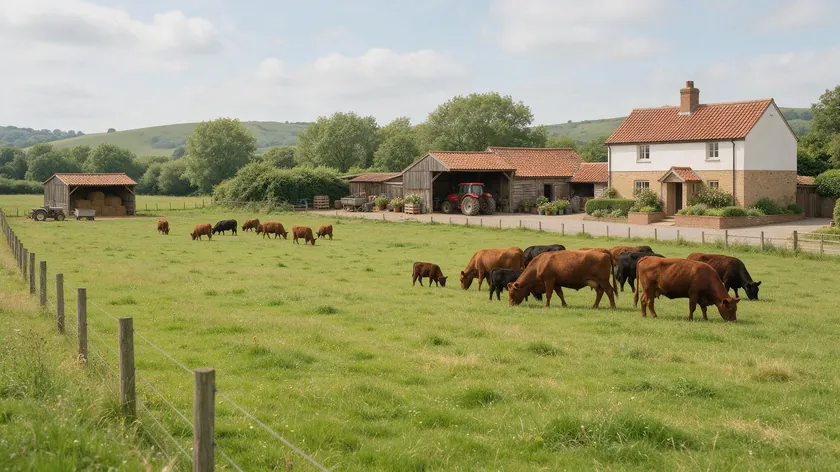
A farm business tenancy (FBT) is a type of business tenancy for agricultural land or buildings in England and Wales, created under the Agricultural Tenancies Act 1995.
Farm business tenancies were created to replace the restrictive letting regime that discouraged landlords from making agricultural land available on the open market.
An FBT is a business lease for land used mainly for agriculture as a commercial farm business. It commonly covers fields, farmyards, meadow land, and agricultural buildings used for production. It is not a residential tenancy.
FBTs provide significant freedom of contract for landlords and tenants and can provide opportunities for new entrants to enter the farming industry.
An FBT applies to any agricultural tenancy starting on or after 1 September 1995. Earlier agricultural tenancies are normally governed by the Agricultural Holdings Act 1986, which carries very different security of tenure and succession rights.
Unlike a residential assured periodic tenancy, an FBT is governed by the 1995 Act and covers working agricultural land. Readers needing a residential contract should see the UK tenancy agreement template pillar article.
Qualifying Conditions: When Does a Tenancy Become an FBT?

Not every letting of rural land is automatically a farm business tenancy. The tenancy must meet specific statutory conditions in the Agricultural Tenancies Act 1995.
The agricultural land requirement means the land must be farmed – arable cropping, grazing livestock, dairy farming, horticulture, fruit or seed growing, or ancillary woodland management carried on as part of an agricultural enterprise all qualify.
A farm business tenancy must involve some agricultural use of land, and FBT status requires agricultural use for trade or business purposes.
During the tenancy, the character must remain primarily agricultural unless valid written notices are exchanged before the tenancy begins to preserve FBT status while allowing additional business operations.
At least some land must be farmed throughout the tenancy, though use can rotate across the holding as cropping and grazing patterns shift in the normal course of farming.
Example: a landlord lets 80 acres from 1 October 2026 for a mixed beef and arable unit. The tenant runs a commercial farming business from the start, using the land for cattle grazing and cereal production. Because the land is occupied and farmed as a business, such a tenancy qualifies as an FBT from day one.
Agricultural Use, Farm Business and Diversification

The 1995 Act defines agriculture broadly. It covers horticulture, fruit growing, seed production, dairy farming, livestock breeding and keeping, grazing, market gardens, osier land, nursery grounds, and ancillary woodlands.
Typical FBT activities include:
- Beef and sheep grazing on pastoral or meadow land
- Cereal, vegetable, and fruit production on arable holdings
- Commercial orchards and glasshouse operations
- Farm-scale renewable energy projects forming part of the tenancy business
Certain diversified enterprises – a farm shop, cafés, holiday lets, caravan or campsite pitches, livery yards – are not agriculture themselves but can sit alongside agricultural use. Tenants can diversify to non-agricultural uses with landlord consent, and tenancy agreements can include diversification into activities like tourism or renewable energy.
The Agricultural Tenancies Act 1995 allows some non-agricultural activities provided the agricultural letting qualifies under the statutory tests.
Pre-tenancy notices under the 1995 Act allow the parties to agree in writing that the tenancy will remain an FBT even if a non-agricultural business use becomes predominant. Notices must be exchanged to maintain FBT status during diversification, and they must be in writing before occupation.
If diversification exceeds agricultural use and no protective notices were served, the tenancy can drop out of the FBT regime and become a business lease under the Landlord and Tenant Act 1954, changing renewal rights and rent review assumptions entirely.
Term, Notice to Quit and Ending a Farm Business Tenancy

FBTs can last for varied terms, from a single year to several decades. Landlords can tailor the agreement length to their future plans under an FBT, and the 1995 Act sets particular rules on how fixed tenancies and periodic tenancies end.
Less than two years
Tenancies of less than two years automatically expire without notice on the contractual term date, though the agreement can still provide for notice if the parties want extra certainty.
Two years or more
If the agreed term of an FBT exceeds two years, a written notice to quit is typically required between 12 and 24 months before termination. Written notice of at least one year is required for longer tenancies, and the maximum notice period can be agreed up to 24 months. Any clause providing for a shorter notice will normally be ineffective.
A notice to quit must be in written notice form, correctly addressed, and served to expire on the end of the fixed term or end of a tenancy year. If neither party serves a valid notice before the term expires, an FBT of two years or more will usually continue from year to year on the same terms until properly terminated.
A break clause can be included – for example, allowing either the landlord or tenant to terminate after the third year with at least 12 months’ written notice. The parties can also end the FBT early at any time by mutual agreement through a written deed of surrender.
Rent Levels and Rent Reviews in Farm Business Tenancies
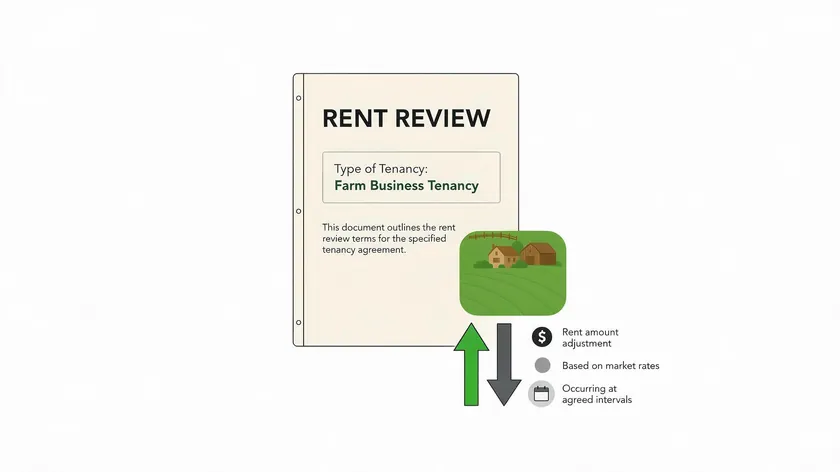
Rent levels in FBTs are generally agreed upon through negotiation rather than statutory formulas. At grant, the parties should agree an initial rent reflecting the quality of the agricultural land, fixed equipment, environmental scheme obligations, and any restrictions, and record the amount and pay dates clearly in the tenancy agreement.
Rent reviews can occur every three years unless contracted out. Either landlord or tenant can require a statutory review even if the agreement is silent.
Rent reviews in FBTs can reflect actual market conditions and earning capacity, covering both increasing market rents and future rent reductions – the 1995 Act does not allow parties to prevent rent being reduced on review.
Review clauses should specify the mechanism (open-market rent, formula-based adjustment, or index-linked changes) and a clear timetable for serving review notices and any reference to an independent expert or arbitrator.
Drafting should also recognise current schemes such as Environmental Land Management, confirming whether stewardship payments affect the agreed rent and the capital value assessment.
Tenant’s Improvements, “Tenant Right” and Compensation
One of the most important features of a farm business tenancy is the tenant’s right to compensation when the tenant quits the holding. Compensation is due for tenant improvements upon quitting the property, and compensation includes both physical and intangible improvements.
Landlord consent is required for compensation eligibility, and the tenancy agreement should include a clear procedure for seeking consent and recording what has been authorised. The tenancy agreement in an FBT can specify responsibilities for repair and maintenance alongside improvement obligations.
Long-Term Improvements
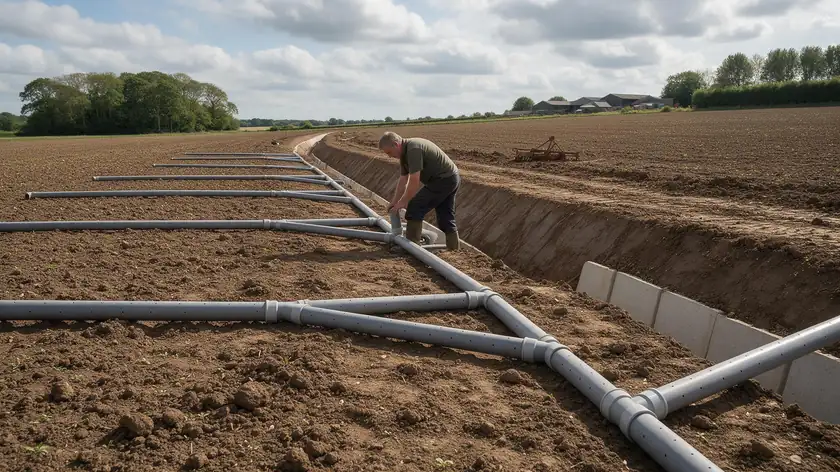
Long-term fixed equipment improvements – new farm buildings, drainage systems, irrigation infrastructure – typically require the landlord’s written consent before work starts.
These carry the highest compensation value at tenancy end because they deliver lasting benefit to the agricultural holdings. Compensation is based on the current value of improvements to an incoming tenant.
Medium-Term Improvements
Medium-term works – reseeding, fencing, yard work – sit between long-term fixed equipment and short-term cropping measures in terms of both cost and expected lifespan. These routine improvements are common across farming businesses and should be documented with consent where the tenant intends to claim.
Short-Term Improvements
Short-term cropping or soil-improvement measures – such as lime application or temporary drainage work – usually carry lower compensation values reflecting their shorter useful life. Physical improvements of this nature are still compensable where properly consented.
Tenant Right, Repairs and Arbitration on Improvements
Tenant rights can also include intangible items such as planning permission, environmental scheme agreements, or milk quotas or other production rights obtained by the tenant and left with the holding.
Routine repairs and maintenance – ordinary hedge-cutting, ditch-clearing and day-to-day upkeep – are usually part of the tenant’s obligations and do not attract additional compensation unless the agreement specifically says otherwise.
Where the landlord unreasonably refuses consent, tenants can seek arbitration under the 1995 Act before the works are carried out. Any compensation claim is normally determined at or shortly after the tenancy ended date.
Disputes, Arbitration and Practical Drafting of an FBT Agreement
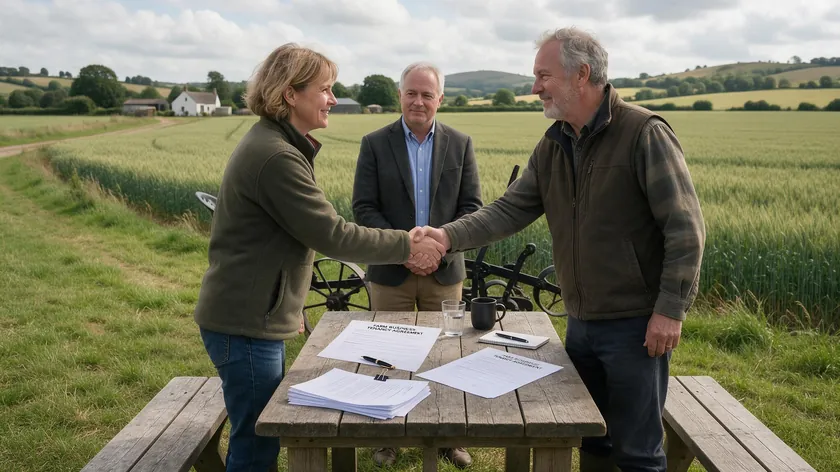
Disputes under farm business tenancies often relate to rent reviews, repairs, improvements, or notices to quit. The 1995 Act provides a framework for resolving many of these through arbitration – a private, legally binding process where an independent agricultural arbitrator decides the matter.
Either landlord or tenant can usually require arbitration under the Act. If the parties cannot agree on an arbitrator, one can be appointed by a professional body such as the Royal Institution of Chartered Surveyors (RICS).
The tenancy agreement should include clear dispute-resolution clauses stepping through negotiation, expert determination, and then arbitration.
High-level drafting guidance: the FBT should clearly set out the parties, description and plan of the agricultural land, term, rent and rent reviews, repair obligations, insurance, use and diversification controls, environmental responsibilities, succession or assignment restrictions, and procedures for notices.
Both landlords and tenants are advised to seek professional advice before signing an FBT due to its individual nature. A structured, legally up-to-date farm business tenancy template ensures the document aligns with the Agricultural Tenancies Act 1995.
Relationship with 1986 Act Agricultural Tenancies and Succession
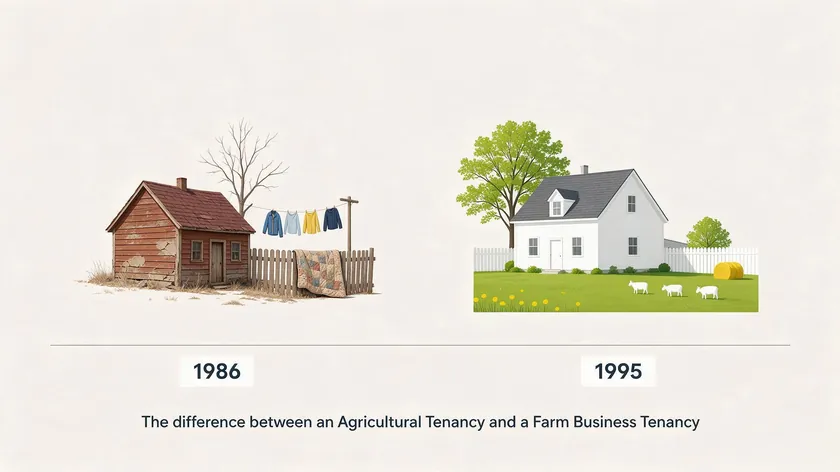
Agricultural tenancies in England and Wales fall mainly into two legal regimes. A tenancy of agricultural land granted before 1 September 1995 is usually an Agricultural Holdings Act tenancy, and these older tenancies often provide lifetime security of tenure for the tenant farmer.
| Aspect | Agricultural Holdings Act 1986 | Farm Business Tenancy (1995 Act) |
|---|---|---|
| Notice to quit | Long-term security of tenure; strict statutory grounds needed to end the tenancy | 12–24 months’ written notice; fixed terms under 2 years end automatically |
| Rent review | Arbitration-based formula tied to open market/productive capacity | Statutory 3-year default review cycle; open-market or formula-based |
| Compensation | Compensation for improvements under a different statutory scheme | Compensation for approved improvements and tenant right under the 1995 Act |
| Succession | Statutory succession rights for close relatives (pre-12 July 1984 tenancies) | No statutory succession; must be expressly agreed in the tenancy agreement |
Some 1986 Act tenancies granted before 12 July 1984 carry statutory succession rights, allowing certain close relatives to apply to succeed on retirement or death. This has a long history in English agricultural law. Modern farm business tenancies under the 1995 Act generally do not include statutory succession.
FBTs do not automatically confer lifetime security or rights to pass the tenancy to future generations. Any rights to assign, sublet, or allow a family member to take over must be expressly allowed in the FBT agreement itself.
Landlords and tenants should review older agreements carefully to confirm whether they are 1986 Act or post-1995 FBTs, as the rules differ significantly. The Law Commission’s current project on agricultural tenancies is examining whether regulatory reform is needed to better balance the interests of landowners, tenant farmers, and the wider demand for sustainable land management in England.
Key Takeaways
- A farm business tenancy is a flexible business tenancy framework for letting agricultural land and buildings where the land is farmed as a commercial business under the Agricultural Tenancies Act 1995, distinct from residential letting law.
- An FBT arises where land is used primarily for agriculture as a business, or where valid pre-tenancy notices preserve FBT status alongside diversified non-agricultural uses.
- FBTs share common core elements – term length, 12–24 month notice periods, three-year default rent review cycles, and structured compensation for tenant’s improvements and tenant right – but each tenancy agreement should be tailored to the particular farm business and holding.
- Careful drafting around diversification, environmental schemes, repairs and improvements, and dispute resolution can prevent costly disagreements and protect both parties’ interests over the life of the tenancy.
- A structured tenancy agreement template can serve as a useful starting point, but an FBT should always be reviewed by a solicitor or land agent before signing
For residential lettings, explore Documentify’s UK tenancy agreement tools. For any agricultural letting, consult a solicitor or land agent experienced in agricultural tenancies before finalising a farm business tenancy agreement.
FAQ
Does a short grazing arrangement always create a farm business tenancy?
A short-term, non-exclusive grazing licence for a limited season – for example, summer grazing from May to October – may be structured so it does not create a tenancy at all, particularly where the owner retains substantial control and access.
However, where a grazier has exclusive possession of the agricultural land for a definite term and uses it for a business, a farm business tenancy can arise even if the written document calls it a grazing licence. Landowners should take professional advice and use carefully drafted documents if they intend to grant a licence rather than an FBT.
Can a farm business tenancy include a farmhouse for the tenant to live in?
Many farm business tenancies allow the tenant to occupy a farmhouse or farm cottage where residential use is linked to managing the agricultural land and the farming business. Whether the dwelling is part of the FBT or let under a separate residential agreement depends on how the documents are drafted.
Where a dwelling is essential to the farm business, the parties may keep it within the FBT so that termination of the tenancy also ends the right to live in the property, subject to proper notice requirements.
What happens if we forget to serve a rent review notice on the agreed review date?
If the tenancy agreement sets a timetable for rent reviews and a party misses the date, that review opportunity may be lost unless the clause allows for late service or the parties agree to proceed by mutual agreement.
The statutory right to a three-yearly rent review under the 1995 Act can still apply where the parties have not effectively contracted out, allowing either party to trigger a review by serving the appropriate statutory notice. Build clear reminder dates into your management practices.
Can a tenant under an FBT assign or sublet the holding to someone else?
Assignment and subletting are largely controlled by the terms of the FBT tenancy agreement. Many modern farm business tenancies restrict assignment or subletting without the landlord’s written consent, sometimes allowing assignment only to defined family members actively involved in the farm business.
Both parties should consider in advance whether succession within a farming family, contract farming, or share-farming structures should be permitted and should record the agreed position clearly.
How do environmental schemes and natural capital projects affect a farm business tenancy?
New environmental schemes – such as ELM options, woodland creation, or biodiversity net gain – can change how agricultural land is used, potentially affecting rent, improvements, and compensation.
The FBT should address which party can enter stewardship or carbon schemes, who receives the payments, and how scheme obligations and termination penalties are shared between landlord and tenant.
Review existing farm business tenancies before entering long-term environmental commitments to ensure the agreement still satisfies the FBT qualifying conditions.

