
A room tenancy agreement is a contract used when a landlord rents out a single bedroom in a shared house – not the whole property – to an individual tenant.
This guide covers both assured periodic tenancy room lets and lodger agreements in England, and it is fully up to date with changes under the Renters’ Rights Act 2025 and the new rules effective from 1 May 2026.
You will learn when to use a room tenancy agreement, how it differs from a whole-property assured shorthold tenancy, and what clauses to include. The examples throughout assume a typical shared house with four to six occupants and a private landlord.
Table of Contents
- What is a room tenancy agreement?
- When does a room tenancy agreement apply?
- Room Tenancy vs Lodger Agreement vs Whole-Property Tenancy
- Assured Periodic Tenancy Agreements for Individual Rooms
- Joint Tenancy vs Individual Room Tenancy
- Key Terms to Include in a Room Tenancy Agreement
- Rent, Deposits, and Rent Increases for Room Lets
- Landlord’s Obligations and Repairs in a Room Tenancy
- House Rules, Communal Areas and Quiet Enjoyment
- Live-In Landlords and Lodger Agreements
- Ending a Room Tenancy Agreement
- Practical Tips for Drafting and Using a Room Tenancy Agreement
- Key Takeaways
- FAQ
- Is a room tenancy agreement always an Assured Shorthold Tenancy?
- Can I have a joint tenancy and a room tenancy in the same house?
- What happens if my landlord moves into the property after I have a room tenancy?
- Can my landlord enter my bedroom whenever they want in a shared house?
- Do room tenancies count towards HMO licensing requirements?
What is a room tenancy agreement?

A room tenancy agreement is a written agreement between a landlord and a single tenant for the rental of one bedroom inside a shared residential property. It outlines the terms under which the tenant has exclusive possession of a specific bedroom, along with rights to use communal areas such as the kitchen, bathroom and living room.
The agreement defines the rights and obligations of both the landlord and tenant, making it legally binding in England.
Renting a room can be categorised as a tenancy agreement or a licence/lodger agreement. If the landlord does not live at the same property, the room let will usually be an assured periodic tenancy agreement.
If the landlord shares the living space, the arrangement is typically a lodger agreement or licence with fewer statutory protections. This is different from a standard UK tenancy agreement template, where all occupiers sign one contract covering the entire dwelling.
Consider a concrete example: a landlord in Manchester owns a house with five bedrooms. Each working professional rents their own room under a separate room rental agreement, sharing the kitchen and bathrooms.
Every tenant has a lockable door, a key the landlord cannot use without notice, and the right to treat their bedroom as private space. This is exclusive possession in practice – the tenant can exclude others, including the landlord, from their room – and it is the factor that triggers full tenancy rights rather than a mere licence.
The leading case of Street v Mountford (1985) established that where a person has exclusive possession, pays rent, and occupies for a term, the arrangement is a tenancy regardless of what the document calls itself.
When does a room tenancy agreement apply?
A room tenancy agreement is appropriate where each occupier rents one bedroom and shares common areas such as a kitchen, living room and bathroom. Typical scenarios include:
- Students shared houses with individually let bedrooms.
- Professional house shares where unrelated tenants each sign their own contract.
- Houses in Multiple Occupation (HMOs) managed by a landlord or letting agent.
- Lodgers in an owner-occupied home renting a spare room under a lodger agreement.
For a room let to qualify as an assured periodic tenancy, several conditions must be met: the landlord does not live at the property, the rent payable is £100,000 a year or less, the tenant is an individual using the room as their only or main home in England, and the rent exceeds the low-rent threshold (more than £250 per year outside London, more than £1,000 in London).
Rent can be set up to £100,000 per year in England before the tenancy falls outside the assured regime.
When the landlord lives in the same property and shares kitchen, bathroom or living space, the occupier is usually an excluded occupier – a lodger with basic protection and simpler notice rules rather than full assured tenancy rights.
There are often specific consumer protections for tenants compared to lodgers, so it matters which category applies.
Where all sharers sign a single contract for the whole dwelling, the arrangement is usually a joint tenancy, not a room tenancy agreement, and should be handled under a standard AST or assured periodic tenancy for the whole property.
Room Tenancy vs Lodger Agreement vs Whole-Property Tenancy
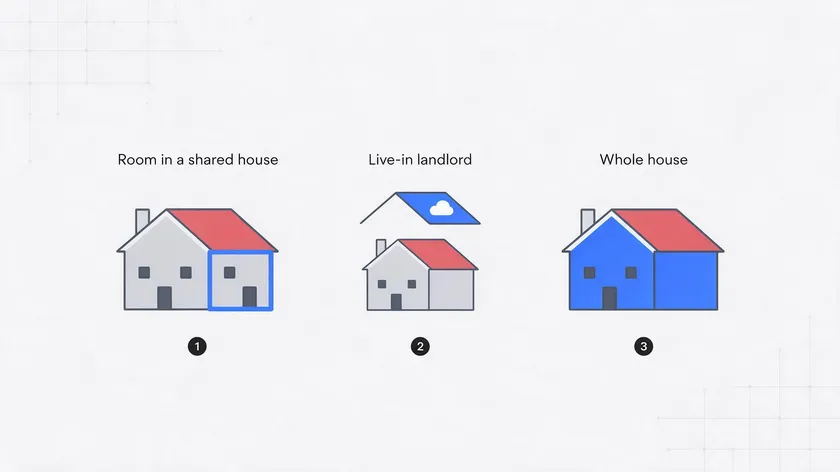
| Feature | Room Tenancy (non-resident landlord) | Lodger Agreement (live-in landlord) | Whole-Property Tenancy |
|---|---|---|---|
| Who lives there? | Tenants only; the landlord lives elsewhere. | The landlord lives at the same property. | Tenants only; the landlord lives elsewhere |
| Exclusive space | The tenant has exclusive possession of their room. | The landlord may enter the room; limited exclusivity. | All tenants share exclusive possession of the whole property. |
| Agreement type | Assured periodic tenancy (from May 2026) | Licence or excluded tenancy | Assured periodic tenancy or former assured shorthold tenancy |
| Eviction process | The landlord needs valid grounds and a court order. | Reasonable notice is usually sufficient; a court order may not be required. | The landlord needs valid grounds and a court order. |
| Deposit protection | Required by law | Not legally required | Required by law |
A lodger agreement works where there is a live-in landlord sharing the kitchen or bathroom. The lodger is usually an excluded occupier with basic rights – the landlord can end the arrangement by giving reasonable notice, often the same length as the rent period, and does not always need to obtain a court order.
Assured shorthold tenancies were historically common for private rentals, but this status does not apply when the landlord is resident.
By contrast, an assured periodic tenancy of a room in a non-resident landlord situation gives the tenant stronger protections under housing law, including deposit protection, formal notice requirements and the right to challenge eviction in court.
A whole-property assured shorthold tenancy – or its post-2026 equivalent – gives sharers joint control of the entire property, not just a room.
Before 1 May 2026, most private lets were assured shorthold tenancies. From that date, the new rules convert fixed-term ASTs into assured periodic tenancies, and no new fixed-term tenancies can be created in England.
Assured Periodic Tenancy Agreements for Individual Rooms

An assured periodic tenancy agreement in the context of room-only lets means each room has its own tenancy, with rent payable monthly and no fixed end date.
From 1 May 2026, all new assured tenancies in England will be periodic – new fixed-term assured shorthold tenancies are no longer allowed, and the Renters’ Rights Act 2025 governs room rental agreements in England.
Picture a four-bed HMO in Leeds. Each tenant signs a separate assured periodic tenancy and is individually responsible for their rent. If one tenant leaves, the other tenants are unaffected – the landlord simply finds a replacement for that room and signs a new agreement.
The term of the agreement can be a fixed term or a rolling arrangement; however, since 1 May 2026, only rolling periodic terms are lawful.
A periodic tenancy rolls from one rent period to the next. Where rent is paid monthly, the tenancy renews each month. Where rent is paid weekly, it renews weekly. Most rooms let us use a monthly rent period.
At a high level, the difference between an assured periodic tenancy and an assured shorthold tenancy is that the shorthold variant allows landlords to use section 21 “no-fault” eviction – now abolished. For the full history and mechanics, see a dedicated AST agreement guide.
Joint Tenancy vs Individual Room Tenancy
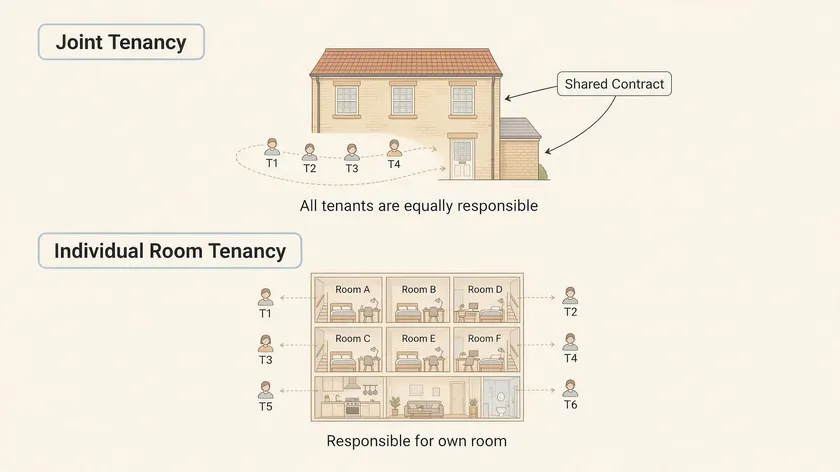
Under a joint tenancy, all tenants sign one contract, share the whole property, and are jointly and severally liable for rent and damage. If one person stops paying rent, the landlord can pursue any or all of the remaining tenants for the full shortfall.
Under an individual room tenancy, each tenant signs a separate contract for their own room, with shared rights and responsibilities over communal areas only. If one party defaults, only the defaulting tenant is liable – other tenants in the same property are not responsible for someone else’s arrears.
Example: three friends renting under a joint tenancy in Bristol share a flat and split everything equally. If one friend moves out mid-contract, the remaining two still owe the full rent.
Compare this with three unrelated professionals, each on their own room tenancy in the same house – each pays their own rent independently, and the landlord deals with any disputes arising from non-payment on a room-by-room basis.
Landlords may choose individual room tenancies for flexibility. It is easier to replace one tenant at a time without disturbing the rest, and there is no risk of a whole group leaving together. For tenants, individual agreements mean you are not dragged into disputes caused by housemates you did not choose.
Key Terms to Include in a Room Tenancy Agreement
Key elements of a room agreement typically include the parties’ names and property details, the description of the rented space, the term, rent, deposit, utilities, repairs, access rules, quiet enjoyment and termination provisions.
The agreement specifies the identification of the rented room and shared spaces – for example, “Bedroom 3, second floor, sole use by Tenant” – alongside a list of communal areas such as the kitchen, bathrooms, garden and living room.
The agreement should also include house rules for guests, noise, smoking, pets and cleaning of communal spaces. In a shared house, these rules are often crucial and should appear either in the main body or as a schedule annexed to the contract.
Utilities and bills must clarify what is included and what is not – for instance, whether rent includes utilities, council tax, or broadband, or whether these are split separately.
The tenant’s right to quiet enjoyment must be referenced: the landlord should not enter the room without proper notice except in an emergency. The agreement regulates access and inspections by the landlord with notice periods – typically at least 24 hours.
It should also clarify whether the tenant may lock their door, whether the landlord retains a master key, and how this interacts with quiet enjoyment and fire safety.
Rent, Deposits, and Rent Increases for Room Lets
This section covers three closely linked money matters: what the rent actually covers, how the tenancy deposit is protected, and when a landlord can lawfully increase the rent.
Rent and payment terms
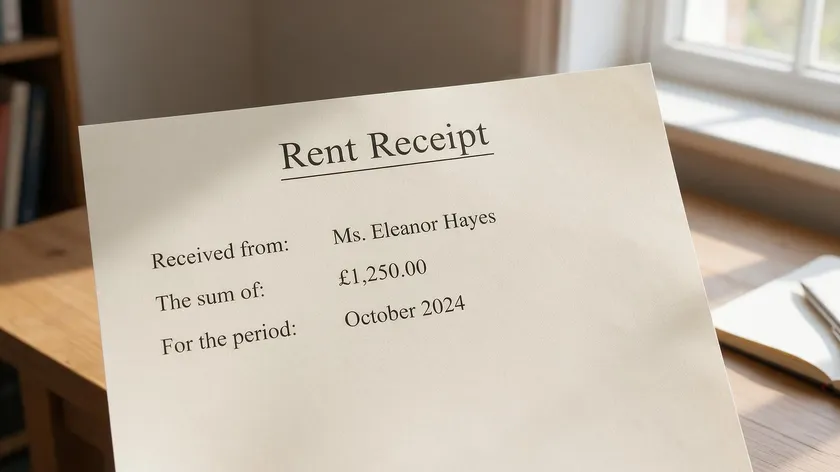
Rent and payment terms outline the cost, frequency, and method of payment. The agreement must state the rent for the individual room, the date it falls due, how it is paid monthly – usually by standing order – and any separate charges.
Each room tenant usually pays their own security deposit. Where damage occurs in communal areas, the landlord should explain how costs will be apportioned among relevant tenants, ideally using photographic evidence or inventory records.
Deposit protection and rent increases
Deposit details must explain the amount, protection, and return conditions. Deposits must be secured in a government-approved scheme within 30 days of receipt. This rule applies to both assured shorthold tenancies and assured periodic tenancies. The landlord must provide the tenant with prescribed information about the scheme used.
Rent can be increased only once every 12 months legally. The landlord must follow the statutory process – serving proper notice and allowing the tenant to challenge the proposed increase if it is above the market rate.
Rent increase clauses must be fair; landlords should benchmark against comparable rooms in the local area and avoid unfair terms that lock tenants into above-market rises. Room tenancy agreements must also comply with the Tenant Fees Act 2019, which bans most charges beyond rent and a capped deposit.
Landlord’s Obligations and Repairs in a Room Tenancy
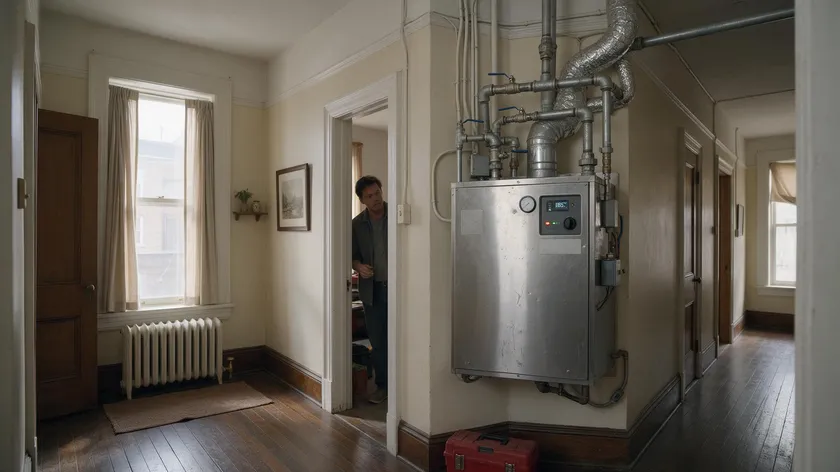
Rent, deposits and repairs are the areas most likely to cause disputes arising in a shared house, so this section splits what the landlord must do from what is expected of the tenant.
Landlord’s obligations
The landlord’s obligations include keeping the structure and exterior of the residential property in good repair, ensuring space heating, heating water, gas, electricity and sanitation are safe and functional, and carrying out necessary repairs in a reasonable time.
Tenants have the right to live in a safe and habitable property – fit for human habitation throughout the tenancy. Landlords must maintain safety compliance and provide necessary repairs. Landlords must provide a gas safety certificate before the tenancy starts and keep it current annually.
The agreement should specify how tenants report repairs, expected response times for urgent versus routine issues, and access arrangements for contractors. Landlords must provide written information about the tenancy before it starts, including the landlord’s details and emergency contact numbers.
Tenant’s responsibilities
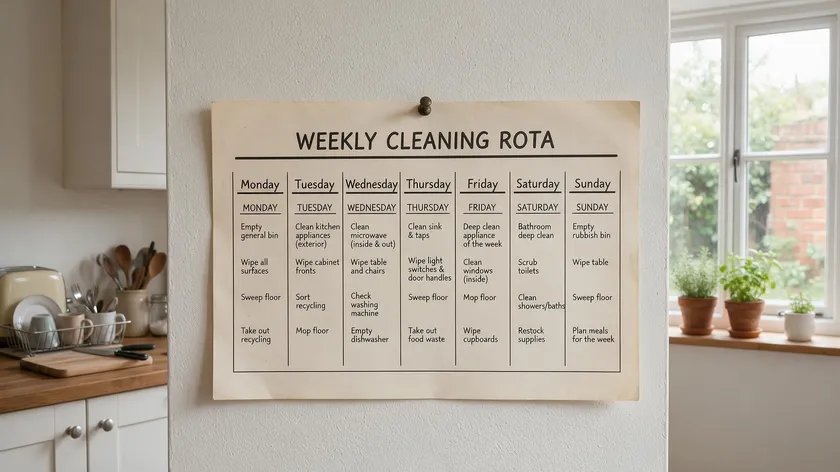
The tenant’s obligations include using the property in a tenant-like way: keeping the room reasonably clean, not damaging fixtures, ventilating to avoid mould, and co-operating with safety checks. Tenants must pay rent on time and maintain the room and shared spaces.
Tenants in shared properties are responsible for communal area upkeep – keeping the kitchen tidy, not blocking fire exits and disposing of rubbish properly. If a tenant fails to meet these responsibilities, the landlord may have grounds to seek possession.
For a fuller list of general landlord obligations, see a dedicated landlord tenancy agreement guide rather than this room-specific resource.
House Rules, Communal Areas and Quiet Enjoyment
House rules and responsibilities include expectations about cleanliness and guest policies.
A room tenancy agreement should contain a clear set of house rules – either in the main body or as a schedule – covering cleaning routines, overnight guests, use of shared appliances, smoking, pets and noise curfews. These rules help avoid conflicts before they start.
Communal areas – kitchen, bathrooms, lounge, corridors, garden – remain under the landlord’s control for maintenance purposes, but tenants have a contractual right to use them as part of their tenancy. The landlord cannot arbitrarily restrict access to shared spaces that were promised in the rental agreement.
The covenant of quiet enjoyment means tenants must be able to use their room and shared spaces without unreasonable interference from the landlord or other tenants. Consider a tenant working night shifts who needs quiet during the day.
If other tenants watch television loudly all morning, house rules setting reasonable noise hours help prevent disputes. Neither the landlord nor a new landlord who takes over the property can override this right.
The agreement should include a simple process for resolving disputes between housemates – escalating to the landlord or managing agent before taking formal action and keeping written records of complaints.
Live-In Landlords and Lodger Agreements
A live-in landlord is someone who uses the property as their only or main home and rents out one or more rooms. A licence or lodger agreement exists when the landlord shares the living space.
This changes the occupier’s legal status significantly: the lodger is often an excluded occupier or licensee rather than a tenant, with fewer rights under the Housing Act but still protection from unlawful eviction under common law.
In most live-in landlord situations, a lodger agreement is more appropriate than an assured periodic tenancy, especially where the kitchen or bathroom is shared. Lodger agreements are specifically designed for landlords renting rooms in their own homes.
However, if the room is self-contained with a lock and no shared essential facilities, the occupier may still hold an assured shorthold or assured periodic tenancy – seek legal guidance in borderline cases.
Example: a homeowner in London rents their spare room under a lodger agreement. The lodger shares the kitchen and living room with the owner. The notice period is typically one month’s notice – matching the rent period – and the owner does not need a court order to regain possession of the room once reasonable notice has been given.
Private tenants renting from a non-resident landlord, by contrast, enjoy considerably stronger protections.
Ending a Room Tenancy Agreement
How a room tenancy ends depends on which type of agreement is in place – an assured periodic tenancy and a lodger agreement follow different notice rules. Tenancies can only be ended by giving appropriate notice.
Ending an assured periodic tenancy

A notice period specifies how much advance notice is required to end the agreement. Tenants must give two months’ written notice to end the tenancy, on or immediately before the rent due date.
Tenants can end their agreement with two months’ notice – this period is the statutory minimum under the Renters’ Rights Act 2025. Tenants can end tenancy sooner with mutual agreement between landlord and tenant.
Landlords can end tenancy by issuing a Section 8 notice, relying on valid grounds for possession under the Housing Act 1988 (as amended by the Renters’ Rights Act 2025).
The landlord must prove the ground – such as serious rent arrears or antisocial behaviour – and obtain a court order through the English courts. A landlord cannot simply change the locks or remove belongings without due process.
Ending a lodger agreement

For lodger agreements and excluded occupiers living with a resident landlord, reasonable notice may suffice. This is often the same length as the rent period – typically one month’s notice for a monthly arrangement.
A court order might not be required for the landlord to regain possession, though physical force or harassment is still unlawful.
Regardless of tenancy type, the move-out process should include a final inspection, inventory check, meter readings, deposit return, a forwarding address and handover of keys.
Here is an example: for a monthly tenancy with rent due on the 1st, a tenant who wants to give notice must time it so the two-month period runs from a rent due date.
If notice is given partway through a rent period rather than on the due date itself, it typically only takes effect from the next rent due date – so tenants should check the exact date with their tenancy agreement or a legal adviser to avoid an unintended extra month of liability.
Practical Tips for Drafting and Using a Room Tenancy Agreement
Draft in plain English and keep clauses consistent about notice, rent dates, and shared facilities. Avoid unfair terms – a clause that lets the landlord increase rent without limit or enter the room at any time without notice is unlikely to be enforceable. Tenancy agreements should meet local legal requirements and be documented in writing.
Always put custom house rules, other services such as cleaning included in rent, or unusual arrangements like on-site parking in writing. If it is not written down, it is far harder to enforce.
Encourage landlords to carry out a tenancy reference check on prospective room tenants – a dedicated tenancy reference guide covers the full process. Some room lets, particularly higher-risk or student lettings, may require a guarantor; a separate guarantor agreement resource explains how that works.
Keep signed copies of all agreements and any later variations. Confirm important discussions by email or message. This small habit dramatically reduces disputes – especially when a housing association or local authorities become involved.
Key Takeaways
- A room tenancy agreement gives a tenant exclusive possession of a specific bedroom while sharing kitchen, bathroom and living spaces with other tenants.
- Where the landlord does not live in the property, the agreement is usually an assured periodic tenancy; where the landlord lives on site, a lodger agreement or licence normally applies instead.
- From 1 May 2026, all new assured tenancies in England must be periodic – fixed-term assured shorthold tenancies are no longer permitted (lodger agreements and licences are not affected by this change).
- The agreement must cover rent, deposit protection, shared areas, house rules, quiet enjoyment, necessary repairs and clear notice periods for both sides.
- Before signing, check that liability is clear – joint tenancy makes all sharers jointly liable for the whole property, while individual room tenancies mean each tenant is only liable for their own room rent.
- Both landlords and tenants should read the whole agreement carefully and seek advice where terms seem unfair or unclear – relevant laws change, so staying current protects both sides.
The type of agreement you need ultimately hinges on one question: does the landlord live in the property? If yes, a lodger agreement with its simpler rules will usually apply. If not, a fully assured periodic tenancy gives the tenant stronger protections and the landlord clearer legal footing.
Use Documentify’s tenancy agreement tool to create a room tenancy agreement or lodger agreement tailored to your situation, with every clause customisable before you commit – it is free to create and preview, with a small fee only when you download the final copy.
FAQ
Below are extra questions about room tenancy agreements that are not fully covered in the main article.
Is a room tenancy agreement always an Assured Shorthold Tenancy?
Before May 2026, most private room lets in England without a resident landlord were assured short-hold tenancies. Since 1 May 2026, these have been replaced or converted into assured periodic tenancies – no new shorthold tenancy can be created.
If the landlord lives in the property and shares living space, the occupier is often a lodger with a licence, not under an assured shorthold regime at all.
Can I have a joint tenancy and a room tenancy in the same house?
A landlord can mix models – for example, a joint tenancy on the top-floor flat and individual room tenancies on the ground floor – but must keep each agreement type clear and consistent.
The same room cannot sensibly be under both a joint tenancy and an individual room tenancy at the same time, and mixing them within one unit can cause serious legal confusion. Always use separate, clearly worded contracts.
What happens if my landlord moves into the property after I have a room tenancy?
If the landlord moves in after the tenancy starts, the existing assured periodic tenancy usually continues with its original protections. The resident landlord exception normally only applies where the landlord lived in the property as their main home at the start of – and throughout – the tenancy.
A new landlord buying the property cannot simply claim resident landlord status to reduce existing tenant rights.
Can my landlord enter my bedroom whenever they want in a shared house?
Even in a room tenancy, the tenant has a right to quiet enjoyment and exclusive use of their bedroom. The landlord should give reasonable notice – usually at least 24 hours – before entering, except in genuine emergencies such as a gas leak or flood.
The agreement should set out access rules for inspections and repairs. Tenants can challenge repeated unannounced visits as a possible breach of quiet enjoyment, and local authorities may investigate persistent harassment.
Do room tenancies count towards HMO licensing requirements?
Having multiple individual room tenancies in one property often means it is a house in multiple occupation. The mandatory national HMO licence applies where five or more people forming two or more households share the property.
Some councils also run additional licensing schemes covering smaller HMOs of three to four occupiers, so landlords should always check local rules. Failing to licence an HMO properly can lead to significant fines and rent repayment orders.

