
This article explains what a surrender of tenancy is, how it works in England and Wales from 1 May 2026, and the practical steps both the landlord and tenant should take to end a tenancy early by mutual agreement.
Whether you are a private landlord trying to recover possession of your property or a tenant who needs to leave early, understanding surrender as a distinct legal mechanism is essential. The sections below cover express and implied surrender, joint arrangements, abandonment, rent and deposit handling, and what to do once the old tenancy ends.
Table of Contents
- What is a surrender of tenancy?
- Express surrender: ending a tenancy by written agreement
- Implied surrender: when actions speak louder than words
- Surrender vs giving notice, break clauses and eviction
- How surrender works in assured and fixed-term tenancies
- Joint tenancy, joint landlords and contract holders
- Abandonment, “walking away” and why it is not surrender
- Rent, deposit and fees when you end the tenancy by surrender
- Practical steps to negotiate and document a surrender
- Using new tenancy agreements after a surrender
- Key Takeaways
- FAQ
What is a surrender of tenancy?

A surrender of tenancy is a mutual agreement between landlord and tenant to end the tenancy before its natural expiry or – in the case of periodic tenancies – at a date earlier than the next available notice period would allow.
It applies to both fixed-term and periodic tenancies and can be used by any private landlord or tenant who wants to bring the arrangement to an end by mutual consent.
Both sides give up their rights and obligations for the future once the tenancy ends by surrender. However, anything already owed – such as unpaid rent, rent arrears, or compensation for damage – remains enforceable unless the landlord explicitly waives it as part of the settlement. Surrendering a tenancy does not erase past breaches; it simply stops the clock on future liability.
Surrender is different from giving notice in a periodic assured tenancy, exercising a break clause in a fixed term, or eviction via a court order. Each of those tools has its own rules about who starts the process, how much notice is required, and whether the landlord can refuse.
For full detail on those mechanisms, see our separate guides on the UK tenancy agreement template and landlord tenancy agreement.
From 1 May 2026, most private tenancies in England are assured periodic tenancies by default under the Renters’ Rights Act 2025. Fixed end dates have largely disappeared, but surrender still works in the same way – it remains a valid route to end a tenancy early whenever both the landlord and tenant agree.
A surrender of tenancy can be formal and documented – known as express surrender – or it can arise from the conduct of the parties, known as implied surrender. The next sections unpack both.
Express surrender: ending a tenancy by written agreement

An express surrender happens when landlord and tenant agree in writing – usually through a deed of surrender – to end the tenancy on a specific date. Express surrender requires a signed legal document by both parties, and the deed of express surrender must be witnessed to satisfy formalities under section 1 of the Law of Property (Miscellaneous Provisions) Act 1989.
A typical express surrender document should cover the parties’ names, property address, original tenancy start date, the agreed surrender date and time, handover of keys, treatment of rent and any arrears, deposit handling, and signatures of all required parties.
The document must clearly state the tenancy ends immediately on the agreed date, so there is no ambiguity about when liability stops.
Both landlord and tenant must agree to express surrender terms. Once the deed takes effect, express surrender releases both parties from future obligations – the landlord cannot later claim future rent, and the tenant has no ongoing duty to pay rent beyond the surrender date. Only arrears or agreed costs up to that date survive.
Even where the original discussion was verbal, putting the agreed surrender in writing is strongly recommended. A written agreement removes doubt about exact dates, keys, and rent apportionment and provides evidence if a dispute arises later.
Implied surrender: when actions speak louder than words

Implied surrender occurs through actions indicating the tenancy has ended, even without a formal written agreement. The conduct of both the landlord and tenant must amount to an unequivocal act that is inconsistent with the tenancy continuing – for example, the tenant completely vacates, removes all possessions, and the landlord accepts keys and re-lets the property.
Consider this example: a tenant emails on 10 March 2026 to say they have left, posts keys through the landlord’s letterbox, and the landlord advertises and grants a new tenancy for the same property starting 1 April 2026. A court would likely find implied surrender took effect when the landlord accepted keys and began re-letting. In Bellcourt Estates Ltd v Adesina (2005), the Court of Appeal confirmed that surrender by operation of law requires conduct from both parties inconsistent with the tenancy continuing.
Returning keys can indicate an implied surrender of tenancy, but the landlord must accept keys for implied surrender to be valid. Handing keys back alone is usually only an offer to surrender – the tenancy is not ended until the landlord accepts that offer, either expressly in writing or by clearly treating the tenancy as finished. Joint landlords must also agree to any implied surrender.
The main risk sits with landlords: if a landlord takes back possession or re-lets too quickly, a court may find they have accepted an implied surrender and lost the right to claim rent for the rest of a fixed term.
Where possible, landlords should avoid relying solely on the tenant’s actions and should follow up with written confirmation setting out the date and terms on which the surrender has been accepted.
Surrender vs giving notice, break clauses and eviction
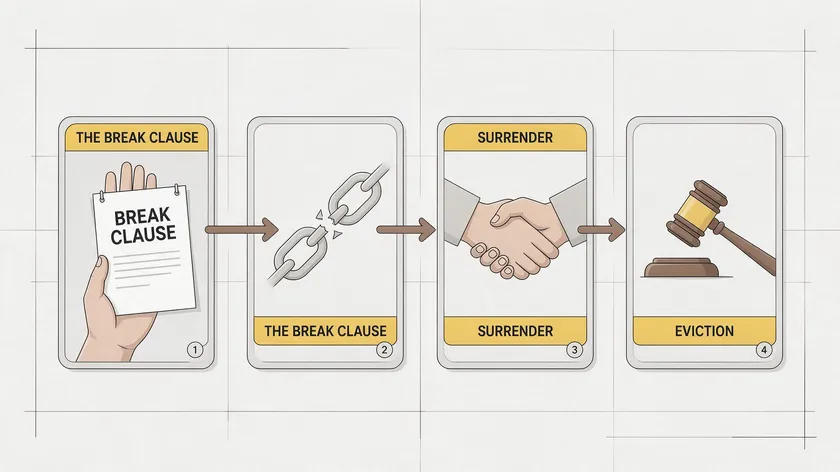
Surrender is just one way to end a tenancy early. The table below compares it with giving notice, using a break clause, and eviction via court order so you can see where each mechanism fits.
| Mechanism | Who starts it? | Can the landlord refuse? | When does rent stop? |
|---|---|---|---|
| Tenant’s notice in a periodic assured tenancy | The tenant gives the correct notice. | No, if notice meets legal requirements | After the notice period expires |
| Break clause in a fixed term | Tenant or landlord, per the contract | No, if the clause is validly exercised | From the break date stated in the clause |
| Surrender of tenancy (express or implied) | Both parties by mutual agreement | Yes – the landlord must agree or accept. | Immediately on the agreed surrender date |
| Eviction via court order | Landlord through the court | N/A – it is the landlord’s process. | Once the court grants a possession order |
Surrender is often used when both sides want flexibility – for instance, when the tenant has a job move or the landlord agrees to refurbish the property. But it requires genuine mutual consent; neither side can force it. For full guidance on how notice periods work or when a landlord can recover possession through the courts, see our broader articles on the UK tenancy agreement template and landlord tenancy agreement.
How surrender works in assured and fixed-term tenancies
Surrender operates slightly differently depending on whether you hold an assured periodic tenancy, a fixed term, or an older form of assured tenancy. Understanding which applies helps both the landlord and tenant manage expectations.
For assured periodic tenancies in England – the default from 1 May 2026 – surrender can end the tenancy on any date agreed upon between the parties, without waiting for the end of a tenancy period. If the surrender date falls mid-period, pro-rata rent refunds or a final payment matching the exact days may be appropriate.
For a fixed-term tenancy, surrender is usually the only way – besides a break clause or serious breach – for a tenant to leave early without remaining liable for the entire term’s rent. In a fixed term, both landlord and tenant must agree to the early end.
If the landlord refuses, the tenant normally remains liable for rent until the fixed end date or until a replacement tenant is granted a new tenancy on the same property.
Many tenancies granted before 1 May 2026 converted into the new assured periodic model under transitional regulations. Regardless of conversion, the parties can still agree to an express surrender at any point, and doing so does not change the historic rent already owed.
Tenants should check their agreement for any wording about early termination or surrender charges, and landlords should ensure any terms comply with the Tenant Fees Act 2019.
Joint tenancy, joint landlords and contract holders

Surrender becomes more complex where there are joint tenants, joint landlords, or joint contract holders in Wales. Everyone’s rights must be considered before any agreement is signed.
Ending a joint tenancy by surrender normally requires the agreement of all joint tenants – unanimous consent is required for surrendering joint tenancies, and a mutual surrender cannot be executed unilaterally by one tenant.
A deed of surrender must be signed by all joint tenants. If other joint tenants want to stay, one tenant wishing to leave may need to negotiate assignment or ask the landlord to grant a new tenancy to the remaining occupiers, rather than attempting a sole tenancy surrender that affects everyone.
In England, a single joint tenant may sometimes end a periodic joint tenancy by giving notice – subject to the terms of the agreement and a shorter notice period where applicable – but a negotiated surrender usually needs all joint contract holders’ written consent.
For joint landlords, the express surrender document must be signed by all landlords or by one joint landlord who is clearly authorised to accept on behalf of the others. Without proper authority, the surrender may be challenged.
Here is an example: three joint contract holders in Cardiff agree on 15 September 2026 to surrender a fixed-term occupation contract early. All three sign a mutual surrender document, and the landlord grants a new agreement to one remaining occupier from 1 October 2026. The old tenancy ends cleanly, and the new contract reflects the updated arrangement.
Anyone in a joint arrangement should seek free advice or specific legal guidance before agreeing to a surrender, as one person’s signature can affect other tenants’ housing rights and ongoing rent liability – sometimes in ways that are difficult to reverse, such as through Westminster Council or a local housing advisory service.
Abandonment, “walking away” and why it is not surrender

Tenant abandonment occurs when a tenant leaves without notice and stops paying rent. Abandonment has no specific legal meaning in tenancy law – it is not the same as a lawful surrender.
If a tenant simply leaves and posts keys through a letterbox without any discussion, the tenancy generally continues until the landlord clearly accepts an implied surrender or a court ends the tenancy. A tenant leaving without notice does not automatically imply surrender.
Landlords can issue an abandonment notice for unoccupied properties, but acting too quickly carries risk. A landlord who changes locks or re-lets after suspected abandonment – without evidence of mutual agreement – may face unlawful eviction claims and lose the ability to pursue rent for the remaining term.
A tenant remains responsible for rent until the tenancy is legally ended, whether by surrender, a possession order, or valid notice. Landlords may reclaim possession through court if a tenant abandons the property, but the correct process matters.
Practical steps when abandonment is suspected include repeated attempts to contact the tenant, documenting visits and communications, checking with neighbours, and seeking legal advice before changing locks.
Some tenancy agreements contain clauses requiring the tenant to notify the landlord if the property will be empty beyond a set number of days, but breach of that clause alone does not create a surrender.
A properly documented surrender – not just a vacant property – is the safest way to end the tenancy for both sides.
Rent, deposit and fees when you end the tenancy by surrender
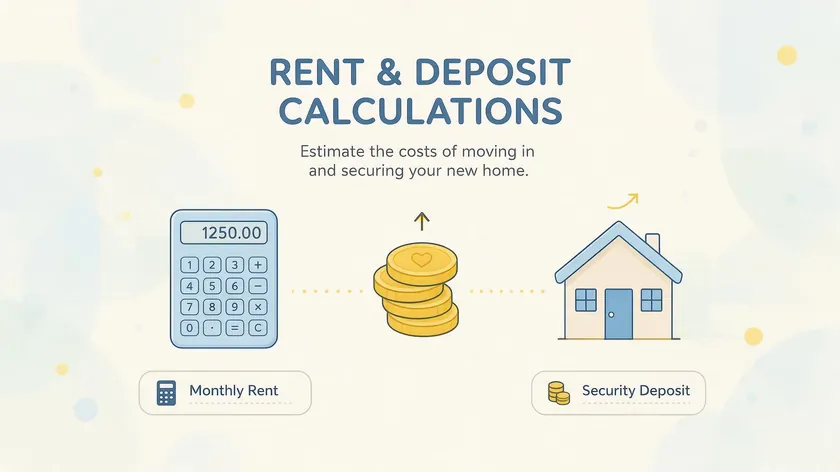
Surrender stops future rent, but it raises important questions about rent up to the surrender date, deposit return, and any fees the landlord may charge.
Rent up to the surrender date and apportionment
Tenants remain liable to pay rent and utility bills until the agreed surrender date – or the date the landlord accepts an implied surrender – even if the tenant leaves and physically moves out earlier.
If the surrender date falls midway through a rent period – say, monthly rent of £1,200 with surrender on the 10th – the tenant would owe roughly £400 for those ten days, and many landlords will refund a pro rata amount or agree to a final payment matching the exact days occupied.
Deposit return after surrender
After a valid surrender, the landlord should arrange a check-out inspection, note the condition of the property against the original inventory, and deduct only for evidenced damage or arrears. Deposit return is handled according to the Tenancy Deposit Scheme – whether TDS, DPS, or MyDeposits – and the balance should be repaid promptly following the scheme’s rules.
Permitted fees under the Tenant Fees Act 2019
Landlords can charge fees associated with early tenancy surrender, but the Tenant Fees Act 2019 regulates surrender fees strictly. Fees must not exceed the landlord’s incurred loss – for example, marketing costs to re-let the property and lost rent until a suitable replacement tenant starts.
Landlords can charge for lost rent if notice is incorrect or if the tenant agrees to cover a shortfall, but they cannot profit from the arrangement or impose arbitrary charges. Any charge that goes beyond the genuine loss incurred risks being treated as a prohibited payment under the Act.
All sums agreed on surrender – final rent, arrears payment plans, deposit deductions, and any permitted fees – should be recorded in a written agreement to minimise later disputes.
Practical steps to negotiate and document a surrender
This section provides a step-by-step roadmap for both tenants and landlords who want to end a tenancy early by mutual agreement.
Steps for tenants
Raise the issue early – ideally at least four to eight weeks before your desired move-out date. Explain your reasons honestly, whether it is a job relocation, relationship breakdown, or financial pressure.
Propose a specific surrender date and offer cooperation: allow viewings, help find a replacement tenant, or agree to cover reasonable costs. Early communication usually leads to better terms and avoids hardship for both sides.
Steps for landlords
Consider whether you are willing to accept the surrender. Think about realistic advertising timescales for re-letting in your area and respond in writing – either agreeing, refusing, or proposing alternative terms such as the tenant continuing to pay rent until a new tenant is found. If the landlord agrees, confirming that in writing protects everyone.
Finalising the documentation

Once agreement in principle is reached, fix a clear surrender date and time, agree what happens to rent, arrears, and the deposit, and record all of this in a short surrender letter or deed signed before keys are handed back.
Carry out a check-out inspection on or just before the surrender date, take meter readings and photographs, and have both parties confirm in writing that keys have been returned and possession has passed back to the landlord.
Once the surrender has taken place, the landlord is free to re-let the property – and this is the point where a fresh, well-drafted tenancy agreement becomes essential for the next occupier.
Using new tenancy agreements after a surrender
After a surrender, the old tenancy has ended completely, and any new occupier – whether the same person under revised terms or a brand-new tenant – must have a fresh tenancy agreement. There should be no overlap in rights between the old and new contracts.
Where a landlord grants a new tenancy for the same property – for example, converting a sole tenancy to a joint tenancy for a couple from 1 July 2026 – this can itself amount to implied surrender of the earlier tenancy and the creation of a new agreement by operation of law.
The new tenancy agreement must reflect current law, including assured periodic tenancy rules after 1 May 2026, with clear rent terms and accurate details of all joint contract holders or joint landlords.
This is the stage where landlords need a properly drafted, up-to-date tenancy agreement for the new letting. Getting the internal document right from day one protects both the landlord and the incoming tenant.
Surrender is ultimately about cleanly drawing a line under the old tenancy so that both sides can move on – and the landlord can safely start again with a properly documented new tenancy.
Key Takeaways
- A surrender of tenancy is a mutual agreement between landlord and tenant – or contract holder – to end a tenancy early, separate from giving notice or a break clause.
- Express surrender (usually a deed) is documented in writing; implied surrender arises from conduct such as the tenant returning keys and the landlord re-letting – always keep clear evidence either way.
- Surrender immediately ends future rent and obligations but does not wipe out arrears; rent is still owed up to the agreed surrender date, and any deposit deductions or permitted reasonable costs should be recorded in writing.
- Joint tenancies and joint landlords generally need everyone’s agreement to surrender the tenancy, and abandonment alone is never a valid surrender – a landlord who acts too fast risks an unlawful eviction claim.
- If your situation involves large arrears, subtenancies, or disputed abandonment, seek tailored legal advice rather than relying on general guidance.
Once a surrender is agreed, the property’s ready for a fresh start. Documentify’s tenancy agreement tool helps you put together a new agreement in minutes – free to create and preview, with a small fee to download. Just check it reflects your latest circumstances first.
FAQ
These FAQs cover common edge-case questions not fully answered in the sections above.
Can my landlord refuse to accept a surrender of tenancy?
Yes. Surrender is a mutual agreement, so the landlord can refuse. If they do, the tenant normally remains liable to pay rent until the end of the fixed term or until a valid notice period expires, unless a new arrangement is reached. In Wales, the same principle applies to occupation contract holders – the landlord’s consent is required for surrender to take effect.
Do I still owe rent arrears after a surrender?
Surrender only ends future obligations. Any rent arrears or agreed damages that accrued up to the surrender date remain payable unless the landlord explicitly waives them as part of the settlement. This applies equally in England and Wales, and unpaid amounts can still be pursued through the court if necessary.
Will surrendering my tenancy affect my credit file or references?
A properly agreed surrender is not usually recorded on a credit file by itself. Problems arise only if outstanding arrears are sent to debt collectors or a county court judgement is obtained.
Future landlord references typically focus on payment history and property condition rather than the fact of surrender, so a clean exit with no arrears should not harm your record.
Can one joint tenant surrender if the others want to stay?
Ending a joint tenancy by surrender normally needs all joint tenants’ agreement. A single tenant wishing to leave may need to negotiate assignment or ask the landlord to grant a new tenancy for the remaining occupiers, rather than unilaterally surrendering.
In Wales, joint contract holders face equivalent rules – all must consent, or the landlord must agree to restructure the arrangement with immediate effect.
Is an email enough to prove an express surrender?
Courts may accept clear written emails as evidence of agreement, particularly where both parties confirm the surrender date and terms in the correspondence. However, best practice – especially for longer or higher-value tenancies – is to sign a simple deed or written agreement so there is no doubt about what was agreed and when the tenancy ended.

